

The global workforce is undergoing a rapid transformation. As automation, artificial intelligence, and digital platforms reshape industries, the demand for new digital capabilities is rising sharply. Professionals who continuously upgrade their skills will be better positioned to adapt, grow, and lead in this evolving landscape.
From data-driven decision-making to cybersecurity awareness, the next decade will reward individuals who understand technology and can apply it strategically. Companies across sectors, including technology leaders like Microsoft, Google, and Amazon, are already prioritising talent with advanced digital skills.
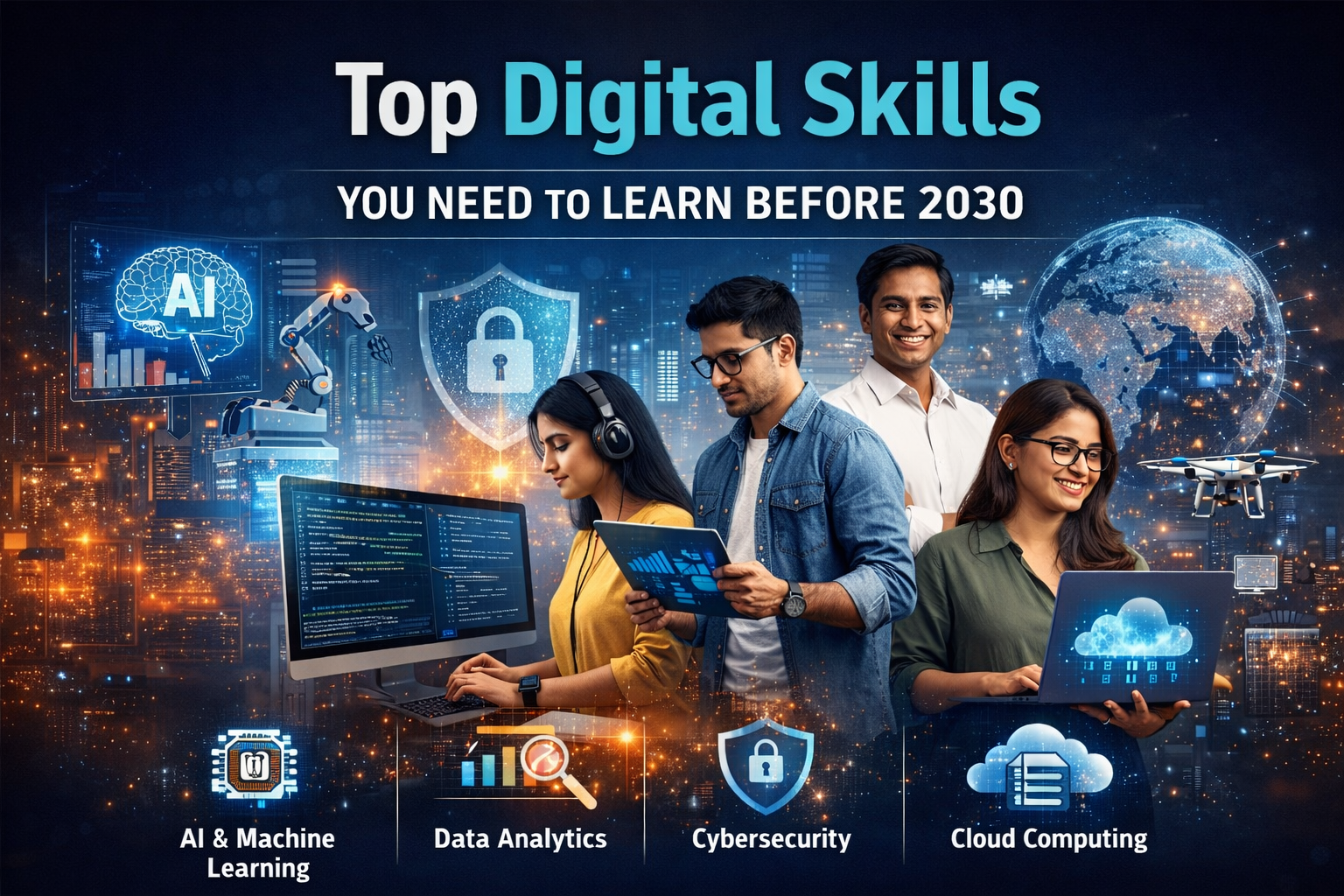
Here are some of the most valuable digital skills that are expected to shape careers by 2030.
Artificial Intelligence and Machine Learning
Artificial intelligence is quickly becoming an essential part of modern business operations. From recommendation engines and chatbots to predictive analytics, AI-powered systems are improving efficiency and enabling smarter decision-making.
Professionals who understand the fundamentals of AI and machine learning will be in high demand across industries. Even roles that are not purely technical increasingly require familiarity with AI tools and workflows.
Companies such as OpenAI and NVIDIA are driving rapid innovation in this space, creating new opportunities for engineers, analysts, and product specialists. Learning how to work with AI systems, interpret data outputs, and build intelligent applications will be a major advantage in the coming years.
Data Analytics and Data Literacy
Data has become one of the most valuable assets for organisations. Businesses today rely on insights from data to guide marketing strategies, product development, and operational planning.
By 2030, professionals across departments will be expected to understand basic data analysis and interpretation. Skills such as working with spreadsheets, visualisation tools, and data dashboards will become standard workplace capabilities.
Technology firms like IBM and consulting companies such as Accenture are investing heavily in data-driven technologies and talent. Individuals who can translate complex datasets into clear insights will be especially valuable to employers.
Cybersecurity Awareness and Protection
As organisations continue to digitise their operations, cyber threats are becoming more sophisticated. Protecting sensitive data and digital infrastructure has therefore become a top priority for businesses worldwide.
Cybersecurity skills are no longer limited to specialised IT teams. Many organisations now require employees across departments to understand safe digital practices and recognise potential threats.
Large technology firms, including Cisco and Palo Alto Networks, are continuously developing security solutions to address evolving cyber risks. Professionals with knowledge of cybersecurity frameworks, threat detection, and data protection practices will find strong demand in the coming decade.
Cloud Computing and Digital Infrastructure
Cloud computing has become the backbone of modern digital services. Businesses increasingly rely on cloud platforms to store data, run applications, and scale operations efficiently.
Platforms offered by companies such as Amazon Web Services, Microsoft Azure, and Google Cloud are used by startups and global enterprises alike.
Professionals who understand how cloud infrastructure works and how applications are deployed in cloud environments will be well-positioned for future roles in software development, IT management, and digital transformation initiatives.
Automation and No-Code Tools
Automation is reshaping how work gets done. Tasks that once required manual effort can now be automated using digital tools and platforms.
No-code and low-code technologies allow professionals to build workflows, applications, and integrations without deep programming knowledge. This trend is empowering non-technical teams to create digital solutions quickly.
Platforms developed by companies such as Zapier and Airtable are helping businesses streamline processes and improve efficiency. Understanding automation tools will become a key advantage for professionals across marketing, operations, and project management.
Also Read: Indian Startup Ecosystem in 2026: How Innovation, AI, and Deep Tech Are Redefining the Future
Adapting to a Digital Future
While technical knowledge is important, the most successful professionals will combine digital skills with creativity, critical thinking, and problem-solving. The future workplace will value individuals who can use technology to create meaningful solutions.
As digital transformation accelerates globally, organisations will continue to seek talent capable of navigating new technologies and leveraging them effectively. Companies such as Tata Consultancy Services and Infosys are already expanding their digital capabilities to support businesses worldwide.
For students, professionals, and entrepreneurs alike, investing in digital skills today can open doors to exciting opportunities in the years ahead. By 2030, those who embrace continuous learning and technological fluency will be best prepared to thrive in the digital economy.

1 Comment
Pingback: Alibaba CEO Eddie Wu Leads New AI Business Group