

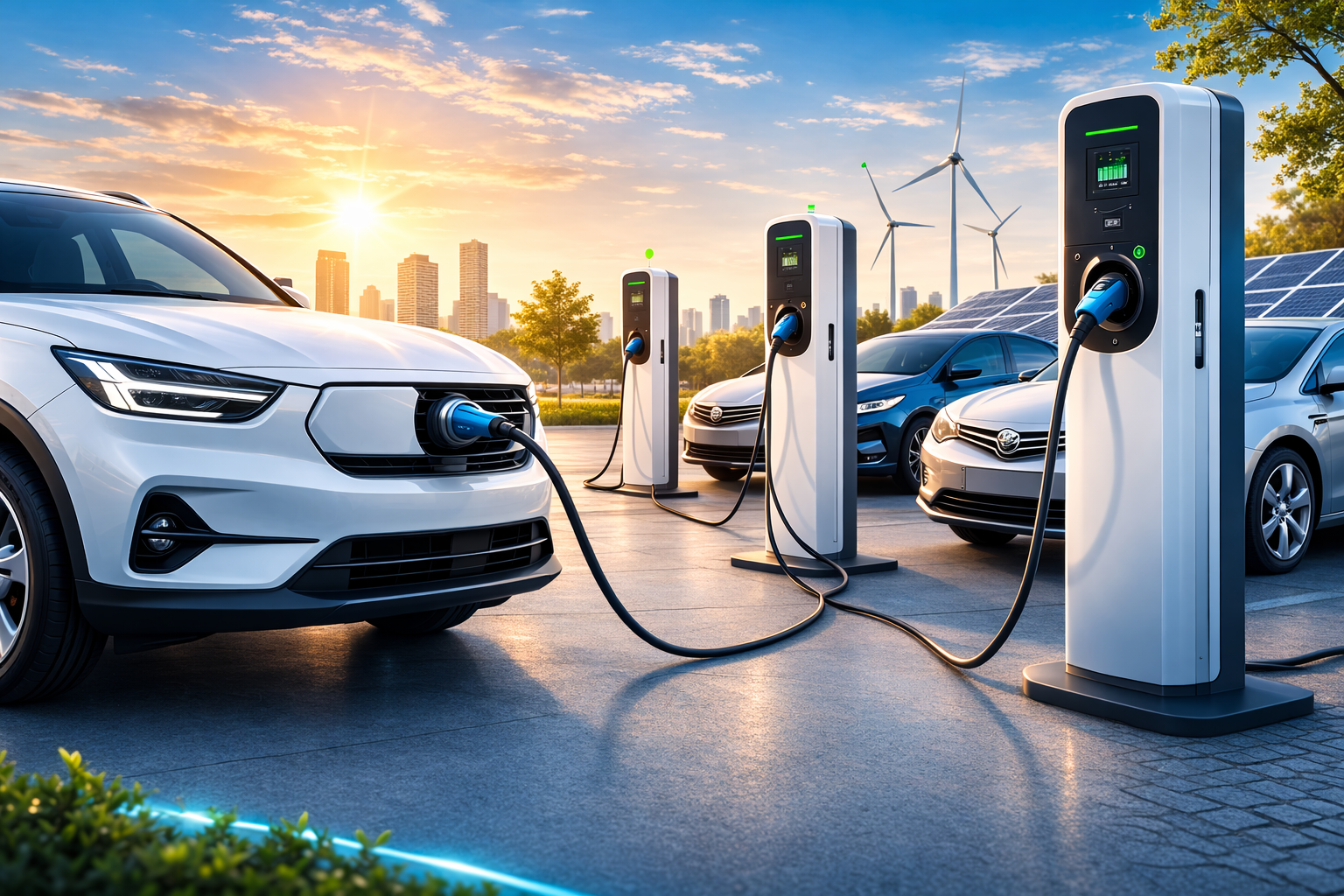
Electric vehicles are automobiles powered by electricity rather than conventional petrol or diesel engines. These vehicles use rechargeable battery systems and electric motors to operate, producing zero tailpipe emissions and significantly reducing environmental impact.
In India, electric vehicles are rapidly gaining attention as the country looks for sustainable transportation solutions. Rising fuel prices, urban air pollution, and climate concerns have accelerated the shift toward electric mobility.
Governments, automakers, and technology companies are investing heavily in electric vehicles and related infrastructure, signalling a major transformation in how transportation will function in the coming decades.
Why Are EVs Important for India?
The adoption of EVs is becoming increasingly important for India due to environmental, economic, and energy security concerns.
India is among the world’s fastest-growing automobile markets. As vehicle ownership increases, emissions from conventional vehicles contribute heavily to urban pollution.
By replacing traditional internal combustion engine vehicles with electric ones, the country can significantly reduce carbon emissions and improve air quality.
Key benefits of include:
- Reduced air pollution in cities
- Lower dependence on fossil fuels
- Improved energy efficiency
- Reduced long-term operating costs
For a country with ambitious climate commitments, electric vehicles represent a crucial step toward sustainable development.
How Do Electric Vehicles Work?
Understanding how such vehicles function helps explain why they are considered more efficient than conventional vehicles.
Unlike petrol-powered cars, these vehicles rely on electric motors powered by rechargeable batteries. These batteries store electrical energy that is converted into mechanical energy to move the vehicle.
Major components of are:
- Battery packs that store electrical energy
- Electric motors that power the wheels
- Power electronics that regulate energy flow
- Charging systems that replenish battery power
Many vehicles also use regenerative braking technology, which captures energy during braking and sends it back to the battery, improving efficiency.
What Role Does Charging Infrastructure Play in EVs?
One of the biggest factors influencing the adoption is the availability of charging infrastructure.
Charging stations allow EV users to recharge their batteries either at home or in public locations. A strong EV charging infrastructure is essential for building consumer confidence in electric mobility.
India has started expanding its charging network across:
- major highways
- urban commercial centres
- residential complexes
- public transport hubs
Fast-charging technology is also improving the practicality of these vehicles, enabling vehicles to recharge quickly and travel longer distances without long waiting times.
As charging networks grow, EVs are expected to become increasingly convenient for everyday transportation.
How These Vehicles Change Urban Mobility?
The rise of such vehicles is closely linked with the future of sustainable urban transportation.
Many cities are adopting electric buses, shared electric mobility platforms, and EV-based last-mile transportation systems. These initiatives reduce pollution while improving the efficiency of urban transport networks.
Electric two-wheelers and three-wheelers are also becoming popular in India because they are cost-effective and easier to operate in congested city environments.
The expansion of electric cars in public and private transport is helping create cleaner and quieter cities.
What Technologies Are Powering Electric Vehicles?
Technological innovation plays a major role in the development of electric vehicles.
Advancements in battery technology are allowing EVs to travel longer distances on a single charge. Lithium-ion batteries currently dominate the EV market because they offer higher energy density and improved durability.
In addition to batteries, electric vehicles increasingly incorporate digital and smart technologies such as:
- intelligent navigation systems
- battery monitoring software
- connected vehicle platforms
- smart energy management systems
These innovations improve both vehicle performance and user experience.
Also read: https://circleofnews.in/qualcomm-tata-electronics-partner-for-modules/
What Policies are Supporting EVs in India?
Government policy has been a major catalyst for the growth of electric vehicles in India.
Authorities have introduced incentives, subsidies, and tax benefits to encourage EV adoption among consumers and manufacturers.
Key policy measures include:
- financial incentives for EV purchases
- support for EV manufacturing
- investment in charging infrastructure
- promotion of battery innovation
Several Indian states have also launched regional EV policies aimed at encouraging the use of electric vehicles in public transport and private mobility.
These policy initiatives are helping create a favorable ecosystem for the electric mobility industry.
What Challenges Do EVs Face?
Despite their potential, they still face certain challenges that must be addressed for widespread adoption.
One of the main concerns for consumers is the initial purchase cost of EVs, which can be higher than traditional vehicles. Although operating costs are often lower, the upfront price remains a barrier for some buyers.
Another challenge is ensuring the availability of charging stations in smaller cities and rural areas.
Battery recycling and environmental management of EV components also require careful planning to ensure sustainability throughout the lifecycle of these vehicles.
Industry experts believe that continued investment in technology and infrastructure will gradually resolve these challenges.
What Is the Future of Electric Vehicles in India?
The future of electric vehicles in India appears increasingly promising.
Experts predict that improvements in battery technology, expanded charging networks, and growing environmental awareness will accelerate EV adoption over the next decade.
Electric two-wheelers, cars, buses, and commercial vehicles are all expected to play important roles in India’s evolving mobility landscape.
As the automotive industry shifts toward cleaner technologies, electric vehicles are likely to become a central component of the country’s transportation system.
How Electric Vehicles Are Shaping the Future of Mobility?
The transition toward electric vehicles represents a major shift in how transportation systems operate. By reducing emissions, improving energy efficiency, and integrating advanced technologies, EVs are helping reshape mobility for a more sustainable future.
For India, adopting electric vehicles is not only an environmental priority but also an opportunity to drive innovation and economic growth.
As infrastructure expands and technology continues to evolve, these vehicles may soon become the foundation of a cleaner and smarter transportation ecosystem.
#india #electricvehicle #news

4 Comments
Pingback: Cabinet Eases FDI Rules To Boost Electronics Manufacturing
Pingback: Top Car Brands & Parent Companies: Who Really Owns Them?
Pingback: Euler Motors Raises $47 Mn in Series E Round Led by Lightrock
Pingback: JSW Motors Partners with Dassault Systèmes: A Big Leap for EV