

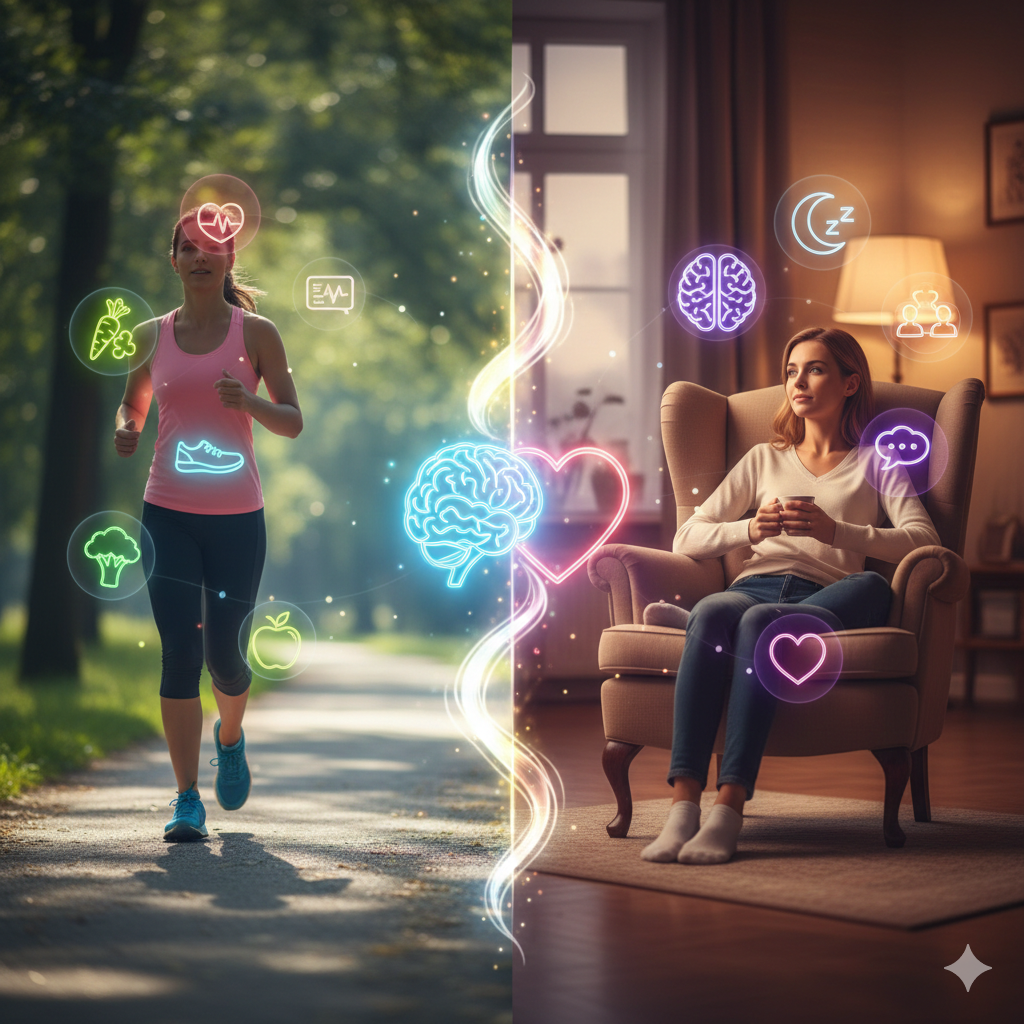
For decades, conversations around health have largely focused on the physical – diet plans, fitness routines, annual check-ups, and medical tests. While these are undeniably important, there is another equally critical aspect of well-being that often remains overlooked or misunderstood: mental health.
In today’s fast-paced, hyper-connected world, mental health is no longer a “luxury concern” or a topic limited to extreme conditions. It is an everyday issue that affects how we think, feel, work, build relationships, and cope with life’s challenges.
The Invisible Half of Health
Mental health refers to our emotional, psychological, and social well-being. It influences how we handle stress, make decisions, and interact with others. Just like physical health, mental health exists on a spectrum – ranging from feeling balanced and resilient to experiencing anxiety, burnout, or depression.
The challenge is that unlike physical illnesses, mental health struggles are often invisible. A person may look healthy on the outside while silently dealing with overwhelming stress, emotional exhaustion, or persistent worry.
Ignoring mental health is like expecting a phone to work flawlessly while never charging its battery.
The Mind–Body Connection Is Real
Science has consistently shown that mental and physical health are deeply interconnected. Chronic stress, anxiety, and unresolved emotional issues can contribute to physical problems such as:
- High blood pressure
- Weakened immunity
- Sleep disorders
- Digestive issues
- Heart disease
Similarly, physical illness or pain can significantly impact mental well-being, leading to frustration, fear, or depression. Treating one without acknowledging the other often results in incomplete healing.
The Cost of :Pushing Through”
In many cultures, including ours, mental exhaustion is still brushed aside with phrases like “be strong,” “push through,” or “it’s all in your head.” While resilience is important, constant emotional suppression comes at a cost.
Burnout, anxiety disorders, and depression are increasingly common among students, professionals, homemakers, and even adolescents. Long working hours, social pressure, financial stress, and digital overload all contribute to declining mental well-being.
Just as we rest when our body is injured, our minds also need care, rest, and sometimes professional support.
Seeking Help Is Not a Weakness
One of the biggest barriers to mental well-being is stigma. Many people hesitate to seek help out of fear of judgment or being labeled as “weak.” This mindset is slowly changing—but not fast enough.
Talking to a therapist, counselor, or mental health professional is no different from consulting a doctor for a physical ailment. In fact, early intervention can prevent minor concerns from becoming long-term conditions.
Mental health care is an act of self-respect, not self-indulgence.
Everyday Steps Toward Better Mental Health
Caring for mental health does not always require drastic changes. Small, consistent habits can make a meaningful difference:
- Prioritizing adequate sleep
- Setting healthy boundaries at work and home
- Staying physically active
- Practicing mindfulness or relaxation techniques
- Talking openly about emotions with trusted people
- Limiting excessive screen time
Most importantly, being kind to oneself – especially during difficult phases – can be transformative.
A Healthier Society Starts With Awareness
When mental health is treated with the same seriousness as physical health, individuals thrive, workplaces become more productive, families grow stronger, and communities become more compassionate.
A healthy body may keep us moving – but a healthy mind gives direction, purpose, and joy to that movement.
As conversations around lifestyle and well-being evolve, it’s time we stop separating mental health from overall health. Because true wellness is not just about living longer – it is about living better.

4 Comments
Pingback: How to Stay Motivated When You Feel Stuck
Pingback: Eric Dane dies after ALS battle
Pingback: SPL Launches in Delhi with Trophy Unveiling
Pingback: Online Self-Diagnosis: Hidden Health Risks of Googling Symptoms