

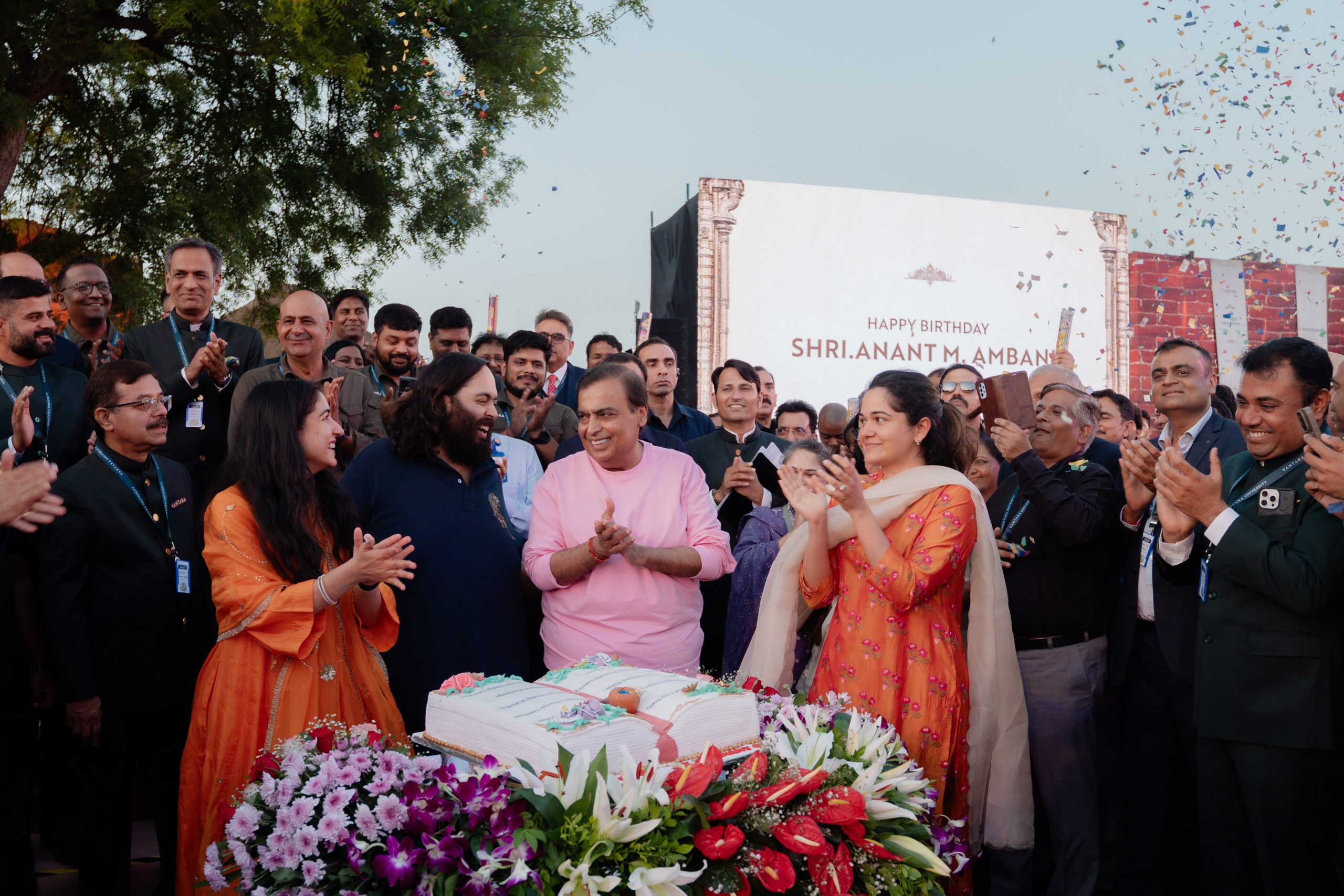
In a landmark development for wildlife conservation and higher education, Vantara, the conservation initiative founded by Anant Ambani, has announced the launch of what it describes as the world’s first integrated global university dedicated to wildlife and veterinary sciences.
The institution will be established in Jamnagar, Gujarat, and aims to create a specialised academic ecosystem focused on wildlife health, veterinary medicine, ecosystem research, and applied conservation sciences.
For India’s education landscape, this is a major moment.
At a time when most new universities continue to focus on engineering, management, or medicine, this initiative brings global attention to a highly specialised yet critically important field — wildlife science and animal care.
What is Vantara University?
The newly announced institution is being positioned as a first-of-its-kind global university that combines:
- wildlife conservation
- veterinary sciences
- ecosystem research
- field-based animal rehabilitation
- One Health studies
Unlike conventional veterinary colleges that focus largely on domestic animals and livestock, Vantara University is designed to address the needs of wildlife species, rescued animals, endangered ecosystems, and conservation medicine.
This makes it distinct from traditional academic institutions.
The university is expected to be deeply integrated with Vantara’s existing conservation and rescue infrastructure in Jamnagar.
Why this Matters Globally?
The institution is being described as the world’s first integrated global university in this field because it seeks to bring academic learning and live conservation work into one ecosystem.
That means students may gain access not only to classrooms and laboratories, but also to:
- live rescue centres
- rehabilitation facilities
- wildlife hospitals
- research labs
- habitat restoration projects
This is particularly important because wildlife conservation education globally is often fragmented across departments such as zoology, ecology, veterinary science, and environmental studies.
Vantara aims to unify these disciplines into one structured framework.
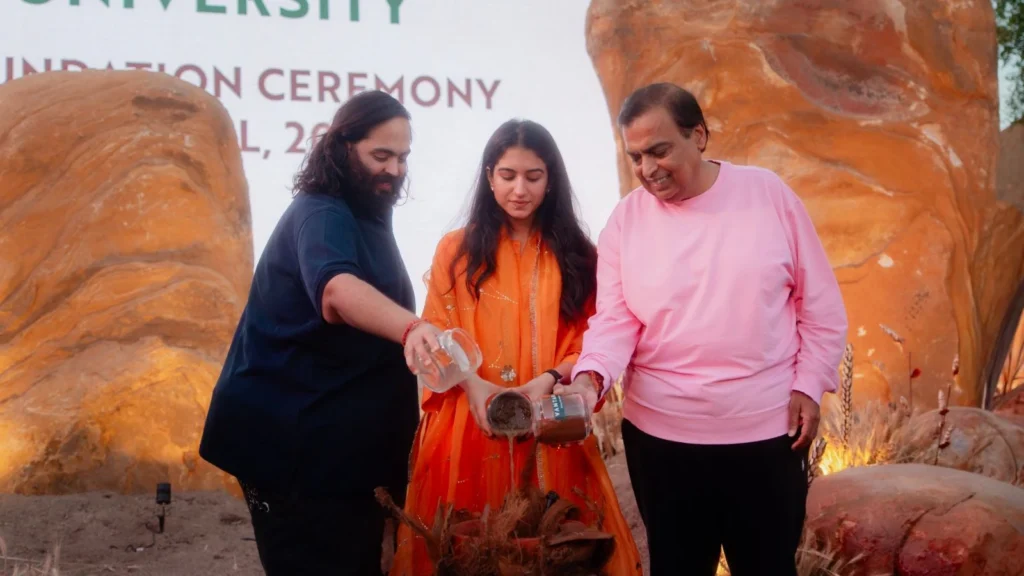
Courses and Academic Structure
According to the announced plan, the university will offer:
- undergraduate programmes
- postgraduate degrees
- fellowships
- specialised certifications
Key academic disciplines include:
1) Wildlife medicine and surgery
This is likely to focus on diagnosis, emergency care, and treatment of wild species.
2) Genetics and epidemiology
Important for disease control, breeding programmes, and species survival.
3) Behavioural sciences
Studying animal movement, stress patterns, habitat adaptation, and rehabilitation.
4) One Health
A globally important interdisciplinary area linking human, animal, and ecosystem health.
5) Conservation policy
Research on wildlife laws, habitat governance, and environmental regulation.
This structure makes the institution highly future-ready.
The Jamnagar Advantage
The decision to locate the university in Jamnagar is highly strategic. Vantara’s existing wildlife rescue and rehabilitation centre spans approximately 3,500 acres and houses around 150,000 animals, according to the announcement.
This gives the university a real-world field base that very few institutions globally can match. Instead of simulated lab-only learning, students may be trained in an active conservation ecosystem.
That improves practical learning and research outcomes.
Why India Needs Such an Institution?
India is one of the world’s most biodiverse countries.
It is home to:
- tigers
- elephants
- leopards
- rhinos
- endangered birds
- marine species
Yet, specialised higher education in wildlife veterinary science remains limited. Most students interested in this space often move through general veterinary or zoology pathways. A dedicated institution can create a stronger talent pipeline for:
- wildlife NGOs
- forest departments
- conservation agencies
- rescue centres
- global research institutions
This makes the announcement significant beyond the Reliance ecosystem.
Scholarships and Accessibility
A notable aspect of the launch is the scholarship component.
The university has announced initiatives such as:
- Vantara University Founding Fellows
- Every Life Matters scholarships
These are intended to support students from economically and socially marginalised backgrounds. This is important because conservation education often remains inaccessible due to high specialisation costs.
Scholarship-led access can significantly improve diversity in the field.
The Role of Anant Ambani
The university also marks an important expansion of Anant Ambani’s role in conservation-led institution building. In his statement, he emphasised that the future of conservation depends on building stronger institutions and capabilities for animal care.
This framing is important.
It shifts the conversation from a one-time conservation initiative to long-term knowledge infrastructure.
Conclusion
The launch of Vantara University in Jamnagar marks a significant milestone for both India’s higher education ecosystem and the global conservation community.
By combining academic rigour with field-based wildlife rehabilitation, the institution has the potential to become a global centre for specialised conservation learning.
At a time when biodiversity loss, habitat degradation, and wildlife health challenges are becoming increasingly urgent, building human capability in this field is not just educationally relevant — it is globally necessary.
If executed at scale, this university could position India as a major contributor to global wildlife science and veterinary research.

1 Comment
Pingback: IPL 2026 Dominates Headlines with High-Scoring Matches