

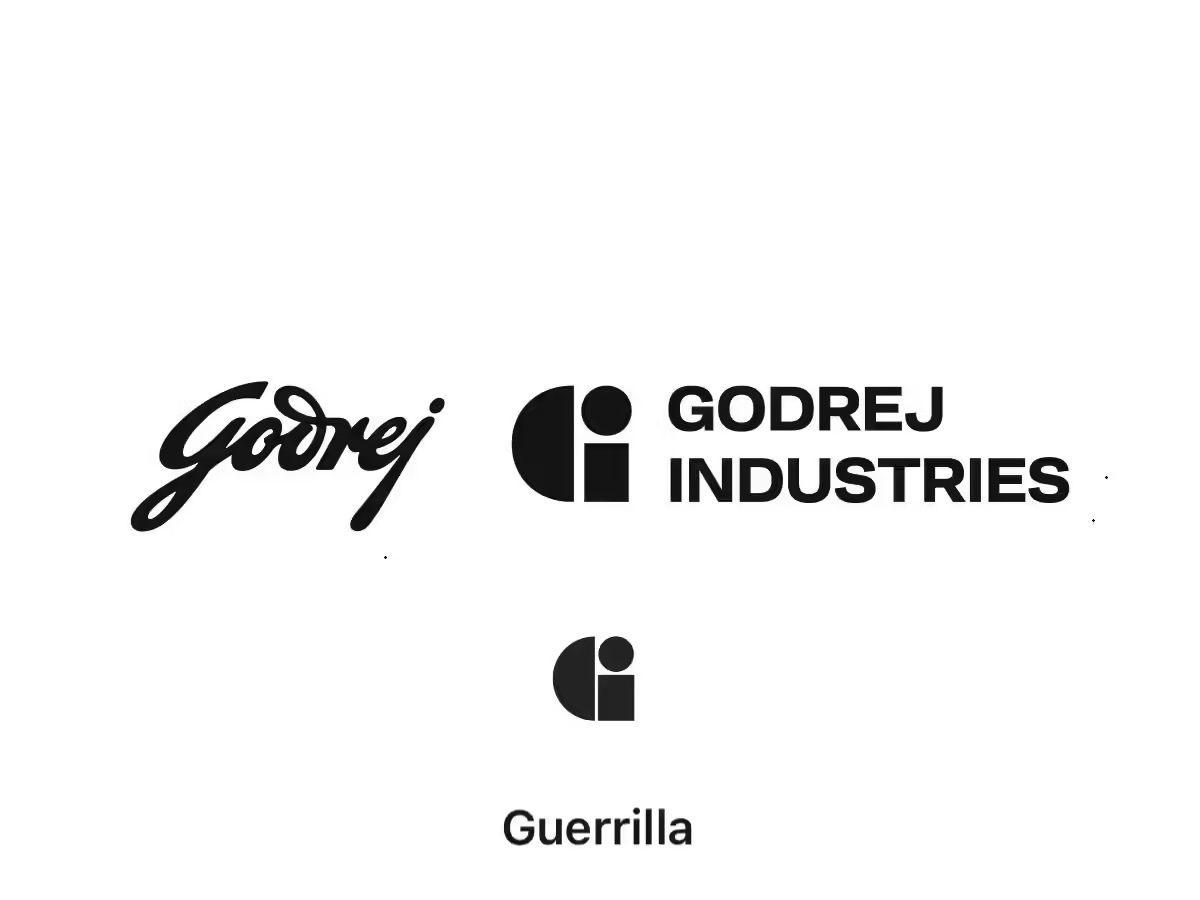
When a legacy brand like Godrej Industries Group decides to refresh its identity, it’s bound to grab attention.
But what started as a strategic rebranding exercise has quickly turned into a larger conversation around design originality, brand legacy, and digital scrutiny.
The company’s newly introduced identity for Godrej Industries has sparked a wave of discussion online – particularly within the design and marketing community – raising important questions about how brands evolve while staying authentic.
A New Identity for a Legacy Brand
Godrej, a name deeply embedded in India’s industrial and consumer landscape, has been undergoing a broader brand transformation in recent years.
As part of this evolution, the group introduced a new visual identity for Godrej Industries, aiming to:
- modernise its image
- align with global design sensibilities
- create a sharper, more contemporary brand presence
Rebranding at this scale is never just about aesthetics. It reflects a company’s intent to stay relevant in a fast-changing business environment.
The Internet Reacts
Soon after the new identity was unveiled, discussions began surfacing across social media platforms.
Designers, branding experts, and observers started analysing the new look – breaking down its:
- typography
- structure
- visual composition
What followed was a wave of comparisons, critiques, and conversations.
The Guerrilla Comparison Controversy
However, soon after the reveal, designers began circulating comparisons online highlighting similarities between the new identity and that of Guerrilla.
Industry observers pointed to overlaps in overall form, typographic treatment and visual structure, sparking questions about originality and differentiation in corporate identity design.
This comparison quickly gained traction, turning what might have been a niche design critique into a broader public debate.
Why Design Similarities Matter?
In today’s digital-first world, brand identity is more than just a logo – it’s a company’s visual voice.
Even subtle similarities can raise concerns around:
- originality
- creative integrity
- brand differentiation
For legacy brands like Godrej, these aspects carry even more weight, given their long-standing reputation and recognition.
Godrej’s Response
Amid the growing chatter, Godrej Industries Group issued a clarification addressing the concerns.
The company emphasised that:
- the new identity was developed through a structured design process
- it reflects the group’s evolving business vision
- it aligns with contemporary branding principles
Godrej also reinforced that the redesign is part of a larger transformation strategy aimed at future growth.
Rebranding in the Age of Social Media
One of the most interesting aspects of this episode is how quickly the conversation unfolded. In the past, brand redesigns were evaluated by a limited audience – primarily industry experts.
Today, however:
- anyone can analyse and critique design
- comparisons can go viral within hours
- brands are held accountable in real time
This shift has fundamentally changed how rebranding is perceived and discussed.
The Fine Line Between Inspiration and Similarity
Design, by nature, often builds on existing ideas and trends.
Minimalism, geometric forms, and clean typography are widely used across industries.
However, the challenge lies in:
- creating something distinctive
- avoiding visual overlap
- maintaining brand uniqueness
The Godrej case highlights how easily this balance can come into question.
Legacy vs Modernity
For a brand like Godrej, rebranding is particularly complex.
It must:
- honour decades of legacy
- appeal to modern audiences
- remain relevant in global markets
This dual responsibility makes design decisions more nuanced – and more scrutinised.
What This Means for Brands?
The debate around Godrej’s new identity offers valuable lessons for companies considering rebranding:
1. Transparency Matters
Clearly communicating the design process can help build trust.
2. Originality Is Critical
Even perceived similarities can impact brand perception.
3. Digital Feedback Is Instant
Brands must be prepared for real-time reactions and discussions.
The Role of the Design Community
The strong response from designers highlights the growing influence of the creative community.
Their analysis goes beyond surface-level opinions, focusing on:
- structure
- intent
- execution
This kind of engagement contributes to more informed conversations around branding.
A Broader Industry Conversation
Beyond Godrej, this episode has sparked a wider discussion about:
- originality in corporate design
- global design trends
- the role of inspiration in creativity
It also raises an important question:
How do brands stand out in a world where visual styles often converge?
The Future of Brand Identity
As companies continue to evolve, rebranding will remain a key strategic tool.
However, the expectations have changed.
Today, a successful brand identity must be:
- distinctive
- meaningful
- adaptable
And perhaps most importantly, it must withstand public scrutiny.
Conclusion
The conversation around Godrej Industries Group’s rebranding is not just about a logo—it’s about the evolving dynamics of branding in the digital age.
What started as a design update has turned into a case study in:
- perception
- originality
- brand storytelling
As the discussion continues, one thing is clear:
In today’s world, branding is no longer a one-way communication—it’s a dialogue.
