

Healthy Indian breakfast ideas do not need special powders or a new shopping list. Familiar meals can offer more variety when a grain-based dish comes with pulses, eggs or plain dairy, plus vegetables or fruit.
The ICMR-National Institute of Nutrition’s dietary guidance recommends variety across food groups, whole grains, pulses and locally available vegetables. The five combinations below are practical ways to use that approach. They are meal ideas, not an official ranking or a personalised diet plan.
1. Moong dal chilla with vegetables and plain curd
Use soaked moong dal for the batter and add chopped onion, tomato or leafy greens. Serve the chilla with plain curd rather than relying only on a salty packaged dip. The dal makes pulses part of the meal; the vegetables and curd add different food groups.
For a dairy-free version, skip the curd and serve cooked chickpeas on the side. Adjust the portion to your appetite and the rest of your day’s meals.
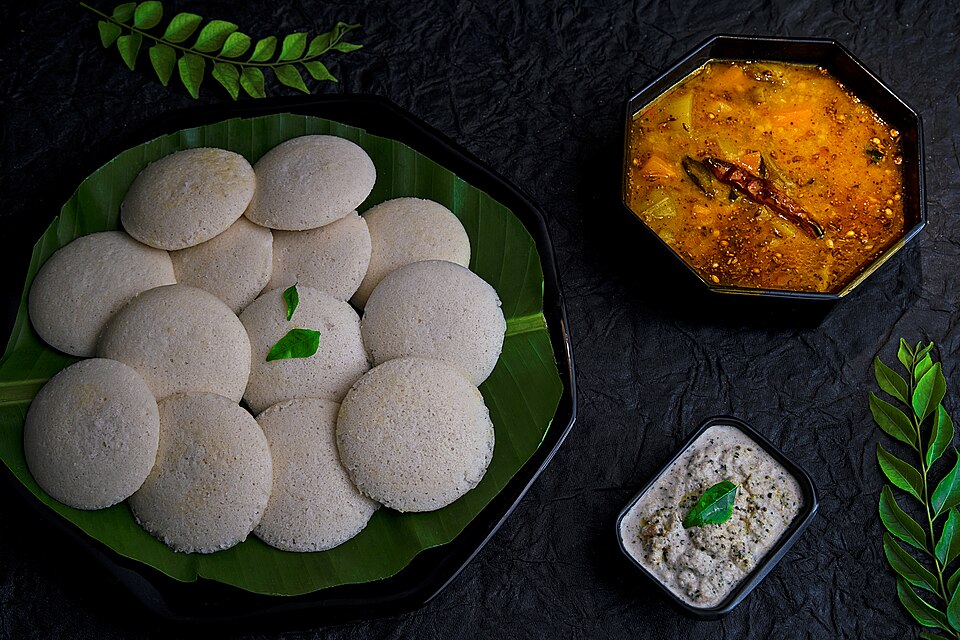
2. Idli with vegetable sambar
Keep the sambar alongside the idli instead of treating it as a small garnish. A dal-based sambar with vegetables brings pulses and produce to a breakfast that might otherwise centre on the idli alone. Coconut chutney can remain a side, rather than replacing the sambar.
The photograph shows a serving arrangement, not a recommended number of idlis for one person.
3. Vegetable poha with peanuts and plain curd
Add peas, carrots or other available vegetables to poha. Peanuts add a nut or oilseed component, while a side of plain curd adds dairy. Use only as much oil and salt as the recipe needs, and avoid making sev or a sweetened drink the main accompaniment.
If you have a peanut allergy, leave the peanuts out. A cooked pulse side is another way to vary the combination.
4. Egg bhurji with whole-wheat roti and fruit
Pair egg bhurji with a whole-wheat roti and a piece of seasonal fruit. Onion, tomato or spinach can go into the bhurji. A tofu scramble is an alternative for people who do not eat eggs; it is a different food, not a promise of identical nutrition.
5. Savoury oats with vegetables and cooked beans
Cook plain oats with vegetables, then add cooked chickpeas or another familiar bean. This gives a grain-and-pulse combination without depending on a flavoured instant packet. Prepare the beans ahead if mornings are rushed.
How to choose between these healthy Indian breakfast ideas
Start with foods you enjoy and can prepare regularly. Rotate ingredients rather than expecting one breakfast to meet every nutritional need. NIN notes that food quantities vary with age, activity and physiological needs. These suggestions therefore do not assign one calorie target or protein number to everyone.
Check ingredients for allergies and dietary restrictions. People following a prescribed diet should adapt meals with their clinician or dietitian. None of these breakfasts is presented as a treatment, a weight-loss guarantee or the single best choice for a medical condition.
Photo: Idli and sambar by Sutapa Pal, Wikimedia Commons, CC BY-SA 4.0. Resized; no other edits.

