

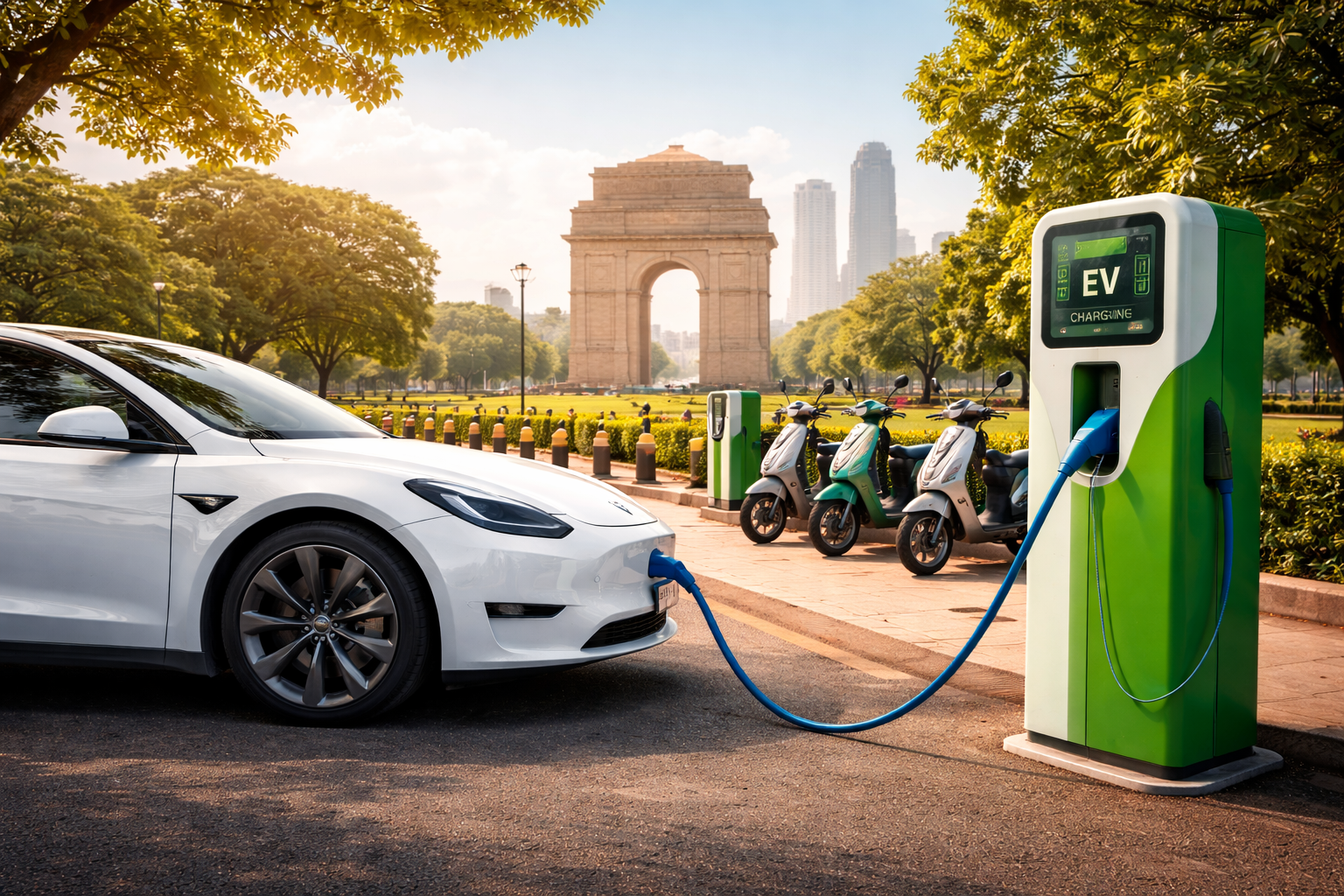
Delhi has unveiled its draft EV Policy 2026–2030, proposing a major push toward electric mobility with one of the most consumer-friendly incentives yet: a 100% waiver on road tax and registration fees for electric cars priced up to ₹30 lakh. The benefit, if approved, will remain valid till March 31, 2030.
The proposed policy is designed to accelerate EV adoption in the capital while addressing one of Delhi’s biggest challenges – air pollution.
For car buyers, the policy could translate into savings worth lakhs depending on the vehicle segment.
What the Tax Waiver Means?
The biggest highlight is the complete waiver for electric cars with an ex-showroom price of ₹30 lakh or below. This means buyers will not have to pay:
- road tax
- registration fees
These charges often significantly increase the on-road price of a vehicle. For mid-range EVs, this could lead to substantial savings and make electric cars more affordable compared to petrol and diesel vehicles.
Cars priced above ₹30 lakh, however, are not expected to receive this benefit.
Partial Relief for Hybrids
The draft also proposes 50% road tax and registration fee relief for strong hybrid vehicles.
This is significant because hybrids are increasingly being considered a practical transition technology for buyers not yet ready to switch fully to EVs.
It gives consumers an intermediate option while still encouraging cleaner mobility.
Petrol Two-wheelers May Face Restrictions
Another major proposal in the draft policy is the phased restriction on internal combustion engine vehicle registrations.
From 2028, new petrol two-wheelers may no longer be allowed for registration in Delhi under the proposed roadmap.
Similarly, from January 2027, only electric three-wheelers are proposed to be permitted for new registrations. This marks one of the most aggressive EV transition proposals among Indian states.
Also read: https://circleofnews.in/cars24-tesla-india-ev-trade-in-programme/
Charging Infrastructure Push
The policy is not only focused on incentives. It also proposes large-scale charging infrastructure expansion. New real estate and urban projects may be required to integrate EV charging facilities as a mandatory component.
This is critical because charging accessibility remains one of the biggest concerns for EV buyers.
The draft policy reportedly aims to ensure charging access within short distances across the city.
Why This Matters for Delhi?
Delhi’s air quality remains a serious public health issue. Vehicular emissions continue to be one of the major contributors to pollution. By incentivising EVs and gradually reducing new ICE registrations, the government aims to:
- improve air quality
- reduce fuel dependence
- lower emissions
- modernise urban transport
What Happens Next?
The policy is currently in draft form and open for public feedback for 30 days. It will become applicable only after formal notification and approval. This means the final version may still see changes based on stakeholder responses.
Conclusion
Delhi’s draft EV Policy 2026–2030 marks one of the most ambitious urban mobility transitions proposed by any Indian state.
The 100% road tax waiver for electric cars under ₹30 lakh, combined with proposed restrictions on new petrol two-wheelers from 2028, signals a clear policy direction toward cleaner and more sustainable transport.
What makes this policy especially significant is that it does not rely only on incentives. It also focuses on long-term ecosystem building through charging infrastructure mandates, hybrid relief, and phased registration reforms.
For consumers, the draft could make EV ownership significantly more affordable. For the auto industry, it sends a strong signal that Delhi is accelerating its shift toward an electric-first future.
If implemented in its current form, the policy could become a blueprint for other Indian cities looking to balance air quality goals with mobility needs. The next few weeks will be crucial as public feedback and stakeholder responses shape the final version.
One thing, however, is already clear — Delhi’s EV journey is moving into a far more decisive phase.

1 Comment
Pingback: Hyundai Joins Hands with TVS Electric