

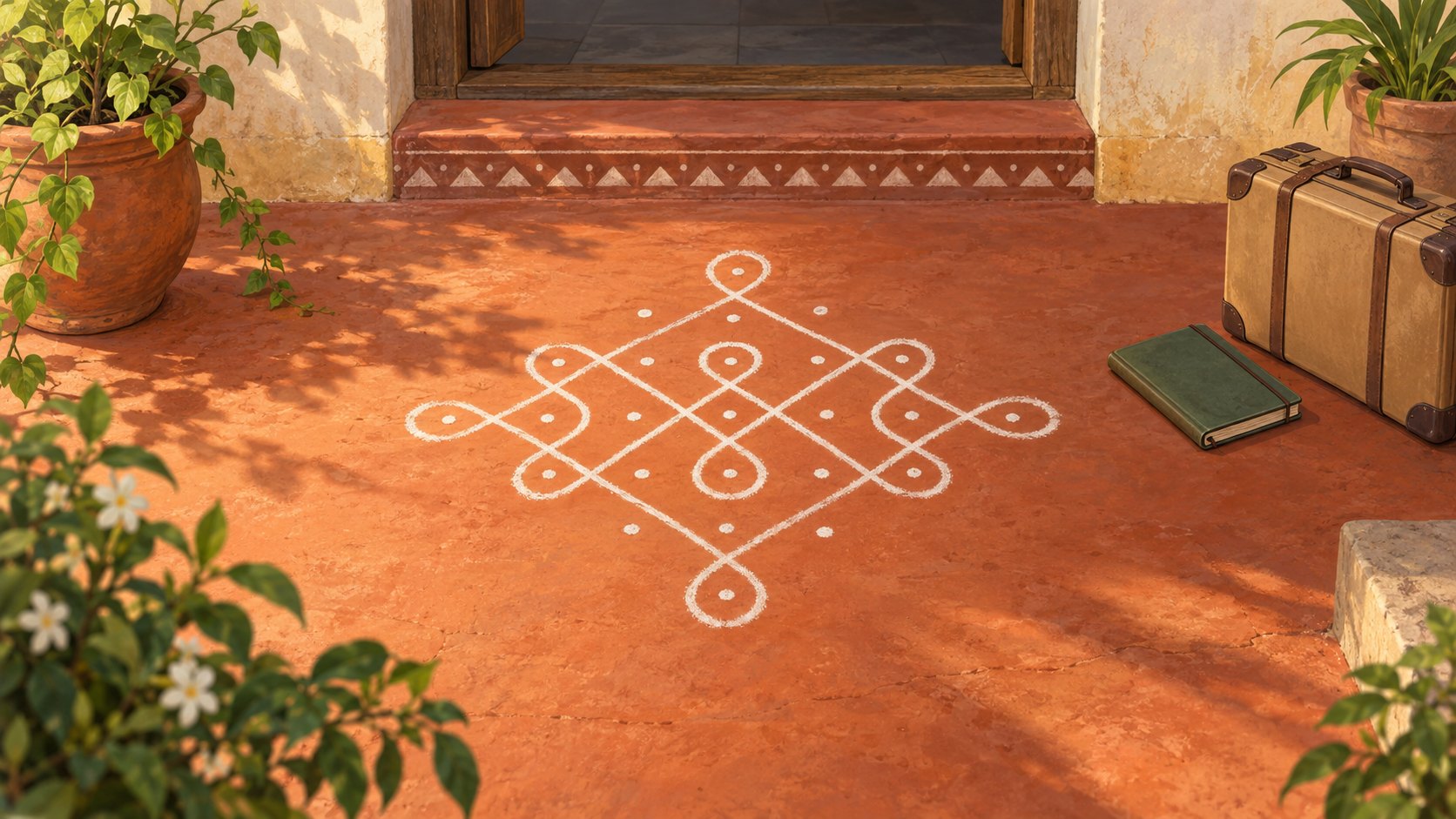
MakeMyTrip’s latest regional campaign uses travel-themed kolams in Tamil Nadu to connect holiday planning with a familiar doorstep tradition. Created with Talented and Kadhai Films, the activity combines neighbourhood artwork, a film and a print invitation for people to make their own designs.
The campaign supports the travel company’s Travel Ka Muhurat Sale. Its most useful marketing distinction is the choice of a locally recognisable format, rather than simply translating a national advertisement into another language.
What does the MakeMyTrip kolam campaign involve?
According to reports published by afaqs on November 27 and ETBrandEquity on November 28, kolam artists created designs based on holiday experiences and destinations across neighbourhoods in Tamil Nadu.
The reported designs include a hammock, surfing and landmarks such as the Taj Mahal, Sydney Opera House and Statue of Liberty. Talented conceptualised the activation and Kadhai Films produced it. A print advertisement extended the idea by inviting readers to create travel-inspired kolams themselves.
Kolams are patterns commonly made using dots and lines at household entrances. In this campaign, the visual form becomes a way of depicting travel aspirations within a setting people already recognise, rather than placing a conventional travel advertisement into that setting.
Why use a regional cultural format?
The creative decision connects three things: a local practice, an everyday moment and the product category. A doorstep design provides the local setting; the start-of-day routine provides the moment; holiday imagery provides the link to travel.
That is an interpretation of the campaign’s design, not evidence that everyone who saw it responded in the same way. Regional marketing needs more than local symbols. The execution still has to respect the practice, make the brand’s role understandable and give the intended audience a reason to pay attention.
In comments carried by the trade publications, MakeMyTrip marketing executive Raj Rishi Singh described the intent as bringing anticipation of a journey into the tradition. The agency team said the idea used a canvas already present in everyday Tamil life. These are statements of creative intent, not independently measured consumer findings.
How do the artwork, film and print work together?
The on-ground work gives the idea a physical form. The film makes that activity available to people who did not encounter it in person. The print invitation adds a participatory element, asking readers to create a design instead of only watching one.
Each element has a different job. A striking installation may generate attention; a film can explain its meaning; participation may indicate interest. None of those automatically establishes that viewers went on to book a holiday.
For a related example of place-led brand storytelling, read our report on Levista’s Coorg-focused campaign and identity refresh. The brands and executions differ, but both make the choice of setting part of the message.
What would show whether the campaign worked?
The reports reviewed describe the execution but do not provide independently verified results for bookings, incremental sales or brand lift. It would therefore be premature to call the activity a commercial success on the basis of its creative idea alone.
A useful evaluation would separate exposure to the campaign, audience understanding, participation and subsequent travel-related action. Booking outcomes would also need to be considered alongside sale pricing, other advertising and seasonal demand. Our guide to measuring brand films and product advertisements explains why those questions should not be collapsed into a view count.
For now, the campaign is a clear example of using a region-specific creative format across physical and media touchpoints. Its broader business impact remains unreported in the sources reviewed.
This report is based on the linked trade-publication coverage and Campaign Brief Asia’s November 27 account; Circle of News did not independently inspect the installations or a primary campaign release. The lead image is a conceptual illustration, not a photograph of the campaign.
