

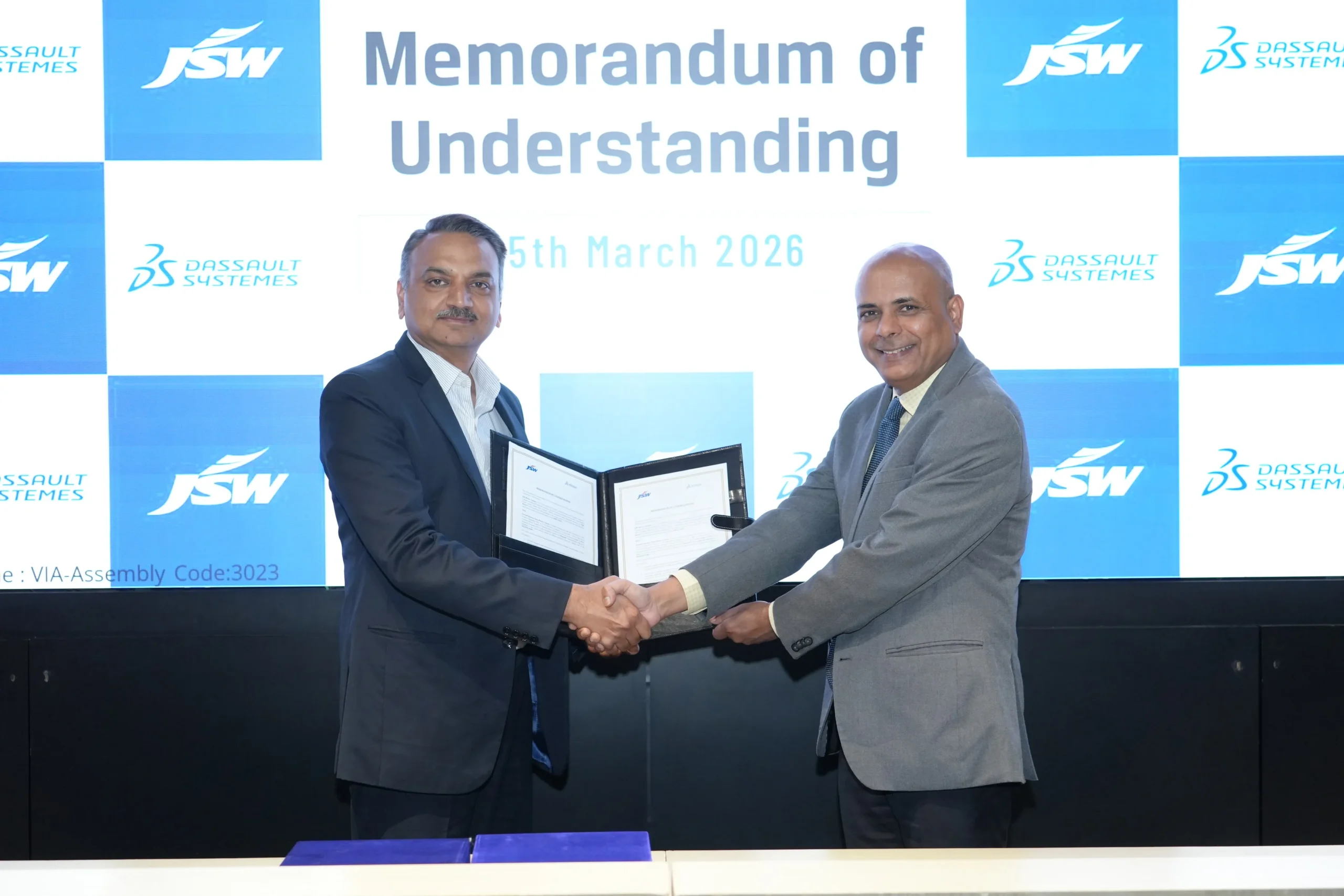
A Strategic Move in India’s EV Race
India’s electric vehicle (EV) ecosystem is heating up – and the latest move by JSW Motors is a clear signal that the competition is entering a new phase.
In a major development, JSW Motors has partnered with Dassault Systèmes to accelerate the development of next-generation electric vehicles (NEVs) in India.
At first glance, this might seem like just another corporate collaboration. But dig deeper, and it becomes clear that this partnership could play a critical role in shaping India’s EV manufacturing capabilities.
So what exactly does this deal involve? And why does it matter so much?
Let’s break it down.
What the JSW Motors–Dassault Systèmes Partnership Is About
The core of this collaboration lies in technology.
JSW Motors will leverage Dassault Systèmes’ 3DEXPERIENCE platform, a powerful digital ecosystem used globally for product design, simulation, and lifecycle management.
What this means in simple terms:
Instead of building and testing vehicles physically at every stage, JSW Motors can now:
- Design vehicles digitally
- Simulate performance in real-world conditions
- Optimize engineering before production
This approach significantly reduces:
- Development time
- Costs
- Errors
In short, it allows JSW Motors to build smarter, faster, and more efficient EVs.
Understanding the 3DEXPERIENCE Platform
The Dassault Systèmes 3DEXPERIENCE platform is not just software – it’s a complete digital environment for vehicle development.
Key capabilities include:
1. Virtual Design & Engineering
Engineers can create detailed 3D models of vehicles and components.
2. Real-Time Simulation
Test how vehicles perform under different conditions—without physical prototypes.
3. Lifecycle Management
Track the entire journey of a vehicle—from concept to production.
4. Collaboration Across Teams
Different departments can work together seamlessly in a shared digital space.
Why this matters for India:
Traditionally, automotive development in India has been:
- Time-consuming
- Cost-intensive
- Dependent on physical testing
With this platform, digital vehicle development in India can move closer to global standards.
JSW Motors’ EV Ambitions: The Bigger Picture
The partnership is part of JSW Motors’ broader strategy to establish itself as a serious player in the EV segment.
Key goals include:
- Developing new energy vehicles (NEVs)
- Building a strong manufacturing ecosystem
- Competing with established EV brands
India’s EV market is expected to grow rapidly, and companies that invest in technology-first approaches are likely to lead.
The JSW Motors EV strategy clearly reflects this mindset.
Why This Partnership Is Important
This collaboration is significant for several reasons:
1. Faster Time-to-Market
In the EV industry, speed is everything.
Using the 3DEXPERIENCE platform for EV development, JSW Motors can:
- Reduce product development cycles
- Launch vehicles faster
- Respond quickly to market demands
2. Cost Efficiency
Building physical prototypes repeatedly is expensive.
Digital simulations help:
- Cut down R&D costs
- Minimize material waste
- Improve overall efficiency
This is crucial for making EVs more affordable.
3. Improved Product Quality
Simulation allows engineers to:
- Identify flaws early
- Optimize designs
- Enhance safety and performance
This leads to better, more reliable vehicles.
4. Global Competitiveness
By adopting advanced tools used by global automakers, JSW Motors can compete on an international level.
This is a big step toward positioning India as a global EV manufacturing hub.
Also read: https://circleofnews.in/electric-vehicles-india-future-mobility/
The Role of Technology in Modern EV Development
The automotive industry is undergoing a massive transformation.
Today, building a car is no longer just about mechanical engineering – it’s about software, data, and digital ecosystems.
Key trends shaping EV development:
1. Digital Twins
Virtual replicas of vehicles used for testing and optimization.
2. AI-Driven Design
Artificial intelligence helps improve efficiency and performance.
3. Connected Systems
Integration of hardware and software for smarter vehicles.
The partnership between JSW Motors and Dassault Systèmes aligns perfectly with these trends.
How This Impacts India’s EV Ecosystem
The implications go beyond just one company.
1. Boost to Domestic Manufacturing
Advanced tools enable Indian companies to:
- Build world-class products
- Reduce dependence on imports
2. Encouraging Innovation
Access to cutting-edge technology fosters:
- Research and development
- New design approaches
3. Strengthening Supply Chains
Digital platforms improve coordination across:
- Suppliers
- Manufacturers
- Distributors
4. Job Creation & Skill Development
As companies adopt advanced technologies, demand for:
- Skilled engineers
- Software experts
- Data analysts
will increase.
Industry Reactions and Outlook
Industry experts see this partnership as a forward-looking move.
By combining:
- JSW Motors’ manufacturing ambitions
- Dassault Systèmes’ technological expertise
the collaboration has the potential to accelerate EV innovation in India.
What This Means for Consumers
For end-users, this could translate into:
- Better-designed EVs
- Improved safety and performance
- More affordable options
- Faster availability of new models
In simple terms, better cars, sooner.
Final Thoughts: A Step Toward a Smarter EV Future
The partnership between JSW Motors and Dassault Systèmes is more than just a business deal—it’s a reflection of how the automotive industry is evolving.
As India moves toward electrification, success will depend on:
- Innovation
- Speed
- Technology adoption
And this collaboration ticks all three boxes.
If executed well, it could not only strengthen JSW Motors’ position but also contribute significantly to India’s journey toward becoming a global EV powerhouse.

4 Comments
Pingback: Top 10 Busiest Airports in India by Passenger Traffic (FY 2024–25)
Pingback: Cashify IPO Plans Explained: Amazon-Backed Startup Eyes ₹1,800 Crore Public Listing - Circle of News
Pingback: Maruti Suzuki Launches QuickStop Service in 8 Cities
Pingback: Cars24 and Tesla India Partner to Accelerate EV Adoption: How the Trade-In Programme Could Change India’s Electric Car Market - Circle of News