

Clothing is often perceived as a practical necessity or a fashion statement. Yet, in the context of Vedic civilisation, garments were much more than fabric – they were an expression of consciousness, deeply intertwined with nature, spirituality, and the self.
Every drape, fold, and texture reflected an intuitive understanding of the body, mind, and environment. In this sense, clothing was not simply worn; it was lived.
The Philosophy of Vedic Clothing
In early Vedic times, attire was fluid, adaptive, and purposefully unstructured. Men and women wore garments that responded to the climate, the movement of the body, and the rituals of daily life. There were no rigid templates or artificial constructs. Clothing functioned as a bridge between consciousness and expression, allowing individuals to inhabit their physical and spiritual selves fully.
This philosophy of clothing emphasized:
- Adaptation over imitation: Garments conformed to the body and environment, not to societal mandates.
- Spiritual alignment: Clothing was chosen to support meditation, ritual, and inner balance.
- Organic identity: Attire served as a reflection of the wearer’s state of mind and connection to life’s rhythms.
Clothing as an Extension of Self
Unlike modern fashion, which often prioritizes appearance and trends, Vedic clothing was an extension of personal and collective consciousness. Colors, textures, and layers were selected to resonate with inner moods, social context, and environmental awareness.
Garments were not a tool for social control but a medium of harmony between the individual and the cosmos.
Tracing the Evolution of Clothing: Saundarya Shukla’s Research
At the forefront of understanding this transformation is Saundarya Shukla, founder of VedSaundarya. With roots in Prayagraj and experience in Mumbai’s dynamic cultural landscape, Shukla navigates the space between inherited tradition and contemporary observation.
Over seven years, she meticulously studied the evolution of Vedic clothing, not as a stylist crafting trends but as a researcher exploring identity through attire. Her work traces a profound shift:
- Early Vedic Period: Clothing was unstructured, spiritual, and organically tied to the wearer’s consciousness.
- Later Periods: Garments became increasingly influenced by external forces, reflecting social hierarchy, modesty norms, and regional invasions.
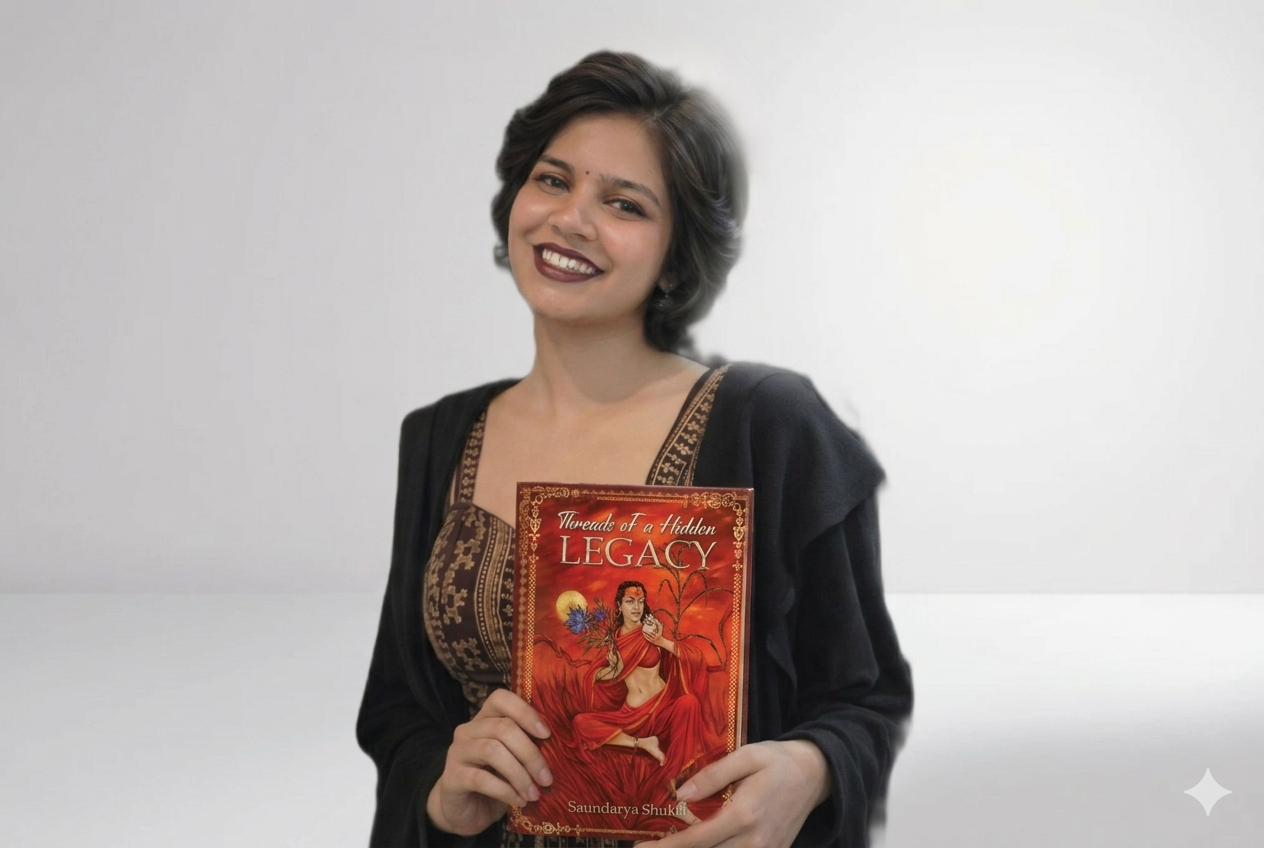
Her findings are captured in the book “Threads of a Hidden Legacy”, which maps the trajectory of clothing from an organic expression of self to a regulated marker of social identity.
From Fluidity to Structure
The research illustrates how waves of invasion and colonial influence altered the perception of clothing. Previously intuitive draping became codified into forms and styles dictated by external standards. Modesty and decorum were redefined. Over time, these standards were internalized, transforming the wearer’s sense of dignity, femininity, and tradition.
This evolution of Vedic clothing highlights a subtle but profound psychological shift:
- Internalisation of norms: Clothing ceased to be a personal spiritual expression and became a tool for social conformity.
- Redefinition of identity: Individuals began to see themselves through the lens of externally imposed ideas of respectability.
- Cultural layering: Each generation absorbed changes that quietly rewrote elements of personal and collective identity.
Threads of a Hidden Legacy: Beyond the Fabric
Shukla’s “Threads of a Hidden Legacy” does not seek to romanticize the past. Instead, it examines how a civilisation expresses itself, adapts, and evolves. The book traces the lineage of clothing as a marker of consciousness, showing how identity and attire interact over centuries.
Through this lens, clothing is more than decorative – it becomes a living archive of cultural memory. Patterns, drapes, and textures tell stories of philosophy, resilience, and transformation. By understanding these threads, we gain insight into how the Vedic civilisation internalized and manifested social change through attire.
Clothing, Consciousness, and Digital Platforms
The narrative extends beyond print. VedSaundarya, Shukla’s platform, brings these insights into the contemporary digital space. Here, fashion is approached not just as apparel but as knowledge, consciousness, and identity. The platform emphasizes:
- Educational engagement: Exploring the philosophy behind garments and draping techniques.
- Cultural preservation: Documenting practices that are often forgotten or simplified in modern fashion.
- Modern interpretation: Guiding contemporary audiences to integrate ancient principles with present-day aesthetics.
VedSaundarya becomes a space where historical understanding and modern identity converge, allowing users to explore Vedic clothing as a lens into consciousness rather than just a fashion choice.
Also read: https://circleofnews.in/gurugram-fashion-meets-fine-spirits-event/
The Psychological Dimension of Clothing
One of the most fascinating aspects of Shukla’s research is the psychological impact of attire. Clothing shapes more than how others perceive us – it shapes how we perceive ourselves.
In early Vedic times, the psychological effect of clothing was inherently positive, aligned with spiritual practice and self-awareness. In contrast, later periods saw clothing serving as a means of control, subtly influencing social behaviour and internal self-concept.
- Femininity and dignity: Altered by imposed norms and modesty standards.
- Self-expression: Gradually replaced by adherence to hierarchy and social expectations.
- Identity perception: Clothing became a mirror of cultural pressure rather than personal consciousness.
Lessons for Contemporary Fashion
Shukla’s work offers profound lessons for today’s designers, consumers, and scholars:
- Clothing as consciousness: Fashion can be a reflection of values, awareness, and inner state rather than just external appeal.
- Integration of tradition: Ancient practices can be interpreted in modern contexts without losing philosophical depth.
- Sustainability and mindfulness: The Vedic approach prioritizes harmony with environment and self, inspiring sustainable fashion choices.
- Identity beyond trends: Understanding the evolution of clothing helps consumers and creators reclaim agency in self-expression.
Conclusion: Rediscovering Identity Through Attire
The journey of Vedic clothing from fluidity to regulation mirrors the evolution of society, consciousness, and identity in India. Through the work of Saundarya Shukla and platforms like VedSaundarya, modern audiences are invited to reconsider what they wear not just as clothing but as living symbols of culture, consciousness, and self.
Threads of a Hidden Legacy teaches us that clothing is never trivial; it carries memory, philosophy, and the subtle imprint of history. By engaging with this legacy, contemporary fashion can reconnect with meaningful self-expression, mindfulness, and cultural continuity.
In an age where fashion often prioritizes speed and trend, understanding the psychology, spirituality, and identity embedded in attire is more relevant than ever. The story of Vedic clothing is a call to look beyond the fabric, to see clothing as a bridge between the self, society, and the cosmos.

1 Comment
wonder bookfull