

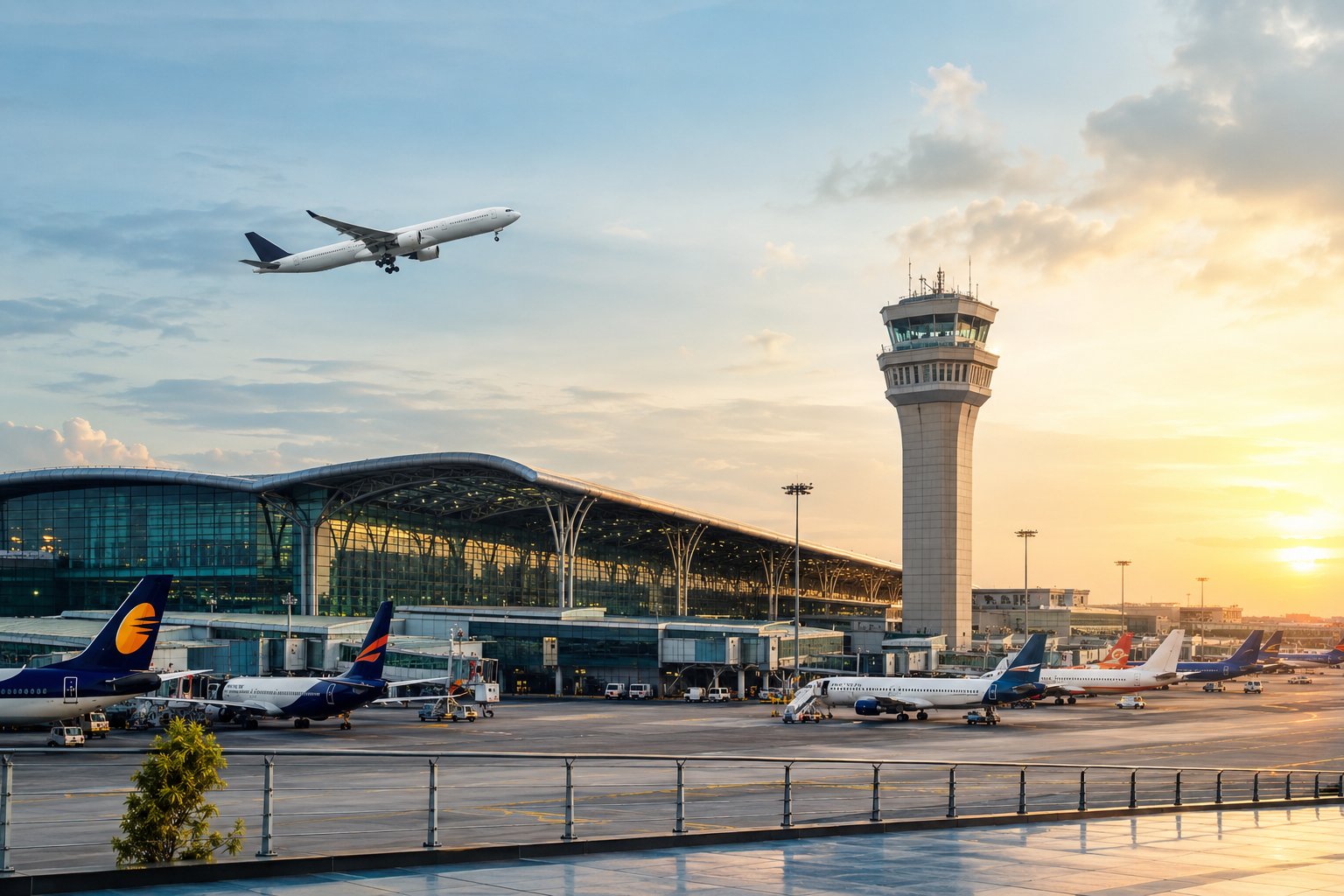
India’s aviation industry is growing at an incredible pace.
Over the last decade, air travel in the country has transformed from being a luxury into something increasingly accessible to millions of people. Business travel, tourism, international connectivity, regional routes, and low-cost airlines have all contributed to this rapid growth.
At the center of this transformation are India’s busiest airports — massive transportation hubs that connect cities, countries, industries, and people every single day.
These airports are no longer just transit points. They are economic engines that influence tourism, trade, infrastructure, and global connectivity.
Here’s a detailed look at the top 10 busiest airports in India, their importance, passenger traffic, and what makes each of them unique.
1. Indira Gandhi International Airport – Delhi
Delhi’s Indira Gandhi International Airport (IGI) consistently ranks as the busiest airport in India in terms of passenger traffic.
Operated by Delhi International Airport Limited, the airport serves as a major domestic and international hub.
What makes Delhi Airport particularly important is its strategic location. Being the capital city, it handles:
- Government travel
- International diplomacy
- Corporate traffic
- Tourism
- Long-haul global routes
Terminal 3, one of the largest airport terminals in the world, significantly boosted the airport’s capacity and global standing.
Delhi Airport also acts as a major transit point connecting India to:
- North America
- Europe
- Middle East
- Southeast Asia
Its scale, infrastructure, and global connectivity make it one of Asia’s most important aviation hubs.
2. Chhatrapati Shivaji Maharaj International Airport – Mumbai
Mumbai’s airport remains one of the busiest and most operationally intense airports in India. Unlike Delhi, Mumbai faces severe space constraints, making its efficiency even more impressive. As India’s financial capital, Mumbai generates enormous passenger traffic from:
- Business travelers
- Entertainment industry professionals
- International commerce
- Tourism
The airport is famous for Terminal 2, which is often praised for its architecture and passenger experience.
Despite handling extremely high aircraft movement on limited runway space, Mumbai Airport continues to remain one of India’s most critical aviation gateways.
3. Kempegowda International Airport – Bengaluru
Bengaluru’s airport has emerged as one of the fastest-growing aviation hubs in the country.
Driven largely by the city’s booming technology ecosystem, the airport handles massive traffic from:
- IT professionals
- Global corporate travelers
- Startups
- International business routes
The airport’s modern infrastructure and expansion projects have helped it become one of the most efficient airports in India. Its new Terminal 2 gained international attention for its eco-conscious design and “garden terminal” concept.
As Bengaluru continues growing as India’s technology capital, its airport is expected to become even more globally significant.
4. Rajiv Gandhi International Airport – Hyderabad
Hyderabad’s airport is widely regarded as one of India’s best-managed airports. Known for operational efficiency and smooth passenger experience, the airport has become a major hub for:
- IT travel
- Pharmaceutical industries
- International connectivity
- Cargo operations
The airport also plays a crucial role in connecting southern India with international destinations.
Its consistent rankings for service quality and passenger satisfaction have strengthened Hyderabad’s reputation within India’s aviation sector.
5. Chennai International Airport – Chennai
Chennai Airport has historically been one of India’s most important gateways to South India.
The airport handles strong domestic and international traffic, particularly to:
- Southeast Asia
- Middle East
- Sri Lanka
A large portion of its traffic comes from:
- Business travelers
- Manufacturing industries
- Tamil diaspora movement
- Medical tourism
Recent modernization and terminal upgrades have improved passenger experience significantly.
6. Netaji Subhas Chandra Bose International Airport – Kolkata
Kolkata Airport serves as the primary aviation gateway for eastern and northeastern India. The airport plays an important strategic role because it connects India with neighboring countries such as:
- Bangladesh
- Nepal
- Bhutan
- Southeast Asian regions
Its integrated terminal modernization project significantly improved infrastructure and passenger handling capacity.
Kolkata’s airport remains critical for regional connectivity and growing tourism traffic.
7. Pune Airport – Pune
Pune Airport has grown rapidly due to the city’s expanding:
- IT sector
- Educational institutions
- Automotive industry
- Startup ecosystem
Although the airport currently operates with certain infrastructure limitations, passenger traffic continues increasing steadily.
The demand for expanded aviation infrastructure in Pune reflects how quickly India’s tier-2 cities are growing economically.
8. Sardar Vallabhbhai Patel International Airport – Ahmedabad
Ahmedabad Airport has become increasingly important as Gujarat’s economic influence continues to grow.
The airport supports:
- Business travel
- Trade movement
- International diaspora traffic
- Industrial connectivity
Its importance has expanded alongside Gujarat’s manufacturing and commercial growth. The airport also handles significant passenger movement to Middle Eastern destinations.
9. Cochin International Airport – Kochi
Cochin International Airport is globally recognized for a unique reason: it became the world’s first fully solar-powered airport.
Beyond sustainability, the airport is one of India’s busiest international aviation hubs because of Kerala’s large expatriate population in the Gulf region.
The airport handles substantial traffic connected to:
- International workers
- Tourism
- Trade
- Religious travel
Its sustainability model has earned worldwide attention.
10. Goa International Airport – Goa
Goa’s airport remains one of India’s busiest tourism-focused airports. The state attracts millions of domestic and international tourists every year, driving heavy seasonal passenger traffic.
The airport serves as a major gateway for:
- Beach tourism
- International charter travel
- Hospitality industries
- Leisure travel
With tourism continuing to expand, Goa’s aviation infrastructure is also evolving rapidly.
India’s Aviation Industry Is Growing Rapidly
The rise of these airports reflects a much larger transformation happening across India.
Several factors are fueling aviation growth:
- Expanding middle class
- Affordable air travel
- Regional connectivity schemes
- Tourism growth
- Business mobility
- International trade
India is expected to become one of the world’s largest aviation markets in the coming years.
This growth is also driving:
- Airport expansion
- Infrastructure modernization
- New terminal development
- Increased airline competition
Airports Are Becoming Economic Ecosystems
Modern airports are no longer just about flights.
Today, they function as:
- Commercial centers
- Logistics hubs
- Retail destinations
- Employment generators
- Infrastructure ecosystems
Large airports influence:
- Real estate growth
- Tourism economies
- Business investment
- Urban development
Cities with strong airport infrastructure often become more globally competitive.
The Future of Indian Airports
India’s aviation future looks extremely ambitious.
Upcoming developments may include:
- Smart airport technologies
- AI-driven operations
- Sustainable aviation systems
- Expanded regional connectivity
- New greenfield airports
The country is investing heavily in aviation infrastructure because connectivity increasingly drives economic growth.
And as passenger traffic continues rising, India’s busiest airports will become even more important to the nation’s economic future.
