

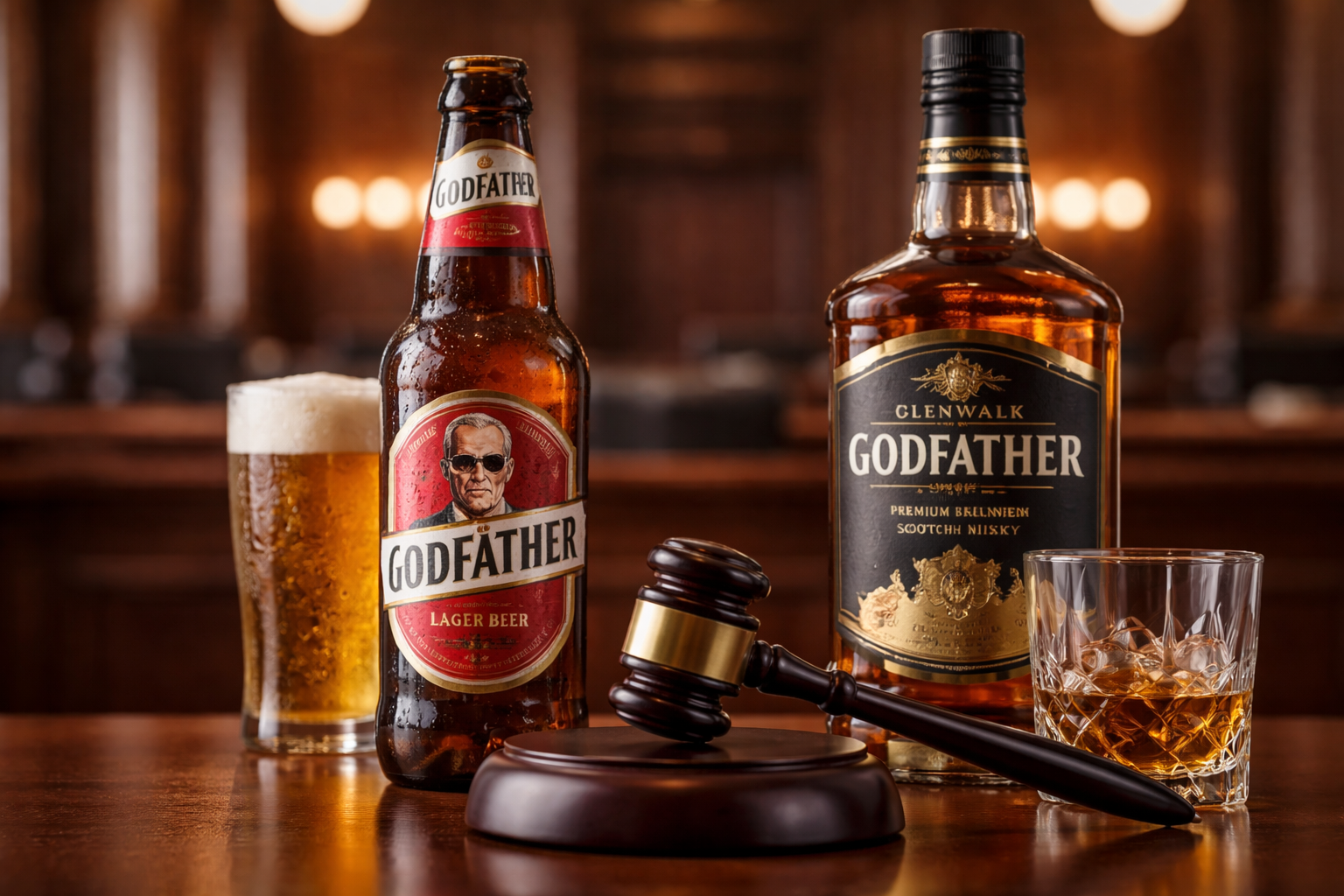
New Delhi: A fresh legal clash in India’s alco-beverage space has brought the spotlight back on trademark boundaries, after the Delhi High Court stepped in to pause the rollout of a new whisky brand carrying the name “Godfather.”
The dispute isn’t just about a product launch—it’s about who owns consumer memory in a crowded market where brand recall can outweigh everything else.
When a Name Carries Weight
The controversy began when Cartel Bros, a venture associated with actor Sanjay Dutt, prepared to introduce a premium whisky under the label “Glenwalk Godfather.” Positioned as an aspirational offering, the brand aimed to tap into India’s growing premium spirits segment.
However, Devans Modern Breweries—best known for its long-running “Godfather” beer—challenged the move, arguing that the name is already deeply embedded in the minds of Indian consumers.
Their core argument: even if the product category shifts from beer to whisky, the emotional and commercial ownership of the name remains unchanged.
Court Steps In Early
Recognising the potential for confusion, the court issued an interim stay on the whisky’s launch. The order effectively blocks the company from pushing the product into the market or amplifying it through advertising channels for now.
This early intervention signals a clear judicial stance—brand identity is not just about product type, but about perception.
Beyond Beer vs Whisky: A Bigger Brand Question
At the heart of the matter lies a critical question for modern brands:
Can a powerful name exist across categories without causing overlap—or does it risk diluting its original identity?
India’s liquor industry is increasingly witnessing:
- Premiumisation and new brand entries
- Celebrity-backed ventures entering legacy spaces
- Aggressive marketing strategies built on recall and storytelling
In such an environment, even a single word like “Godfather” can become contested territory.
Why This Case Matters
This isn’t just a routine trademark dispute—it reflects a larger shift in how courts are interpreting intellectual property in India.
Key takeaways from the case:
- Brand recall is being treated as a protectable asset, not just a registered label
- Category differences may not be enough to avoid infringement claims
- First movers with strong market presence hold a strategic advantage
For new entrants, especially those banking on bold or familiar naming, this case is a reminder: creativity must be balanced with caution.
What Lies Ahead
For now, the whisky launch remains on hold, with the next hearing expected to determine whether the brand can coexist or must be reimagined entirely.
The outcome could influence how companies approach:
- Brand extensions
- Naming strategies
- Market positioning in competitive sectors
As India’s alco-bev market continues to evolve, this case could quietly shape the rules of branding for years to come.
