

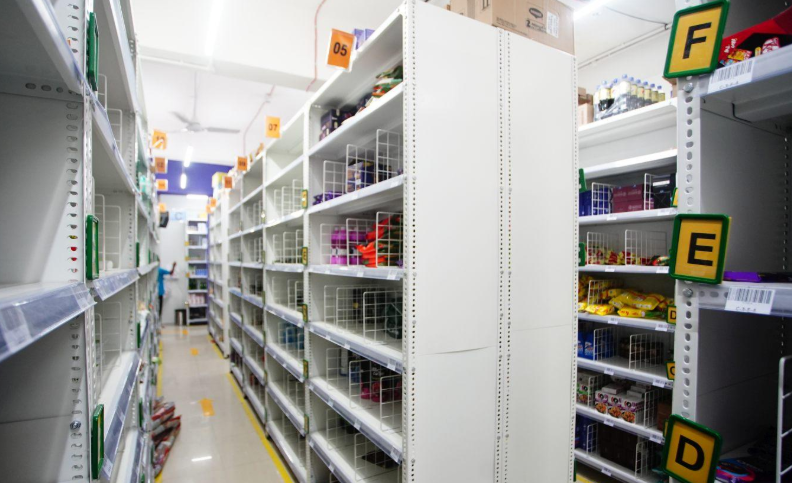
India’s quick commerce revolution, led by platforms like Blinkit, Swiggy Instamart and Zepto, is being powered by a relatively new but highly efficient concept known as dark stores. While consumers enjoy the convenience of groceries delivered in minutes, the real engine behind this speed lies in these hyperlocal fulfilment hubs.
What are Dark Stores?
Dark stores are small warehouses or fulfilment centres that are not open to walk-in customers. Unlike traditional retail stores, they exist purely to process online orders. Typically located within residential neighbourhoods or dense urban clusters, these stores are designed to enable ultra-fast delivery, often within 10 to 20 minutes.
They stock a curated selection of high-demand products such as groceries, essentials, personal care items and snacks. Instead of shoppers browsing aisles, trained staff or pickers quickly locate items based on incoming app orders, pack them and hand them over to delivery partners.
How Exactly Do Dark Stores Work?

The efficiency of dark stores lies in their streamlined operations. Each store typically serves a fixed radius of 2 to 4 kilometres, ensuring minimal delivery time. Once a customer places an order on an app, it is routed to the nearest dark store.
Inside, pickers use handheld devices to identify product locations, complete the order in minutes and pass it on for dispatch. Delivery riders stationed nearby then ensure rapid last-mile fulfilment. The entire process is optimised for speed, accuracy and high order volumes.
Why Companies are Betting Big on Dark Stores?
The rise of quick commerce has triggered aggressive expansion of dark store networks across India. Companies are investing heavily to reduce delivery times and improve service reliability.
A larger network means closer proximity to customers, which translates into faster deliveries and lower logistics costs per order. This has led to intense competition, with players racing to increase their store count and strengthen supply chains.
However, the model is capital-intensive. Setting up and operating multiple dark stores requires significant investment in real estate, inventory, technology and manpower. This is one of the reasons why many quick commerce companies continue to report losses despite strong revenue growth.
Also Read: Zepto Secures SEBI Nod for $1.3 Billion IPO
The Road Ahead
Despite their advantages, dark stores come with challenges. Managing inventory efficiently, reducing wastage and ensuring consistent demand are critical to profitability. Regulatory scrutiny around zoning and urban infrastructure is also emerging as a concern in some cities.
Going forward, innovation in automation, data-driven inventory planning and better unit economics will be key to sustaining the model. As consumer demand for instant delivery continues to grow, dark stores are expected to remain at the heart of India’s evolving retail ecosystem.
In essence, while customers see a simple tap and delivery experience, dark stores represent a complex, high-speed logistics network quietly transforming how India shops.

1 Comment
Pingback: Top 10 IPO to Watch in India in 2026