

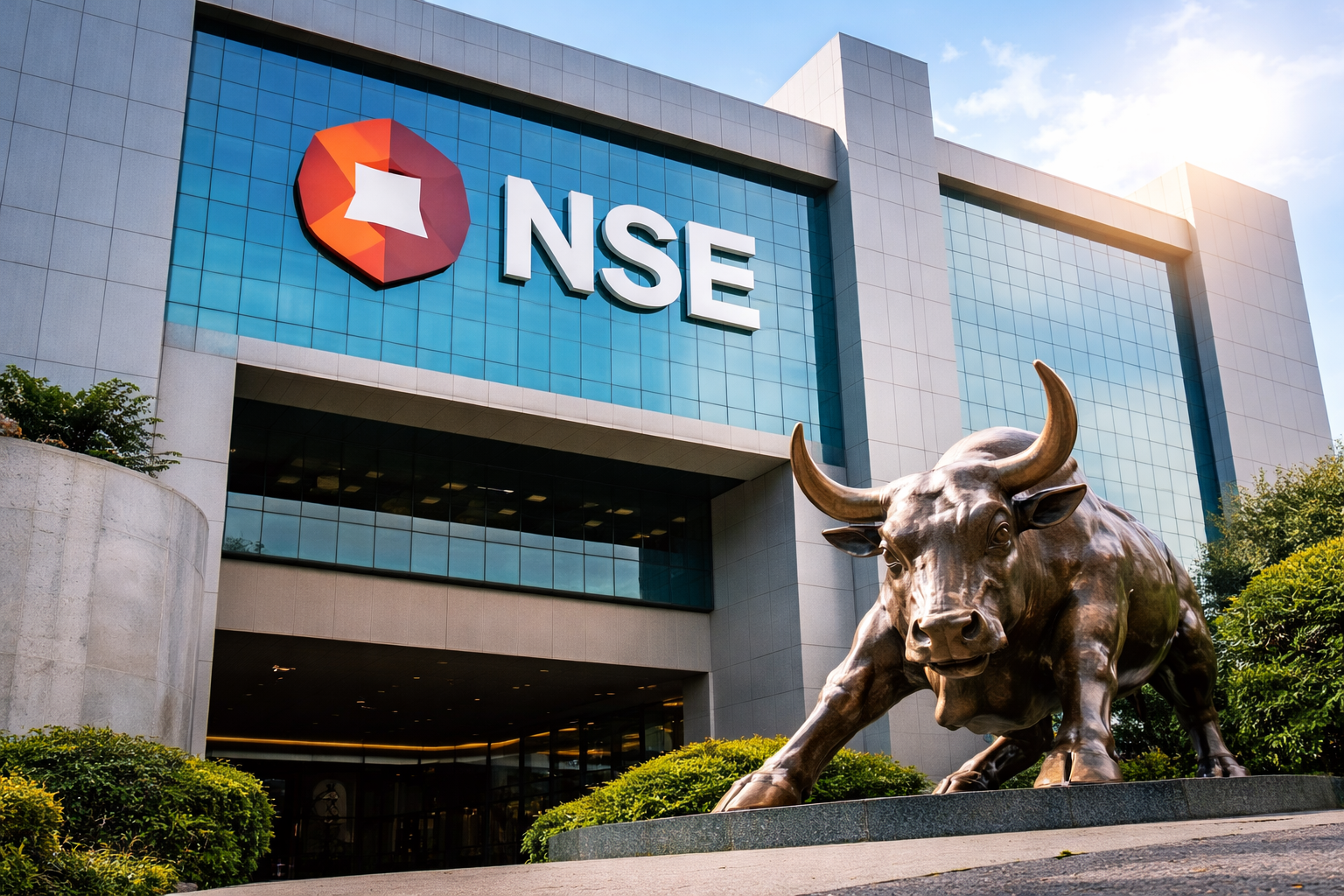
India’s long-awaited National Stock Exchange (NSE) IPO appears to be moving into its final preparation phase, bringing one of the most anticipated public listings in the country’s market history closer to reality.
After years of delays, legal hurdles, and regulatory scrutiny, the exchange has now formally begun preparations for its proposed public issue, with reports suggesting that the Draft Red Herring Prospectus (DRHP) could be filed by late May or early June 2026.
For market participants, this is far more than another IPO. This is the potential listing of India’s largest stock exchange and one of the country’s most valuable unlisted financial institutions.
The proposed issue size is being estimated at around ₹23,000 crore.
Why the NSE IPO Matters So Much?
The NSE is not just another company entering the public market. It is India’s dominant stock exchange and the backbone of the country’s equity derivatives ecosystem. From retail investors trading stocks to institutions hedging billions through futures and options, the exchange sits at the center of India’s financial infrastructure.
Its listing carries significance for:
- capital markets
- financial services
- institutional investors
- retail shareholders
- market governance
The IPO is expected to attract strong interest because the brand itself is deeply embedded in India’s investing landscape.
National Stock Exchange is widely regarded as one of the most important market institutions in the country.
The DRHP Process Has Officially Begun
According to recent reports, the exchange has already held its first major joint meeting with the appointed bankers. The purpose of this meeting was to begin drafting the DRHP and establish the timeline for the public issue.
This is a major milestone. The DRHP is the formal document that contains:
- business details
- risk factors
- financial statements
- shareholding information
- offer structure
- litigation disclosures
For investors, this document becomes the primary source of due diligence. The fact that drafting work has now started indicates that execution is actively underway.
Why 20 Merchant Bankers Were Appointed?
One of the most striking developments in this IPO process is the appointment of 20 merchant bankers. This is believed to be the highest number ever appointed for an Indian public issue.
This highlights the scale and complexity of the issue. The large syndicate reflects:
- massive deal size
- large shareholder base
- institutional distribution needs
- legal and compliance complexity
Because NSE has a wide set of institutional and retail shareholders, coordinating the offer structure requires extensive advisory support.
Estimated IPO size: around ₹23,000 crore
Reports indicate that the issue could be valued around ₹23,000 crore, although final pricing and stake sale details will depend on market conditions and offer structure. This would place it among India’s largest ever listings.
For context, mega IPOs at this scale typically attract:
- sovereign funds
- global pension funds
- domestic mutual funds
- retail investors
- HNI participation
The issue is expected to be primarily an Offer For Sale (OFS). That means proceeds are likely to go to existing shareholders rather than the exchange itself.
Why the IPO Was Delayed for Years
The NSE IPO story has been long and complicated. The exchange had first explored listing plans nearly a decade ago.
However, the process was delayed due to regulatory and legal issues, particularly around the co-location controversy. This involved concerns regarding unequal access to trading infrastructure, which led to scrutiny from Securities and Exchange Board of India (SEBI).
Earlier this year, NSE reportedly received key regulatory clearance that allowed it to restart the listing process. This regulatory approval was the biggest hurdle. Now that it has been crossed, the IPO is back on track.
What This Means for Retail Investors?
Retail investors are watching this story closely for one simple reason: This is a chance to own a stake in the country’s most important exchange business. Historically, exchange businesses are considered attractive because they benefit from:
- trading activity
- market volatility
- listing fees
- clearing and settlement income
- data services
In periods of high market participation, exchanges can generate strong operating leverage. That makes the listing especially attractive.
Why Timing Matters in 2026?
The timing of the NSE IPO is interesting. India’s primary market has seen renewed activity in 2026, with multiple large issuers exploring listings.
The exchange may be aiming to capitalize on:
- improving market sentiment
- strong retail participation
- rising SIP flows
- global investor interest in India
A successful listing could also boost broader confidence in India’s IPO ecosystem.
Also read: https://circleofnews.in/indiaai-mission-explained-2026/
Valuation Expectations and Market Buzz
While the final valuation is yet to be confirmed, market participants are already speculating on where the exchange could be priced. Given its scale and profitability profile, investors will likely compare it with other listed global exchange businesses.
Key valuation metrics may include:
- earnings multiples
- transaction growth
- derivatives market share
- revenue diversification
- return on equity
The DRHP will provide more clarity.
What Happens Next?
The likely next milestones include:
1. DRHP filing
Expected by late May or early June 2026
2. SEBI observations
The regulator may issue comments and clarifications
3. RHP filing
Final offer document before issue launch
4. Price band announcement
This will be closely watched by investors
5. Subscription window
Retail and institutional bidding
6. Listing on exchanges
Likely one of the most tracked listings of the year
Final Thoughts
The NSE IPO is shaping up to be far more than just another large public issue – it represents a landmark moment for India’s capital markets.
As the country’s largest stock exchange moves closer to filing its DRHP, the proposed ₹23,000 crore listing is expected to draw significant interest from retail investors, institutions, and global funds alike. More importantly, it signals how India’s financial ecosystem has matured into one of the world’s most closely watched investment destinations.
After years of regulatory delays and market speculation, the exchange’s IPO journey now appears to be entering its most decisive phase. For investors, this could be a rare opportunity to participate in the listing of a market institution that sits at the heart of India’s trading and investment landscape.
The next few weeks – especially the DRHP filing and SEBI’s response – will be crucial in determining the final timeline.
If executed successfully, the NSE IPO may not only become one of India’s biggest listings, but also one of its most symbolic.
In many ways, this issue could mark the beginning of a new chapter for India’s public markets.
FAQs
1. When will the NSE IPO DRHP be filed?
Current reports suggest that the DRHP may be filed by late May or early June 2026, subject to completion of offer documentation.
2. What is the expected size of the NSE IPO?
The issue is estimated to be around ₹23,000 crore, making it one of India’s largest IPOs.
3. Will the IPO raise money for NSE?
The IPO is expected to be largely an Offer For Sale (OFS), meaning proceeds may go to existing shareholders rather than the exchange itself.
4. Why was NSE IPO delayed?
The listing was delayed for several years due to regulatory issues, including matters related to the co-location case and pending approvals from SEBI.
5. Why is NSE IPO important?
Because it involves India’s largest stock exchange, the IPO is significant for capital markets, retail investors, and global institutions looking at India’s financial growth story.

2 Comments
Pingback: Avaada Electro: ₹10,000 Crore Solar Manufacturing Gets SEBI Nod
Pingback: NSE Gets SEBI Nod to Invest in National Coal Exchange