

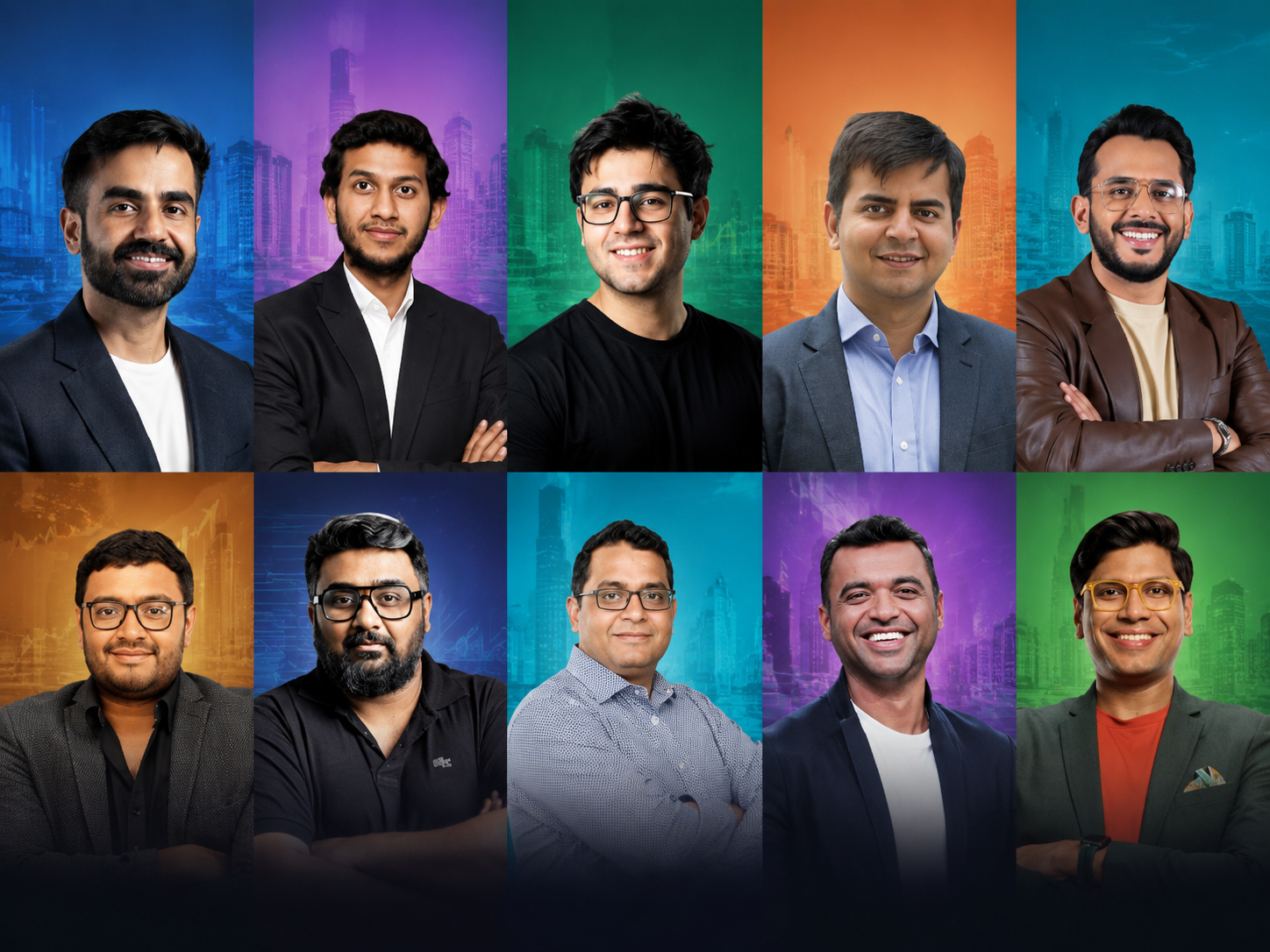
India’s startup ecosystem has entered a completely new era in 2026. The conversation is no longer only about unicorn valuations, billion-dollar funding rounds, or IPO hype.
Today, one of the biggest discussions among entrepreneurs, investors, and business analysts is this:
How much of their companies do India’s top founders still own?
As startups scale aggressively and raise billions from global investors, founder ownership becomes a direct reflection of:
- control,
- long-term wealth creation,
- investor dependence,
- and strategic power.
A viral graphic circulating online showcasing India’s top founders and their ownership stakes has sparked massive curiosity across social media and startup circles. While some figures are estimated and not officially confirmed due to private company structures, the larger story reveals a powerful truth about modern entrepreneurship in India.
From bootstrapped giants like Zerodha to hyper-funded startups like Zepto and Swiggy, India’s founders are taking very different paths to build the next generation of global companies.
The New Startup Question: Growth or Ownership?
Over the last decade, Indian startups focused heavily on growth at all costs. Companies raised massive funding rounds to dominate markets quickly.
But in 2026, the ecosystem is becoming more mature.
Now people want to know:
- Who actually controls these companies?
- How much equity do founders still hold?
- Did founders sacrifice ownership to scale faster?
- Which startup models are creating the most long-term founder wealth?
These questions are now becoming just as important as valuation itself.
Nikhil Kamath & The Bootstrapped Billion-Dollar Dream
Among India’s most respected entrepreneurs, Nikhil Kamath stands out because of one major reason — Zerodha largely avoided external venture capital.
Zerodha became one of India’s biggest fintech success stories while remaining profitable and founder-controlled.
Reports and industry estimates suggest the Kamath brothers continue to hold dominant ownership stakes in the company, making Zerodha one of India’s strongest examples of wealth creation through bootstrapping rather than dilution.
In a startup ecosystem obsessed with fundraising, Zerodha proved something different:
you don’t always need investors to build a billion-dollar company.
That model is now inspiring a new generation of Indian entrepreneurs.
Why Zerodha’s story matters:
- Founder-led growth
- Profit-first strategy
- High ownership retention
- Minimal investor pressure
- Sustainable scaling
Bhavish Aggarwal & India’s EV Ambition
Few founders represent India’s aggressive startup ambition better than Bhavish Aggarwal.
From ride-hailing to electric vehicles, AI, and manufacturing, Ola has transformed into one of India’s most watched tech brands.
Industry reports suggest Bhavish Aggarwal continues to maintain a strong ownership position despite multiple rounds of funding and expansion.
His journey reflects a founder who chose scale aggressively while still retaining meaningful control.
As India pushes toward EV adoption and local manufacturing, Ola’s future will remain closely tied to Bhavish’s long-term vision.
Key business themes:
- EV ecosystem growth
- AI-led mobility
- Manufacturing expansion
- Startup nationalism
- Deep-tech innovation
Aadit Palicha & The Cost of Hyper Growth
India’s quick-commerce war changed the startup funding game completely.
Zepto became one of the fastest-growing startups in the country, attracting huge global investor attention.
But rapid growth comes with a tradeoff: dilution.
Industry estimates suggest Aadit Palicha’s ownership stake may now be relatively small compared to earlier years due to aggressive fundraising rounds.
And this perfectly captures the modern venture-capital model:
founders often give up larger equity portions in exchange for rapid scaling and market domination.
Still, even a smaller percentage in a multi-billion-dollar company can create enormous wealth.
What Zepto represents:
- Speed-driven startup culture
- VC-backed expansion
- Quick-commerce wars
- High-burn growth strategy
- Investor-led scaling
Kunal Shah & Premium Fintech Branding
CRED founder Kunal Shah remains one of India’s most influential startup minds.
Unlike many traditional fintech companies, CRED focused heavily on brand perception, premium audiences, and psychological consumer behavior.
Even though the company raised substantial capital over time, Kunal Shah’s strategic influence remains central to the business.
CRED also represents another major trend in India’s startup ecosystem:
building lifestyle-led technology brands instead of only utility products.
Why CRED became unique:
- Premium positioning
- High-income customer targeting
- Brand-driven fintech
- Strong investor confidence
- Community-style loyalty
Aman Gupta & India’s Consumer Brand Revolution
Aman Gupta transformed boAt from a startup into one of India’s biggest youth-focused lifestyle brands.
Unlike traditional electronics companies, boAt mastered:
- influencer marketing,
- social media branding,
- celebrity partnerships,
- and digital-first consumer behavior.
His rise through Shark Tank India further amplified the company’s visibility and public trust.
boAt’s success reflects how modern Indian startups are increasingly becoming brand-first businesses.
boAt’s growth formula:
- Youth-focused branding
- Affordable premium products
- Social media dominance
- Influencer-led marketing
- Strong D2C strategy
Read more – https://circleofnews.in/dunzo-co-founder-kabeer-biswas-raises-102-cr-for-new-ai-startup/
Vijay Shekhar Sharma & India’s Fintech Transformation
Despite market volatility and regulatory pressure, Vijay Shekhar Sharma remains one of India’s most recognized startup founders.
Paytm played a massive role in India’s digital payments revolution.
From wallets and QR codes to UPI adoption and financial services, Paytm helped transform consumer payment behavior across the country.
Over time, however, multiple funding rounds and IPO dilution reduced founder ownership significantly — something common in large public technology companies.
Still, Vijay Shekhar Sharma’s entrepreneurial influence remains enormous.
Deepinder Goyal & The Food-Tech Evolution
The Indian food delivery ecosystem completely changed consumer habits over the last decade.
Deepinder Goyal helped turn online food delivery from a luxury into an everyday urban lifestyle behavior.
Even though founder ownership has diluted over years of fundraising and public market expansion, his role in shaping India’s hyperlocal commerce ecosystem remains historic.
Today, food-tech companies are no longer just delivery apps. They are:
- logistics companies,
- data companies,
- advertising platforms,
- and quick-commerce ecosystems.
The Real Meaning Behind Founder Ownership
The viral discussion around founder stakes reveals something deeper about India’s startup future.
High Founder Ownership Usually Means:
- Bootstrapped growth
- Slower but sustainable scaling
- Long-term strategic control
- Lower investor dependence
Lower Founder Ownership Usually Means:
- Aggressive expansion
- Heavy fundraising
- Hyper-competitive markets
- Faster scaling pressure
Neither model is necessarily wrong.
Some founders choose profitability and control.
Others choose speed, valuation, and market dominance.
Both paths are shaping India’s startup economy.
India’s Startup Ecosystem Is Growing Up
In 2026, Indian startups are no longer trying to simply copy Silicon Valley.
Instead, they are creating uniquely Indian business models across:
- fintech,
- electric vehicles,
- AI,
- quick commerce,
- D2C brands,
- SaaS,
- logistics,
- and consumer technology.
The founders leading these companies are becoming some of the most influential business personalities in Asia.
And as IPOs, acquisitions, and global expansion continue, founder ownership will become one of the most closely watched metrics in India’s entrepreneurial landscape.
Final Thoughts
India’s startup founders are building more than companies — they are shaping the country’s economic future.
Whether it’s Zerodha’s bootstrapped discipline, Ola’s EV ambition, Zepto’s rapid scaling, or Paytm’s fintech revolution, every ownership number tells a bigger story about risk, ambition, dilution, and legacy.
In 2026, the biggest startup question is no longer just:
“How much is the company worth?”
It is:
“How much of it does the founder still own?”
