

The New Reality of Search: SEO Alone Is No Longer Enough
For more than two decades, businesses, publishers, and marketers have optimized websites for search engines. Ranking on the first page of Google was the ultimate goal. Higher rankings meant more traffic, more visibility, and more revenue.
But in 2026, the rules of online discovery are changing rapidly.
Millions of users are now searching through AI-powered platforms such as ChatGPT, Gemini, Claude, Perplexity, and AI-generated search experiences integrated into traditional search engines. Instead of clicking through multiple websites, users increasingly expect direct answers.
This shift has given rise to a new discipline: Generative Engine Optimization (GEO).
While Search Engine Optimization (SEO) remains important, businesses that want visibility in AI-generated answers must understand how GEO works and why it is becoming a critical part of digital strategy.
What Is GEO?
Generative Engine Optimization (GEO) refers to the process of creating, structuring, and publishing content that can be understood, trusted, and cited by AI systems.
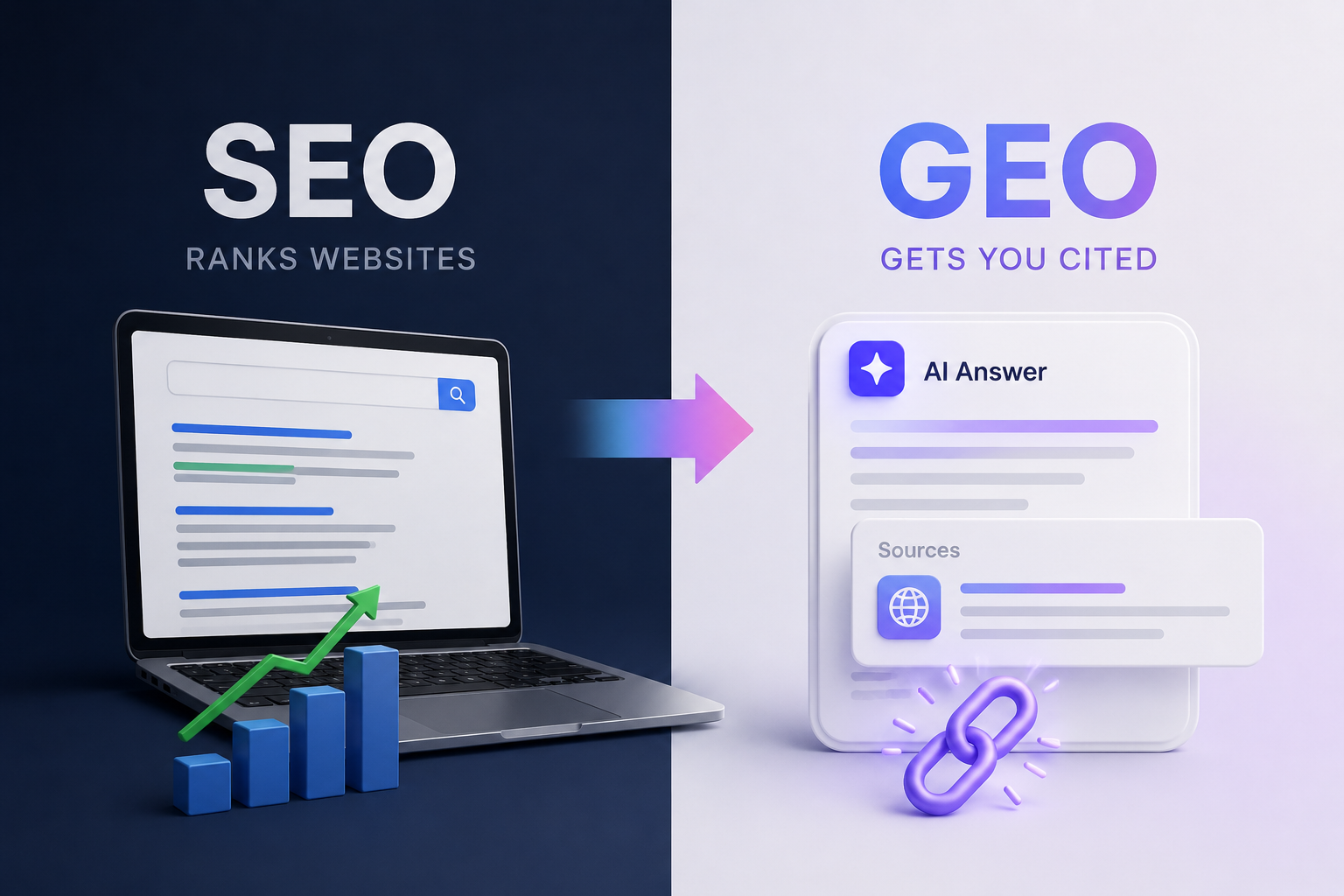
Traditional SEO focuses on ranking webpages.
GEO focuses on becoming a source that AI systems reference when generating answers.
In simple terms:
- SEO helps users find your website.
- GEO helps AI find your expertise.
As AI search continues to grow, appearing in citations may become just as valuable as appearing in search rankings.
SEO vs GEO: What’s the Difference?
Traditional SEO Goals
SEO typically focuses on:
- Keywords
- Backlinks
- Meta tags
- Page speed
- Technical optimization
- Search rankings
- Click-through rates
The objective is simple: drive users to your website.
GEO Goals
GEO focuses on:
- Expertise and authority
- Structured explanations
- Accurate information
- Entity recognition
- Original insights
- Answer-focused content
- Citation potential
The objective is to become a trusted source that AI systems use when generating responses.
Why GEO Matters in 2026?
The rise of AI assistants is changing user behavior. Instead of searching: “What is PCOS?”, users are asking: “Explain PCOS symptoms and treatment options for women in their 20s.”
Instead of: “Best investment options in India”, they ask: “What are the safest investment options for a 30-year-old professional in India?”
AI systems generate direct answers rather than showing ten blue links. This means visibility is increasingly moving from rankings to references.
The websites that provide the clearest, most reliable, and most comprehensive answers are more likely to be cited.
How AI Systems Choose Sources?
Although each AI platform uses different methodologies, most prioritize similar signals.
1. Authority
Websites demonstrating subject-matter expertise tend to receive more trust.
For example:
- Healthcare content written by qualified doctors
- Finance content supported by experts
- Industry insights written by practitioners
2. Clarity
AI systems prefer content that directly answers questions.
Articles that bury answers beneath excessive promotional language often perform poorly.
3. Structure
Well-organized content is easier for AI systems to interpret.
Useful elements include:
- Clear headings
- Definitions
- Bullet points
- FAQs
- Step-by-step explanations
4. Original Information
Many websites simply rewrite existing news.
AI systems increasingly reward original reporting, interviews, expert commentary, proprietary data, and unique perspectives.
5. Entity Signals
AI understands entities better than keywords alone.
Instead of stuffing phrases repeatedly, content should naturally discuss:
- People
- Companies
- Products
- Industries
- Concepts
This helps AI establish context and relevance.
The Biggest Mistake Publishers Are Making
Many publishers continue creating content exclusively for Google rankings.
They focus on:
- Keyword density
- Search volume
- Ranking positions
While these remain useful, they often overlook the fact that AI models are looking for answer quality. A 500-word article optimized around a keyword may rank. But a 1,500-word article that explains the topic comprehensively is far more likely to be cited by AI.
The future belongs to content that informs, not content that merely ranks.
What Makes Content AI-Citation Friendly?
Several characteristics appear consistently among content frequently surfaced by AI systems.
1. Direct Answers
Answer the main question early. Don’t make readers scroll through multiple paragraphs before finding the core information.
2. Strong Definitions
Every major topic should begin with a clear explanation. For example:
“What is GEO?”
“What is Quick Commerce?”
“What is Open Banking?”
These sections are often extracted by AI systems.
3. Comprehensive Context
Provide:
- Background
- Current developments
- Expert analysis
- Future implications
This creates a complete resource rather than a fragmented article.
4. FAQs
Frequently Asked Questions remain one of the strongest formats for AI discoverability because they mirror natural user queries.
5. Original Analysis
AI systems can summarize facts. They value sources that contribute perspectives. Adding observations, predictions, and industry expertise increases citation potential.
How Businesses Can Optimize for GEO?
1. Create Topic Authority
Instead of publishing random articles, build clusters around a subject.
For example:
A healthcare website could cover:
- PCOS
- Fertility
- Pregnancy
- Hormonal health
- Women’s wellness
Over time, AI systems recognize topical authority.
2. Publish Expert-Led Content
Author credibility matters.
Include expert opinions, interviews, and specialist commentary.
3. Answer Questions People Actually Ask
Research:
- Google “People Also Ask”
- Reddit discussions
- Quora questions
- Industry forums
- Customer inquiries
These questions often become AI prompts.
4. Focus on Evergreen Content
News has a short lifespan.
Educational explainers can attract citations for years.
5. Use Clear Language
AI systems favor content that is easy to understand.
Complicated jargon often reduces citation potential.
The Future of Digital Visibility
The future of content marketing is unlikely to be SEO versus GEO. Instead, businesses will need both. SEO will continue driving search traffic. GEO will drive AI visibility.
The most successful brands will optimize for human readers, search engines, and AI systems simultaneously.
Those who adapt early may gain a significant competitive advantage as AI becomes the primary gateway to information.
Final Thoughts
The internet is entering a new discovery era.
For years, ranking on Google was the primary goal. Today, being cited by AI systems is becoming equally important.
Generative Engine Optimization is not replacing SEO. It is expanding it.
The websites that provide expertise, clarity, original insights, and trustworthy information will be the ones most likely to appear in AI-generated answers.
In 2026 and beyond, the question is no longer:
“How do I rank?”
The better question is:
“How do I become the source AI trusts enough to cite?”
FAQs
1. What is GEO in digital marketing?
GEO stands for Generative Engine Optimization. It refers to optimizing content so AI systems can understand, trust, and cite it in generated answers.
2. Is GEO replacing SEO?
No. GEO complements SEO. SEO helps content rank in search engines, while GEO helps content appear in AI-generated responses.
3. Why is GEO important in 2026?
As more users rely on ChatGPT, Gemini, Perplexity, and AI-powered search, businesses need visibility beyond traditional search rankings.
4. What type of content gets cited by AI?
Content that is authoritative, well-structured, factually accurate, comprehensive, and easy to understand is more likely to be cited.
5. How can publishers improve AI citation opportunities?
Publish original insights, answer user questions directly, build topical authority, use clear formatting, and focus on expertise-driven content.

1 Comment
Pingback: AI Search Replacing Google? The Rise of AI-Powered Search