

India’s direct-to-consumer fashion space has found one of its biggest growth stories in Snitch, which has reported a sharp rise in scale, crossing ₹900 crore in revenue for FY26.
The Bengaluru-based men’s fashion brand has posted an 80% year-on-year jump from ₹498 crore in the previous fiscal year, emerging as one of the country’s fastest-growing D2C brands in the fashion and lifestyle segment.
At a time when India’s startup ecosystem is increasingly focused on profitable growth rather than pure scale, Snitch’s numbers are drawing significant attention.
The ₹900 Crore Milestone
According to recent reports, Snitch closed FY26 with operating revenue of ₹900 crore, a significant jump from FY25 levels.
This kind of acceleration is notable not only in the D2C category but across India’s broader retail startup landscape.
The company has also reported EBITDA margins of around 2–3%, translating to approximately ₹18–27 crore, indicating that the business is not merely chasing top-line growth but also focusing on sustainable profitability.
For investors and market watchers, that combination of scale and margin discipline is important.
It signals operational maturity.
How Snitch Built This Scale?
What makes Snitch’s growth especially interesting is its omnichannel execution model. The company currently derives nearly:
- 60% revenue from online channels
- 40% from offline retail stores
This balance is critical.
Many D2C brands initially scaled through digital-first channels but later struggled with customer acquisition costs and repeat retention. Snitch, however, appears to have successfully built a hybrid growth model.
Its website, marketplaces, quick commerce integrations, and physical stores are all contributing to revenue.
The Offline Expansion Story
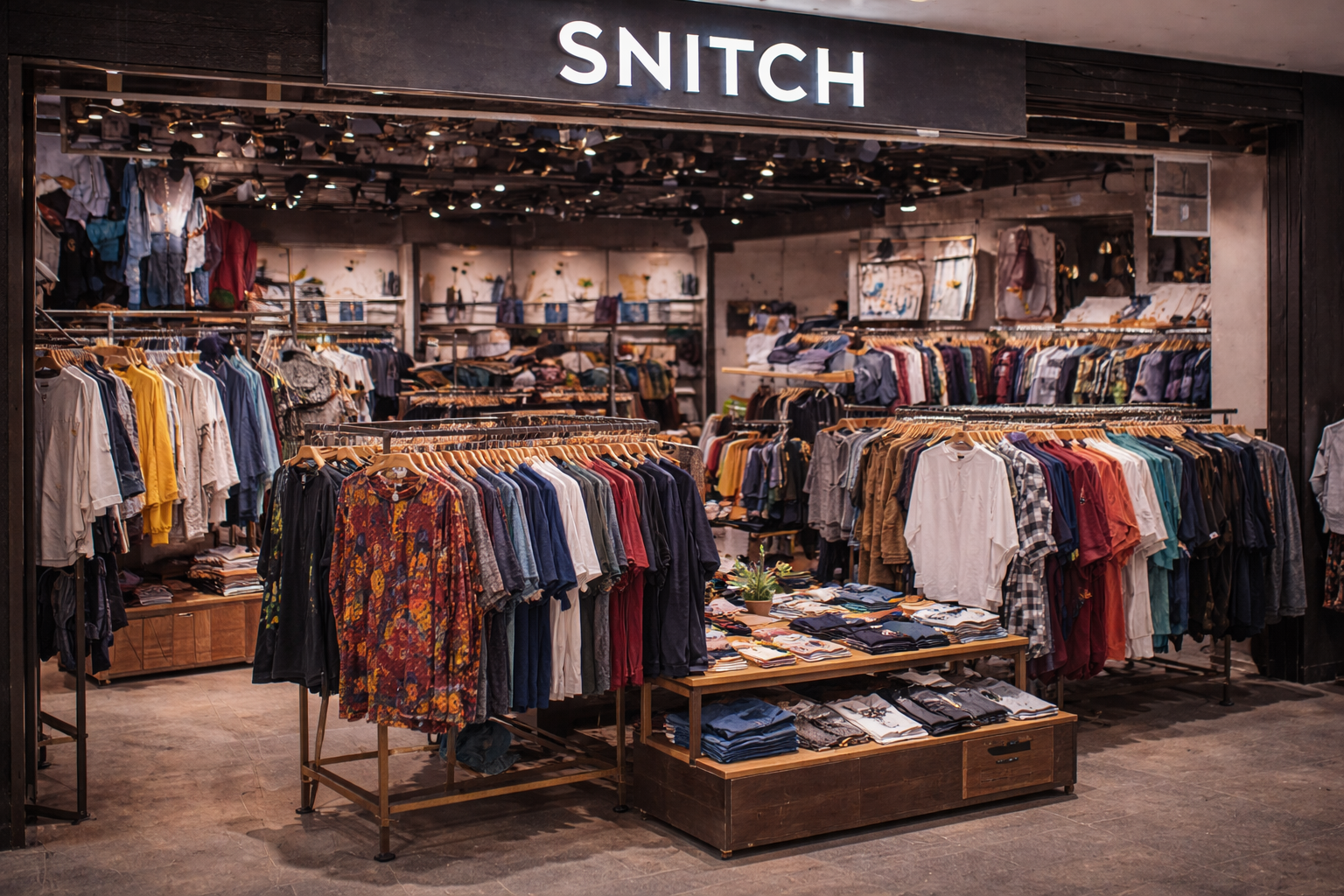
One of the biggest drivers of FY26 growth has been aggressive offline expansion. The brand now reportedly operates over 115 stores across India, with offline business growing nearly 75% year-on-year. This is a major strategic shift.
Instead of remaining a pure D2C digital label, Snitch has evolved into a full omnichannel retail brand.
This physical presence improves:
- brand visibility
- trial experience
- impulse buying
- repeat purchase behaviour
For fashion, physical stores still play a critical role because customers often want to touch, try, and evaluate fit.
The Quick Commerce Play
A major differentiator in Snitch’s strategy has been its move into quick commerce apparel delivery. The company entered this segment in late 2025 with 60-minute apparel delivery, a relatively new proposition in India’s fashion space.
This aligns with changing consumer behaviour. Today, speed is becoming a competitive advantage. Consumers who are used to instant grocery and food delivery increasingly expect the same convenience from fashion brands.
This move positions Snitch strongly in the emerging “fashion quick commerce” segment.
Also read: https://circleofnews.in/anand-rathi-wealth-q4-results-bonus-dividend/
Why the D2C Market is Watching Snitch?
Snitch’s rise is significant because it reflects a broader shift in India’s D2C ecosystem. The first generation of D2C brands focused on customer acquisition and scale. The second generation is focusing on:
- profitability
- omnichannel distribution
- inventory discipline
- faster delivery
- lifestyle expansion
Snitch fits perfectly into this evolution. Its performance suggests that fashion D2C is maturing beyond startup buzzwords into serious retail economics.
From Menswear to Lifestyle Brand
Another important factor behind Snitch’s growth is product expansion. The brand has moved beyond basic menswear essentials into a wider lifestyle offering. Its portfolio now spans:
- shirts
- co-ords
- hoodies
- jackets
- sweaters
- innerwear
- footwear
- perfumes
- accessories
This category expansion helps improve basket size and repeat purchase frequency. For fashion brands, this is key to lifetime value growth.
What Comes Next?
Reports suggest Snitch is now targeting ₹1,400 crore revenue in FY27, which indicates the company is entering a new scale phase.
If it continues its current growth trajectory, it could emerge as one of India’s strongest omnichannel fashion success stories.
Conclusion
Snitch’s ₹900 crore FY26 milestone is more than a revenue update. It is a signal that India’s D2C fashion market is evolving rapidly.
By combining digital strength, physical expansion, quick commerce, and disciplined margins, the brand has positioned itself as one of the most closely watched names in India’s startup and retail ecosystem.
For the broader D2C industry, Snitch may well become the blueprint for the next wave of profitable scale.

1 Comment
Pingback: Amazon Globalstar DEal: How It Can Change iPhone Satellite