

Shorter days, weaker sunlight and heavier winter clothing quietly lower the amount of vitamin D most Indians make between November and February. In north Indian cities, winter smog filters out part of the UVB radiation the skin needs, making the seasonal dip sharper. That matters because India already starts from a low base: an AIIMS review of Indian studies found vitamin D deficiency prevalence ranging from 40 to 99 percent, with most studies reporting 80 to 90 percent across age groups.
Why do vitamin D levels drop in winter?
The skin makes vitamin D when UVB rays hit it directly. In winter the sun sits lower, so UVB intensity falls, and people cover more of their skin and spend less time outdoors. A 2025 consensus statement by 41 Indian endocrinologists notes that some people who reach adequate levels in summer fail to sustain them through winter, which is why the group recommends season-independent habits rather than a summer-only approach.
How much vitamin D do you need?
ICMR-NIN’s 2020 Nutrient Requirements for Indians sets the daily allowance at 600 IU (15 mcg) for adults and children above one year, rising to 800 IU (20 mcg) from age 60. The tolerable upper limit for adults is 4,000 IU a day from all sources. Indian diets supply relatively little on their own, which is why sunlight, fortified foods and, where advised, supplements have to work together.
What actually helps?
Midday sun, used properly. The endocrinologist consensus recommends exposing uncovered forearms and legs to direct sunlight for about 30 to 45 minutes between 10 am and 3 pm, year-round. Sitting near a closed glass window does not count, because glass blocks UVB.
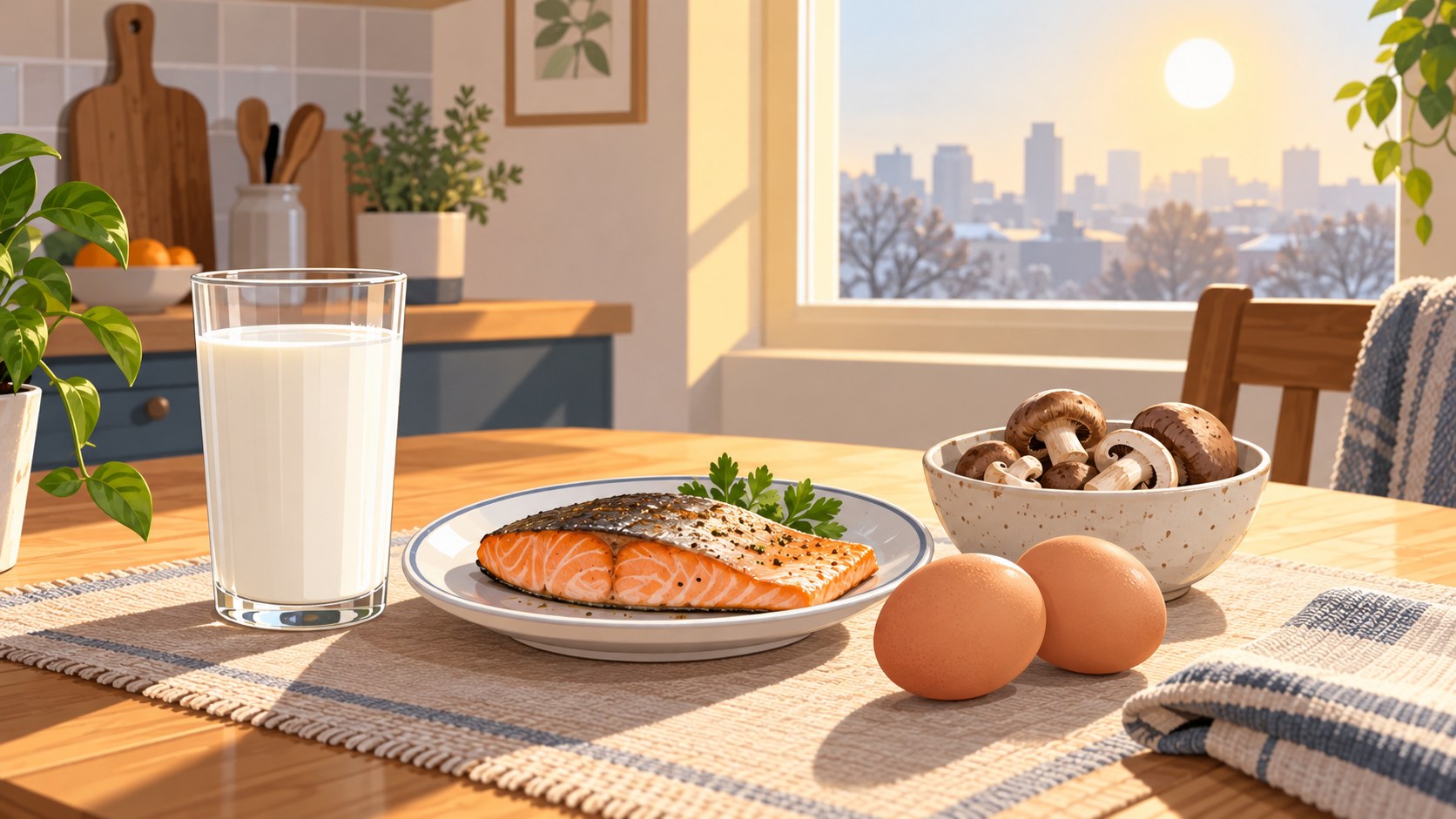
Food and fortification. Fatty fish is the standout natural source: hilsa carries roughly 198 IU of vitamin D per 100 g, and egg yolks and UV-exposed mushrooms contribute smaller amounts. Under FSSAI standards, fortified milk provides about 200 to 300 IU per litre, so a 200 ml glass adds roughly 40 to 60 IU.
Testing and supplements, guided by a doctor. A blood test for serum 25(OH)D is the standard way to confirm a deficiency. Prescription correction in India typically uses high-dose regimens such as 60,000 IU weekly for six weeks, but that is medical treatment, not a self-care step: excess vitamin D is harmful, and ICMR-NIN’s 4,000 IU ceiling exists for a reason. If you suspect a deficiency, test first and supplement only on medical advice.
Nutrients rarely work in isolation, and winter is also when diets drift away from variety. Our explainer on iron-rich vegetarian foods and why absorption matters covers another common Indian deficiency and how food pairing improves it. For more of our guides, see the Circle of News explainer hub.
FAQs
ICMR-NIN’s 2020 guidelines set the allowance at 600 IU (15 mcg) per day for adults, and 800 IU (20 mcg) from age 60. The safe upper limit is 4,000 IU per day from food, fortified sources and supplements combined.
Usually not, especially in north India. Weaker winter UVB, more clothing and smog all reduce skin production, and experts note that even people with good summer levels can lose ground in winter. Consistent midday exposure helps, but food, fortification and, where advised, supplements do the rest.
Fatty fish such as hilsa is the richest common source at roughly 198 IU per 100 g. Fortified milk and edible oils add smaller but useful amounts under FSSAI fortification standards, while egg yolks and UV-exposed mushrooms contribute modestly. Diet alone rarely meets the full 600 IU daily allowance.
This article is for general information and is not medical advice. Figures are drawn from ICMR-NIN’s 2020 nutrient recommendations, an AIIMS review of Indian vitamin D studies and a 2025 expert consensus of Indian endocrinologists. Consult a qualified doctor before testing or supplementation. The lead image is an original concept illustration.
