

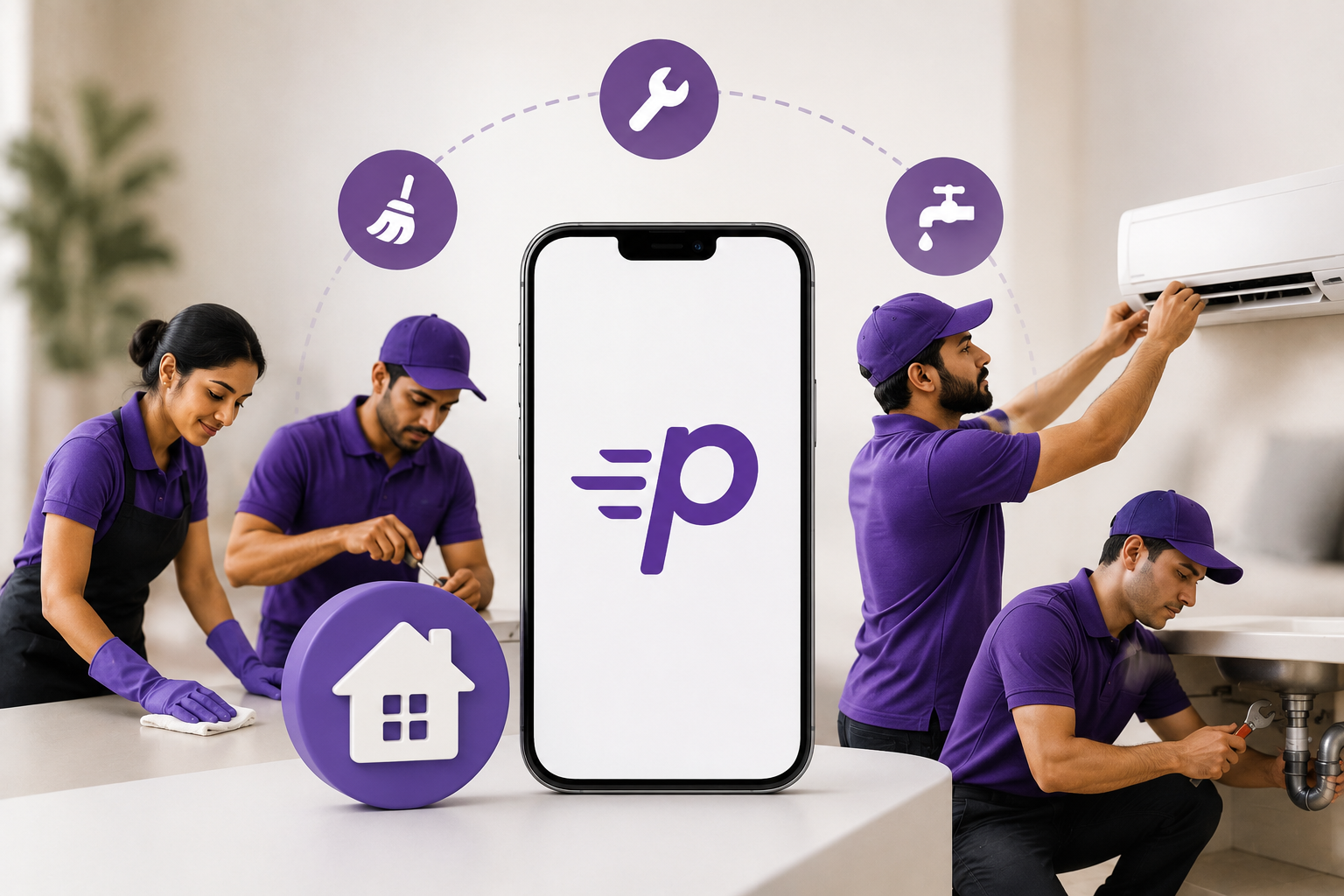
India’s startup ecosystem has seen countless companies promise speed, convenience, and on-demand services. Food arrives in minutes. Groceries appear at the doorstep almost instantly. Medicines, electronics, and even fashion have entered the quick-commerce race.
Now, a new category is rapidly gaining momentum: instant home services.
At the center of this shift is Pronto, a startup that is building a platform focused on delivering household help and professional services within minutes. The company recently raised $20 million in an extended Series B funding round, doubling its valuation to approximately $200 million.
The funding round drew significant attention not just because of the valuation jump, but because of the broader signal it sends about the future of urban consumer behavior in India.
The investment was backed by notable investors, including Silicon Valley investor Lachy Groom, whose participation has further elevated interest in the company’s growth trajectory.
But beyond the funding headlines lies a much larger story—one about changing lifestyles, urban convenience, and the evolution of India’s services economy.
The Rise of Instant Home Services in India
Over the last decade, Indian consumers have become deeply accustomed to convenience-driven digital platforms.
Initially, this transformation focused on:
- Food delivery
- Ride-hailing
- E-commerce
- Grocery delivery
But increasingly, urban consumers are expecting the same level of speed and reliability for everyday household needs.
This includes services such as:
- Cleaning
- Electrician work
- Plumbing
- Appliance repair
- Home maintenance
- Domestic assistance
Traditionally, these services were fragmented and highly unorganized. Finding reliable help often depended on local references, word-of-mouth recommendations, or neighborhood contacts.
Platforms like Pronto are attempting to formalize and streamline this ecosystem.
What Exactly Does Pronto Do?
Pronto operates in the rapidly growing “instant house-help” segment.
Its core idea is simple:
Make professional household services available quickly, reliably, and digitally.
Instead of waiting hours—or sometimes days—for assistance, users can request services through the platform and receive support in significantly shorter timeframes.
The company is effectively applying the logic of quick-commerce to home services.
That shift is important because household services involve:
- Trust
- Scheduling
- Professional quality
- Real-world logistics
Unlike food delivery, service fulfillment depends heavily on human coordination and operational efficiency.
This makes the business model far more complex.
Why Investors Are Paying Attention?
The latest funding round reflects growing investor confidence in India’s emerging convenience economy.
Several factors make Pronto attractive to investors.
1. Massive Market Opportunity
India’s home services market remains largely underpenetrated digitally.
Millions of households still rely on:
- Informal workers
- Unverified providers
- Offline coordination
As digital adoption increases, platforms that organize this sector could unlock enormous economic value.
The opportunity becomes even larger in metro cities where:
- Dual-income households are rising
- Time scarcity is increasing
- Convenience spending is growing rapidly
2. Urban Lifestyle Shifts
Modern urban lifestyles are changing how consumers think about time.
People increasingly prefer:
- On-demand solutions
- Digitally managed services
- Predictable pricing
- Verified professionals
This mirrors the transformation already seen in:
- Transportation
- Food delivery
- Retail commerce
The next logical extension is home services.
3. Operational Scalability
Investors are particularly interested in platforms that can scale operationally across cities.
If executed well, home-service platforms can benefit from:
- High repeat usage
- Strong customer retention
- Predictable demand cycles
That creates the possibility of long-term platform economics.
The Lachy Groom Effect
One of the most talked-about aspects of the funding round was the involvement of Lachy Groom.
Known for backing several high-growth technology companies, Groom’s participation added credibility and visibility to the startup.
Reports surrounding the investment also highlighted how quickly the pitch process moved—reflecting growing global interest in India’s startup ecosystem.
International investors increasingly see India as:
- A large consumer market
- A fast-growing digital economy
- A source of scalable technology businesses
The Pronto investment fits directly into that narrative
The Bigger Trend: India’s Convenience Economy
Pronto’s rise is part of a much broader trend reshaping Indian consumer markets.
Consumers are no longer simply paying for products.
They are paying for:
- Time savings
- Convenience
- Reliability
- Reduced friction
This “convenience economy” is becoming one of the defining themes of modern urban India.
Quick-commerce companies normalized the expectation that:
Services should be immediate.
Now that expectation is spreading across industries.
Why Home Services Are Harder Than Quick Commerce?
While comparisons to food delivery and quick-commerce are common, home services introduce entirely different operational challenges.
Delivering groceries in 10 minutes is difficult.
Managing real-world human service operations is arguably harder.
Why?
Because service quality depends on:
- Human skill
- Availability
- Geography
- Scheduling accuracy
- Customer interaction
A delayed food order is frustrating.
A poor plumbing or electrical experience can completely break user trust.
That means companies like Pronto must solve:
- Workforce training
- Quality control
- Verification systems
- Operational routing
- Customer support
at scale.
Trust Is the Real Product
One of the most important aspects of home-service platforms is trust.
Consumers allow service professionals into their homes. That makes reliability and safety critical.
Platforms therefore need to invest heavily in:
- Verification
- Professional onboarding
- Ratings systems
- Background checks
- Customer feedback loops
In many ways, trust becomes the actual product—not just convenience.
This is one reason why strong execution matters far more in service businesses than in purely digital marketplaces.
The Economics of Speed
Fast delivery models often raise an important question:
Can speed-driven businesses become sustainably profitable?
This debate has already shaped the quick-commerce industry.
Critics often point to:
- High operational costs
- Logistics complexity
- Workforce expenses
The same questions now apply to instant home services.
For Pronto, long-term success may depend on balancing:
- Fast fulfillment
- Service quality
- Sustainable economics
This balance is difficult—but potentially highly rewarding if achieved.
Technology’s Role in Service Platforms
Technology is becoming central to operational efficiency in home-service startups.
Platforms increasingly rely on:
- AI-driven matching systems
- Real-time scheduling
- Demand forecasting
- Route optimization
- Customer personalization
The goal is not just to deliver services faster.
It’s to make the entire experience smoother and more predictable.
As the sector evolves, data and automation could become major competitive advantages.
Competition in the Home Services Space
The opportunity has naturally attracted competition.
India already has multiple startups operating in:
- Professional home services
- Managed maintenance
- Domestic staffing
This means differentiation will matter.
Companies will need to compete on:
- Reliability
- Speed
- Service quality
- Pricing
- User experience
Brand trust could become the biggest long-term moat.
Challenges Ahead for Pronto
Despite strong momentum, the road ahead is not without challenges.
Scaling service operations across cities is operationally intensive.
Some major hurdles include:
- Maintaining consistent quality
- Workforce retention
- Managing logistics density
- Customer acquisition costs
- Expanding beyond metro markets
Consumer expectations also rise quickly in convenience-driven businesses.
What feels impressive today can become the baseline tomorrow.
The Future of Instant Services in India
The rise of platforms like Pronto signals a deeper transformation in Indian urban life.
Future growth could include:
- AI-assisted service booking
- Hyperlocal workforce networks
- Subscription-based household management
- Smart-home integrations
- Predictive maintenance systems
Over time, the line between digital platforms and real-world services may blur even further.
Consumers may increasingly view household support as:
an always-available utility rather than an occasional requirement.
What This Means for India’s Startup Ecosystem
Pronto’s funding round also reflects the maturity of India’s startup ecosystem.
A few years ago, investors focused heavily on:
- E-commerce
- Fintech
- Food delivery
Now attention is expanding toward:
- Infrastructure-driven services
- Operational technology
- Real-world convenience platforms
This shift suggests investors are becoming more interested in businesses that solve everyday operational problems—not just digital engagement.
The Human Side of the Story
At its core, the rise of instant home-service platforms reflects a very human reality:
People value time more than ever.
Urban lifestyles are becoming busier, denser, and increasingly dependent on convenience infrastructure.
The companies that succeed in this environment won’t simply be technology platforms.
They’ll be companies that understand:
- Human behavior
- Reliability
- Trust
- Consistency
Because ultimately, convenience alone is not enough.
Sustainable businesses are built when convenience meets confidence.
Conclusion
Pronto’s $20 million funding round and $200 million valuation mark more than just another startup milestone.
They reflect the emergence of a new category within India’s digital economy:
instant home services.
As consumer expectations evolve, the demand for reliable, fast, and digitally managed household support is likely to grow significantly.
Whether Pronto becomes a dominant player will depend on execution, trust, and operational excellence.
But one thing is increasingly clear: India’s convenience economy is expanding far beyond groceries and food delivery—and home services may be the next major frontier.

1 Comment
Pingback: Skyroot Aerospace Becomes India’s First Space-Tech Unicorn