

India, September 2, 2026: Leading healthcare experts convened for a panel discussion on “Patient Safety in the Age of AI: Are Indian Hospitals Ready for Intelligent Clinical Decision Support?”, highlighting the need for hospitals to adopt artificial intelligence responsibly while keeping clinicians and patient safety at the centre of care.
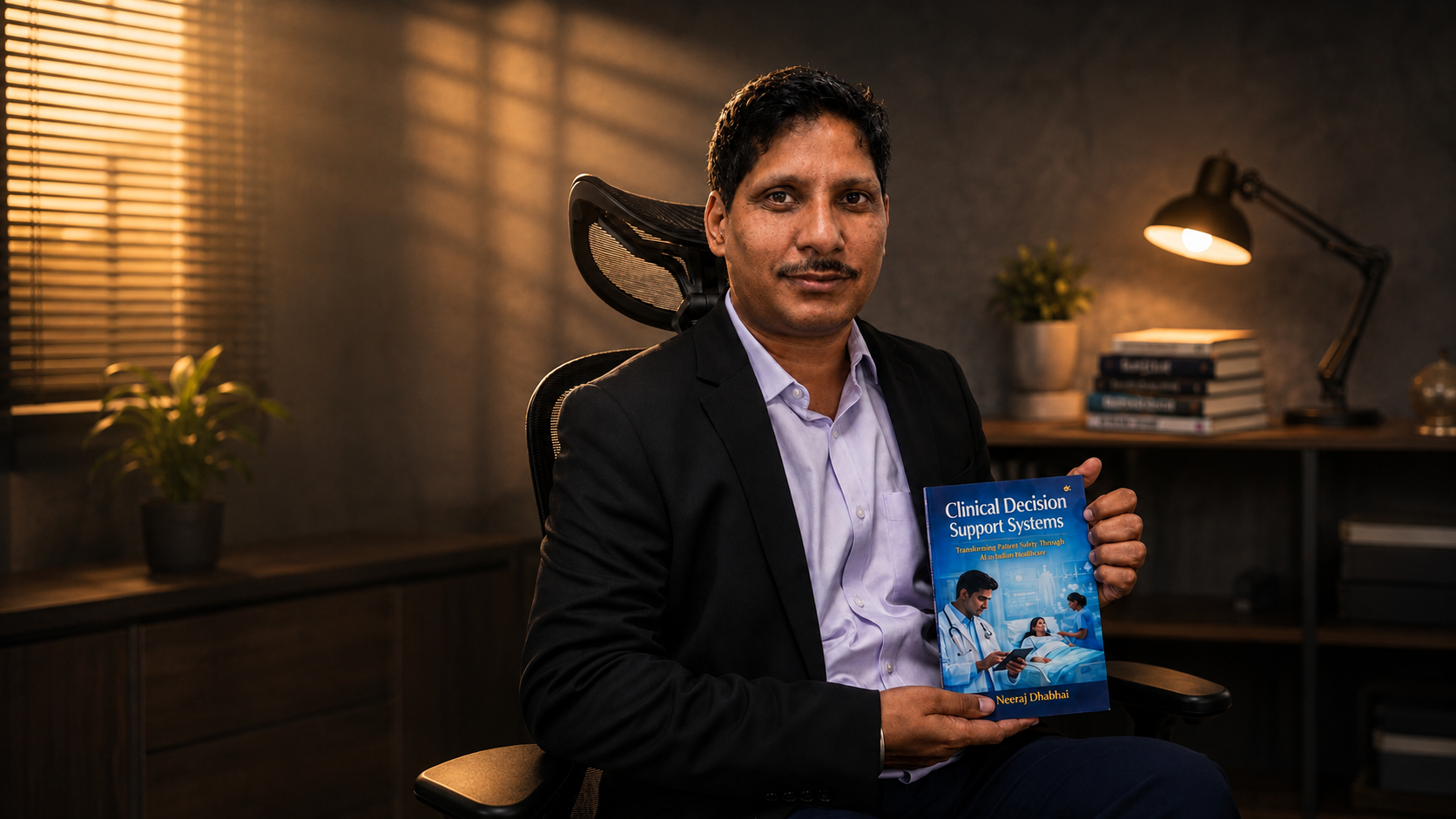
The discussion also marked the launch of Clinical Decision Support Systems: Transforming Patient Safety Through AI in Indian Healthcare, a new book by Dr. Neeraj Kumar Dhabhai, Vice President, Supply Chain at Rainbow Children’s Hospital. The book examines how hospitals can use AI-based Clinical Decision Support Systems (CDSS) to turn fragmented clinical data into timely, evidence-based insights for healthcare professionals.
The panel included Dr. Dhabhai; Dr. A. Ramkishan, Deputy Drugs Controller (India) and DGHS, Ministry of Health and Family Welfare; Dr. N. Venkatesan, Senior Director and Chief Procurement Officer at Max Healthcare; and Mr. Aravind Sivaramakrishnan, Group CTO at Asia Healthcare Holdings. Dr. Vikram Venkateswaran, Founder of Healthcare India and Medbyte, moderated the session.
AI-Based Clinical Decision Support for Patient Safety
The panel explored how artificial intelligence in healthcare can help hospitals move beyond data collection and digitisation. Speakers discussed the importance of making relevant information available to the right healthcare professional at the right time, particularly when clinical teams need to make critical decisions.
An intelligent clinical decision support system can combine information from multiple sources, identify clinically relevant patterns, issue timely alerts and support evidence-based care. However, the panel underlined that AI should support, not replace, clinical judgement.
The need for stronger safety systems remains significant. The World Health Organization estimates that around one in 10 patients experiences harm while receiving healthcare, with more than half of such harm considered preventable. Medication-related harm affects about one in 30 patients, and over a quarter of these cases may be severe or life-threatening.
“AI’s value in healthcare will ultimately be determined not by how much technology we deploy, but by whether it helps healthcare professionals make better and safer decisions at the point of care,” said Dr. Neeraj Dhabhai. “Clinical decision support provides an opportunity to connect fragmented information with clinical context, while keeping patient safety and professional judgement at the centre.”
Also Read: Flipkart Enters Microdrama Space With Short-Form Content on Its App
Indian Hospitals and AI Readiness
The discussion addressed the practical requirements for responsible AI adoption in Indian hospitals, including data quality, interoperability, cybersecurity, clinical validation, governance, workflow integration and organisational readiness.
A NITI Aayog and UK Department for International Trade pilot conducted with AIIMS New Delhi and Lady Hardinge Medical College demonstrated the potential of AI-enabled decision support in Indian healthcare settings. The study found that 80.43% of participating healthcare workers considered the system useful, while 76.09% rated it positively for usability. It also reported the completion of 3,995 of 4,460 clinical decision-support journeys.
At the same time, the pilot identified barriers such as network connectivity, technology integration, workflow fit and user familiarity. These factors, the panellists noted, must guide the rollout of clinical decision support technology in India.
Dr. A. Ramkishan said patient safety must remain the foundation of healthcare’s transition towards AI. He emphasised the need for standards around quality, validation, accountability, data integrity and clinical oversight so that innovation and safety advance together.
New Book Focuses on AI and Patient Outcomes
Dr. Dhabhai’s book presents Clinical Decision Support Systems as an essential part of developing safer healthcare systems, rather than merely a technology upgrade. It covers CDSS fundamentals, implementation strategy, technology architecture, regulatory considerations, and potential use cases in medication safety, evidence-based prescribing, antibiotic stewardship, and healthcare workflow automation.
The book also asks a central question: if the information needed to prevent patient harm already exists somewhere within a hospital system, why does it often fail to reach the right person at the right moment?
Drawing on nearly two decades of experience in hospital operations, healthcare technology, supply chain and innovation, Dr. Dhabhai argues that the next phase of healthcare transformation should focus on using data intelligently, responsibly and in ways that improve patient outcomes.
Mr. Aravind Sivaramakrishnan said AI cannot work in isolation. He noted that meaningful clinical decision support requires strong digital foundations, interoperable systems, reliable data, robust cybersecurity and workflows designed around how clinicians work.
Dr. N. Venkatesan added that AI-enabled decision support can augment clinical judgement, reduce variability and improve patient safety at scale. The panel concluded that Indian hospitals must build patient safety into the design, governance and implementation of AI systems from the outset.
