

Startups in India’s Physical AI ecosystem have raised around $155 million across 31 deals in 2026 so far, according to data compiled by Entrackr. Funding has climbed 19% year-on-year as investors back robotics, industrial hardware, and real-world data infrastructure across these 31 deals, continuing a steady rise from $91 million in 2023 to $124 million in 2024 and $130 million in 2025 (Source: Entrackr). The trend confirms that investors are increasingly backing companies building machines that sense, decide, and act in the physical world, rather than software alone.
What Sets Physical AI Apart
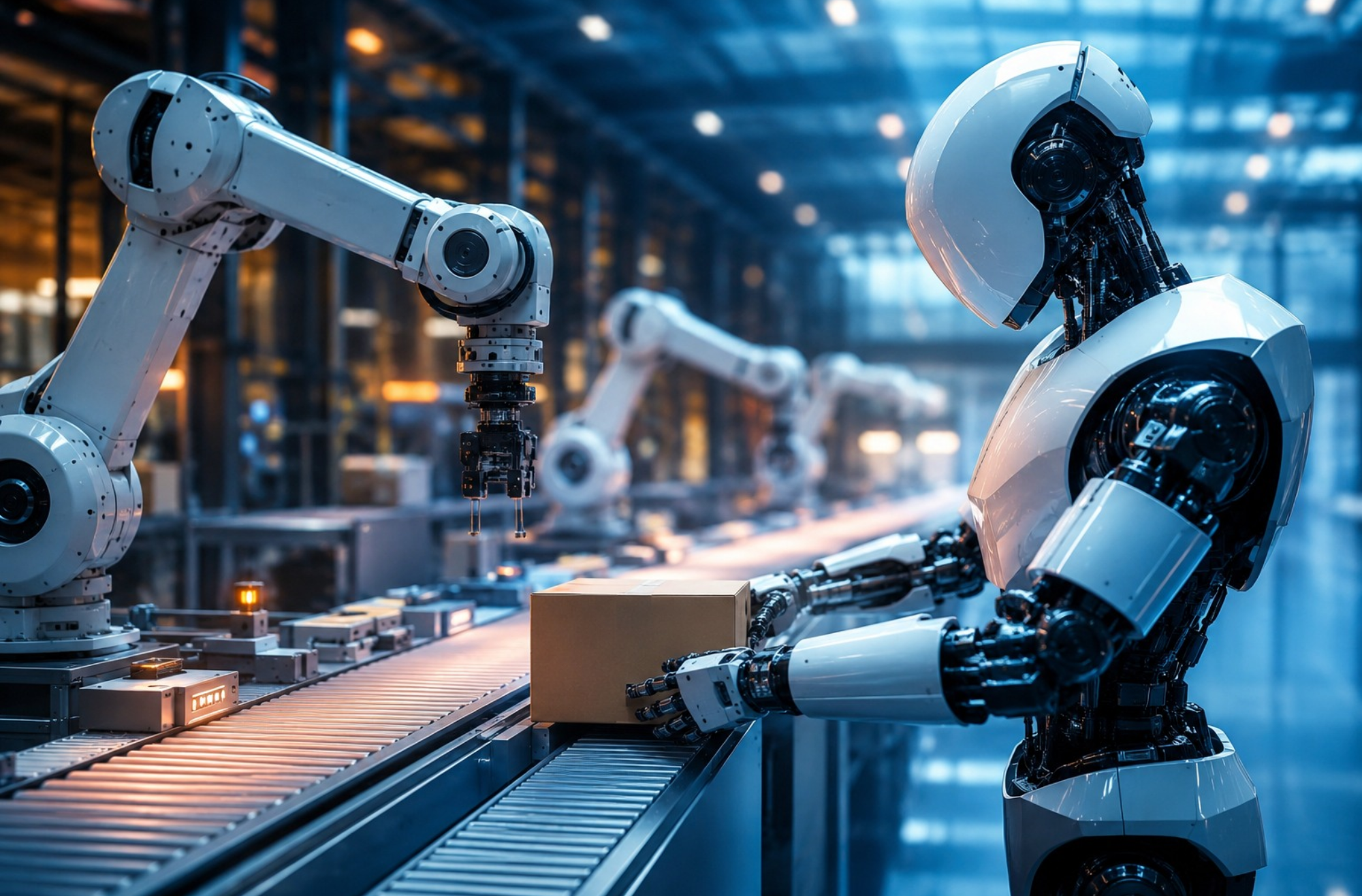
Physical AI differs from the generative AI systems that dominated the last funding cycle. While generative AI produces text, images, or code, physical AI powers robots, autonomous machines, industrial hardware, and embodied systems that operate directly in real-world environments such as factories, warehouses, and construction sites.
Big Deals Anchor the Year
Three companies account for more than half of this year’s total (Source: Entrackr). Innefu Labs led the pack with a $30 million Series B round backed by Panthera Growth Partners, and the company is building a dedicated Physical AI and robotics division for defence applications. Supply chain robotics startup Unbox Robotics raised $28 million in a round led by ICICI Venture, while Deccan AI secured $25 million in a Series A led by A91 Partners. Together, these three rounds total $83 million.
Early-Stage Momentum Builds
Beyond the largest rounds, early-stage activity remains strong. Marine robotics firm Rekise Marine raised $9.7 million, Human Archive secured $8.2 million to build sensorimotor datasets for robot training, and manufacturing inspection startup SwitchOn closed an $8 million round (Source: Entrackr). More than 20 additional deeptech and robotics startups, including ANSCER Robotics, Mowito and Flo Mobility, filled out the remaining capital.
Data Infrastructure Emerges as a Layer
A parallel set of companies is building the data collection and annotation infrastructure that physical AI systems require, since robotics models need real-world data captured specifically for embodied tasks rather than existing internet datasets.
What Comes Next
Skylark Labs is reportedly in talks to raise $100–150 million at a valuation exceeding $1 billion, a round that would surpass any individual India-linked Physical AI deal closed so far in 2026 (Source: Entrackr). Even so, hardware-focused companies continue to face longer commercial cycles and higher deployment costs than their software counterparts, while data-collection ventures must navigate privacy and consent concerns.
