

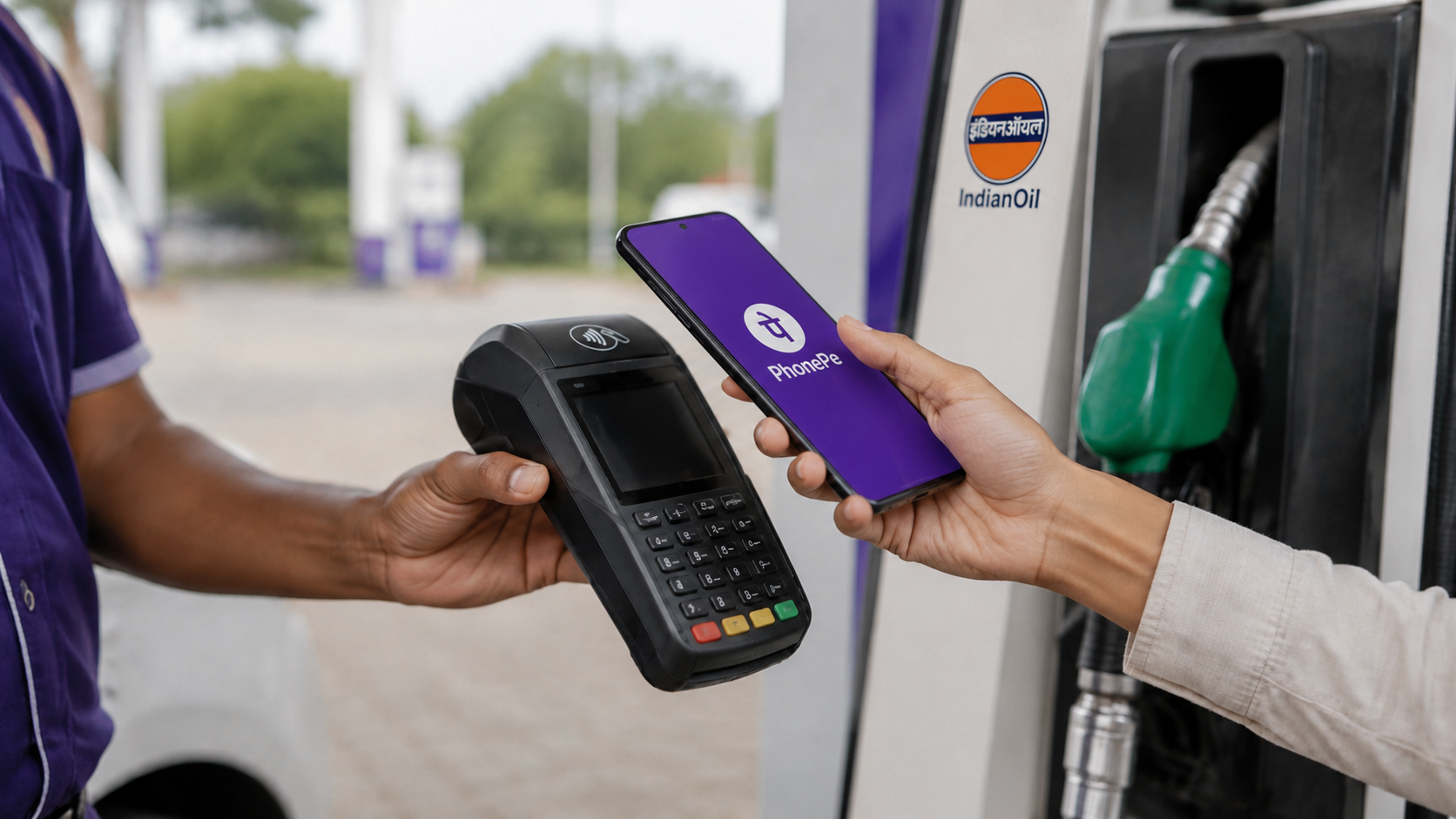
PhonePe has emerged as the lowest bidder for Indian Oil Corporation Limited’s PoS terminal contract, marking a significant development in India’s rapidly expanding digital payments market.
The fintech company reportedly competed against nearly six to seven bidders for the mandate. The deal could help PhonePe expand its presence across IndianOil’s extensive fuel retail network and strengthen its position in the offline merchant payments segment.
However, the aggressive pricing behind the bid has raised questions about the contract’s profitability. According to The Head and Tale, the economics of the mandate indicate that PhonePe may be prioritising merchant reach and payment volumes over immediate financial returns.
Key Highlights of the PhonePe-IOCL PoS Terminal Deal
- PhonePe has emerged as the lowest bidder for the IOCL payment terminal mandate.
- Nearly six to seven companies reportedly participated in the bidding process.
- The mandate could expand PhonePe’s reach across IndianOil fuel stations.
- Aggressive bidding may put pressure on the contract’s short-term profitability.
- PhonePe could use the merchant network to distribute other financial services in the future.
PhonePe Expands Its Offline Digital Payments Network
The IOCL PoS terminal contract presents an important growth opportunity for PhonePe as the company expands beyond app-based UPI transactions.
PoS terminals allow physical businesses to accept payments through debit cards, credit cards, UPI, and other digital payment methods. By securing access to IndianOil’s retail ecosystem, PhonePe could process a large volume of recurring fuel payments.
Fuel stations remain strategically important for payment companies because they handle frequent transactions throughout the day. A wider deployment of PhonePe PoS terminals at IndianOil outlets could increase the company’s visibility among consumers and merchants.
PhonePe already says its business platform serves more than five crore merchants. The latest mandate could strengthen its presence among large enterprises and organised retail businesses.
Also Read: 10 Million Youth to Get AI Training: India’s Biggest Bet Yet on the Future of Work
Low-Cost IOCL Bid Raises Profitability Questions
While the contract could offer considerable scale, PhonePe’s aggressive bid has brought the economics of the deal into focus.
Companies operating PoS payment terminals in India incur costs related to hardware, installation, software, connectivity, maintenance and customer support. A low bid can help a payment company secure a major enterprise client, but it can also limit the revenue earned from each terminal or transaction.
PhonePe will therefore need strong transaction volumes to recover its operational expenses. The company may also look beyond direct payment revenue and use the partnership to promote additional merchant services.
These services could include business loans, insurance, payment settlements and other financial products. This approach would allow PhonePe to treat the contract as a long-term merchant acquisition opportunity rather than a source of immediate profit.
PhonePe Strengthens Its Merchant Payments Strategy
The mandate supports PhonePe’s broader effort to expand its offline merchant payments business.
India’s digital payment companies face intense competition in the UPI market, where basic consumer transactions generate limited direct revenue. As a result, companies are increasingly building merchant ecosystems that can support multiple financial products.
A large enterprise contract can give PhonePe access to valuable transaction data, recurring payment activity, and established merchant relationships. The company could eventually use this distribution network to generate revenue through value-added services.
The strategy may also help PhonePe reduce its dependence on consumer UPI payments and create a more diversified business model.
Also Read: LEAD Group Revenue Reaches ₹387 Crore as FY26 Loss Narrows 20%
PhonePe and IndianOil Renew an Earlier Payments Partnership
PhonePe and IndianOil have worked together in the digital payments space before.
In 2018, the companies introduced a pilot involving PhonePe’s indigenously designed PoS devices at 30 IndianOil retail outlets in Bengaluru. The terminals allowed customers to pay for fuel using UPI, debit cards, credit cards, and supported digital wallets.
The companies planned to scale the payment solution nationally following the pilot. The latest PhonePe and IOCL partnership signals a renewed and potentially larger opportunity for the fintech company in the fuel retail sector.
The mandate could strengthen PhonePe’s enterprise payment capabilities while helping IndianOil improve digital payment acceptance at its outlets. However, the contract’s long-term value will depend on transaction volumes, deployment costs and PhonePe’s ability to generate additional revenue from the network.
For now, PhonePe has secured a strategically important position in the bidding process. The next test will be whether it can convert the potential scale of the IOCL PoS terminal mandate into sustainable business growth.
Frequently Asked Questions
1. What is the PhonePe-IOCL PoS terminal contract?
The mandate involves providing payment terminals for Indian Oil Corporation’s retail network. PhonePe has reportedly emerged as the lowest bidder for the contract.
2. Has PhonePe officially received the IOCL contract?
The available report identifies PhonePe as the lowest bidder. Emerging as the lowest bidder places the company in a strong position, but it does not always constitute a final contract award until the tendering authority completes the required process.
3. What payments can customers make through PoS terminals?
Modern PoS terminals generally support debit cards, credit cards, UPI, QR-based payments, and digital wallets, depending on the terminal configuration.
4. Why is the IOCL contract important for PhonePe?
The mandate could help PhonePe expand its offline payment network, process more fuel transactions, and build stronger relationships with enterprise merchants.
5. Why are there concerns about the contract’s profitability?
Aggressive pricing may reduce PhonePe’s direct earnings from the contract. The company must manage hardware, installation, maintenance, and support costs while generating enough transaction volume and additional merchant revenue to make the deployment sustainable.
