

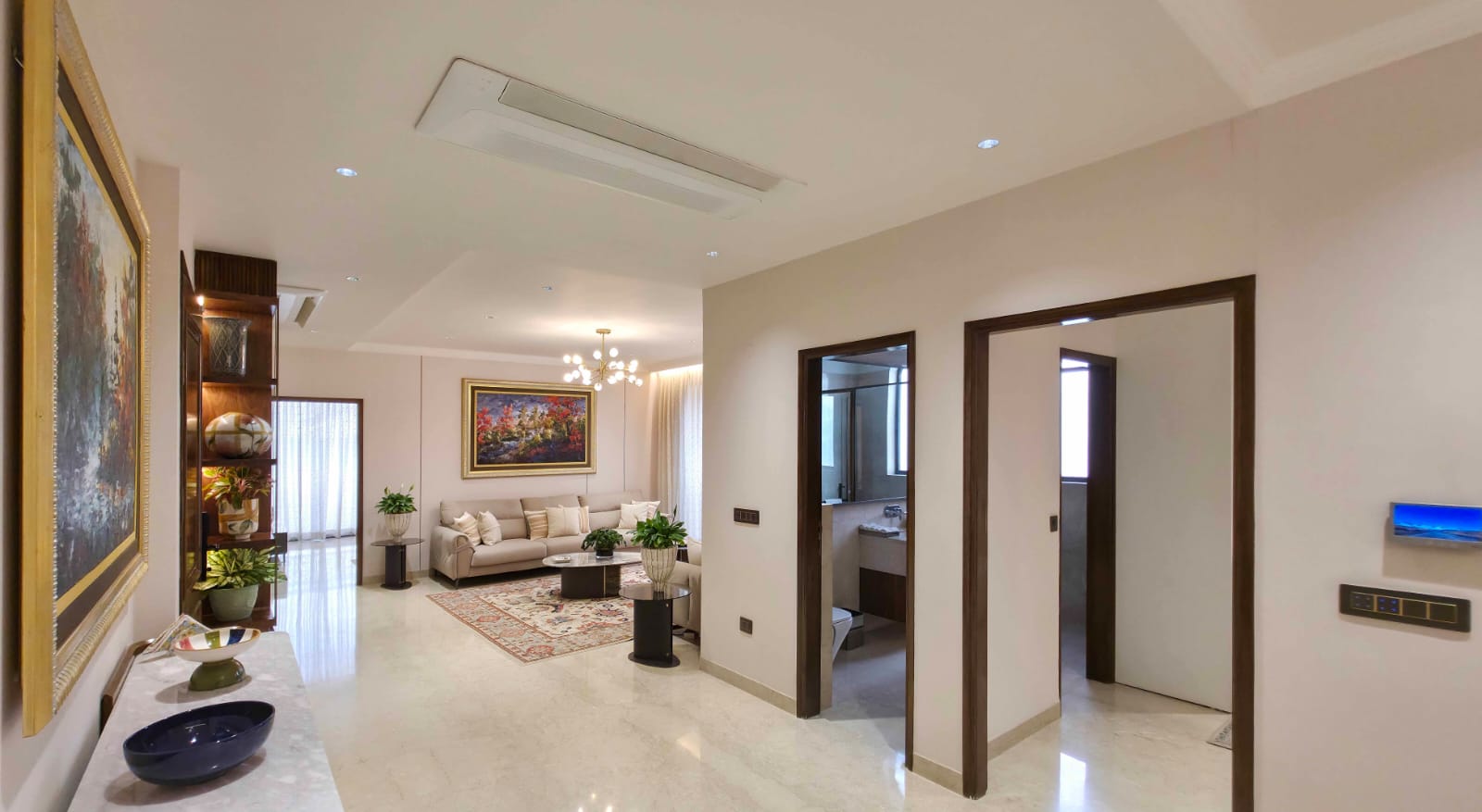
New Delhi, June 22, 2026: Samsung has announced the deployment of its residential climate management solutions featuring WindFree™ cooling, PM1.0 air purification, SmartThings connectivity, and AI-enabled Variable Refrigerant Flow (VRF) technology, targeting premium residential developments in India.
The company said the solutions are designed to address growing concerns around rising temperatures, indoor air quality, energy consumption, and smart home integration in urban centres.
Samsung’s integrated climate ecosystem combines WindFree™ air conditioning systems, PM1.0 purification technology, Wi-Fi-enabled SmartThings connectivity, and AI-powered DVM S2 VRF outdoor units. According to the company, the technology aims to provide improved thermal comfort, cleaner indoor air, and greater energy efficiency.
Speaking about the initiative, Vipin Agrawal, Head of SAC Business at Samsung India, said modern homeowners increasingly seek solutions that go beyond conventional cooling and prioritize healthier air, connected experiences, energy management, and enhanced comfort.
Samsung has deployed one of its largest integrated residential climate technology installations at The Orchard, a residential project within Central Park Flower Valley in Gurugram. The company has equipped 284 luxury residences with the system, supported by a total installed cooling capacity of 4,864 HP.
A key feature of the offering is Samsung’s WindFree™ technology, which distributes cooled air through thousands of micro air holes instead of direct airflow. The company claims this helps reduce discomfort caused by continuous exposure to cold air while maintaining room temperature.
The system also incorporates optional PM1.0 purification panels in WindFree™ 1 Way Cassette air conditioners. These panels use a two-stage filtration process designed to capture larger dust particles as well as ultrafine particles measuring up to 0.3 microns. Samsung stated that the filtration system can sterilize up to 99% of bacteria trapped in the filter.
The solutions are integrated with Samsung’s SmartThings platform, enabling users to remotely monitor and control cooling systems through smartphones. Additional features include voice control support, automated cooling schedules, geo-fencing capabilities, and energy consumption monitoring.
Samsung Leverages AI to Enhance Cooling Efficiency
Samsung’s DVM S2 VRF outdoor units further utilize artificial intelligence to optimize cooling operations. The company said its Active AI Pressure Control technology continuously analyses operating conditions and adjusts refrigerant pressure to improve efficiency. Internal testing conducted by Samsung indicated potential energy savings of up to 15%, although actual results may vary depending on installation and usage conditions.
The AI-enabled system also includes refrigerant monitoring capabilities that can detect abnormalities and notify service personnel, helping maintain operational efficiency and system reliability.
With increasing focus on wellness-oriented and energy-efficient residential infrastructure, manufacturers are expanding offerings that combine air quality management, smart connectivity, and intelligent energy optimization into integrated home climate solutions.
