

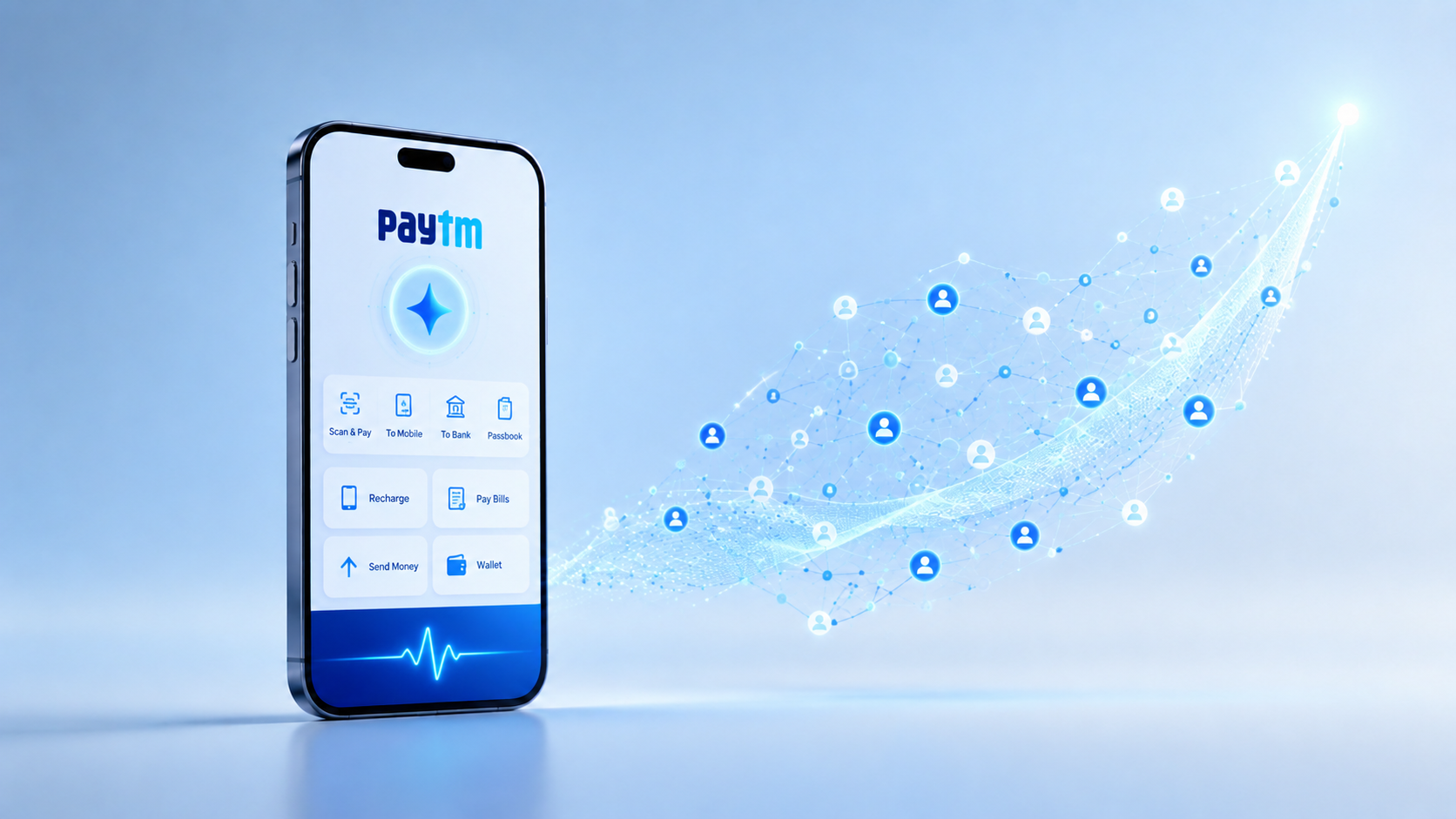
Paytm is reducing in-app promotions and increasing its focus on artificial intelligence. The fintech company plans to use personalised experiences to improve customer engagement and monetisation.
According to a Storyboard18 report, Paytm’s AI strategy aims to reduce its dependence on promotional campaigns. Instead, the company will use AI to understand customer behaviour and recommend relevant services.
This strategy marks a shift towards Paytm customer retention and long-term value. The company believes active users can generate more revenue and attract new customers organically.
Paytm Focuses on Customer Retention
Paytm founder and CEO Vijay Shekhar Sharma discussed the strategy during the company’s Q1 FY27 earnings call. He said the company wants to make existing customers more active.
To support this goal, Paytm has simplified its app and improved several features. These changes aim to make transactions easier and increase usage. The platform is also attracting more Gen Z consumers.
However, Paytm has not stopped investing in marketing. Its Q1 FY27 earnings release showed that marketing expenses rose 27% year-on-year to ₹79 crore.
The company is now spending more carefully. It is directing investments towards customer acquisition, retention, and market-share growth.
Monthly transacting users increased by 60 lakh year-on-year to 8 crore during the June quarter. Meanwhile, customer UPI gross transaction value rose 45% to ₹5.9 lakh crore.
Paytm said its UPI growth was 2.2 times the industry rate. The comparison was based on internal estimates and NPCI data.
AI Personalisation Supports Paytm Monetisation
AI-led customer engagement allows Paytm to show relevant financial products to different customers. This personalised approach could increase engagement and revenue per active user.
Its consumer services include Paytm Postpaid, personal loans, equity broking, and Margin Trade Funding. Paytm also offers wealth products such as digital gold.
AI helps the platform identify customers who may need these services. As a result, Paytm can improve conversions while controlling acquisition costs.
The company also uses AI for fraud detection, merchant onboarding, and customer support. Other applications include collections, retention, and risk assessment.
Paytm has developed specialised models by adapting open-source technology. These models support the company’s specific business requirements.
Sharma said Paytm reduced a 200-billion-parameter model to a four-billion-parameter model. The smaller model supports Indian languages and runs on Paytm’s infrastructure. This setup helps the company reduce operating costs and response time.
Also Read: SEBI Proposes Tighter Rules for Bond Ads, FOMO Marketing and Influencer Promotions
Paytm Plans AI Services for Merchants
Paytm also plans to offer AI-powered merchant services to businesses. These tools could help merchants promote products and communicate with customers.
Merchants may use the technology to provide support across different channels. These channels could include the Paytm app and other digital platforms.
Higher engagement is already visible across Paytm’s consumer business. Monthly transacting users increased by around 8% during Q1 FY27. In comparison, consumer gross transaction value climbed 45%.
The company expects this engagement to support Paytm’s monetisation growth. However, it may take time for higher app usage to translate into revenue.
Travel services faced pressure during the quarter. Higher ticket prices affected leisure demand and slowed the segment’s performance.
Also Read: Asaya Raises Rs 88 Crore From RPSG Capital, OTP Ventures and Other Investors
Paytm Reports Strong Q1 FY27 Growth
Paytm reported revenue of ₹2,448 crore in Q1 FY27. Revenue increased 28% compared with the same period last year.
EBITDA reached a record ₹203 crore after rising 182% year-on-year. Financial-services distribution revenue grew 45% to ₹814 crore.
The number of key financial-services customers also reached 7.6 lakh. This figure increased by two lakh from the previous year.
Paytm is now building a monetisation model around engagement rather than frequent promotions. Its success will depend on how effectively it converts payment users into long-term financial-services customers.
