

Solar energy has transformed the way countries think about power generation. From sprawling solar farms to residential rooftop installations, renewable energy has steadily moved from the margins to the mainstream. Yet one area remains relatively untapped: the devices people use every day.
Smartphones, headphones, smartwatches, and other portable gadgets continue to depend heavily on conventional charging methods despite rapid advances in battery technology. While manufacturers have focused on faster charging speeds and improved battery capacity, a handful of innovators are exploring a different path altogether: enabling electronics to harvest energy from their surroundings.
Among the companies pursuing this idea is AIKO Technologies, a firm working on integrating solar energy capabilities into consumer products. Its efforts reflect a broader industry trend that seeks to make personal technology not only smarter but also more energy conscious.
The premise is simple. Sunlight is available almost everywhere, yet most portable electronics are unable to make use of it. As people spend increasing amounts of time connected to digital devices, dependence on chargers and power outlets has become a routine part of everyday life. The question AIKO and others are asking is whether even a portion of that energy demand can be met through renewable sources.
Rethinking How Consumer Devices Are Powered
The discussion around solar powered electronics comes at a time when sustainability is becoming a major consideration for both manufacturers and consumers. Environmental concerns are influencing purchasing decisions across sectors, and the technology industry is no exception.
In recent years, companies have invested heavily in recyclable materials, energy efficient manufacturing processes, and longer lasting products. Integrating renewable energy directly into devices is viewed by many as the next step in that evolution.
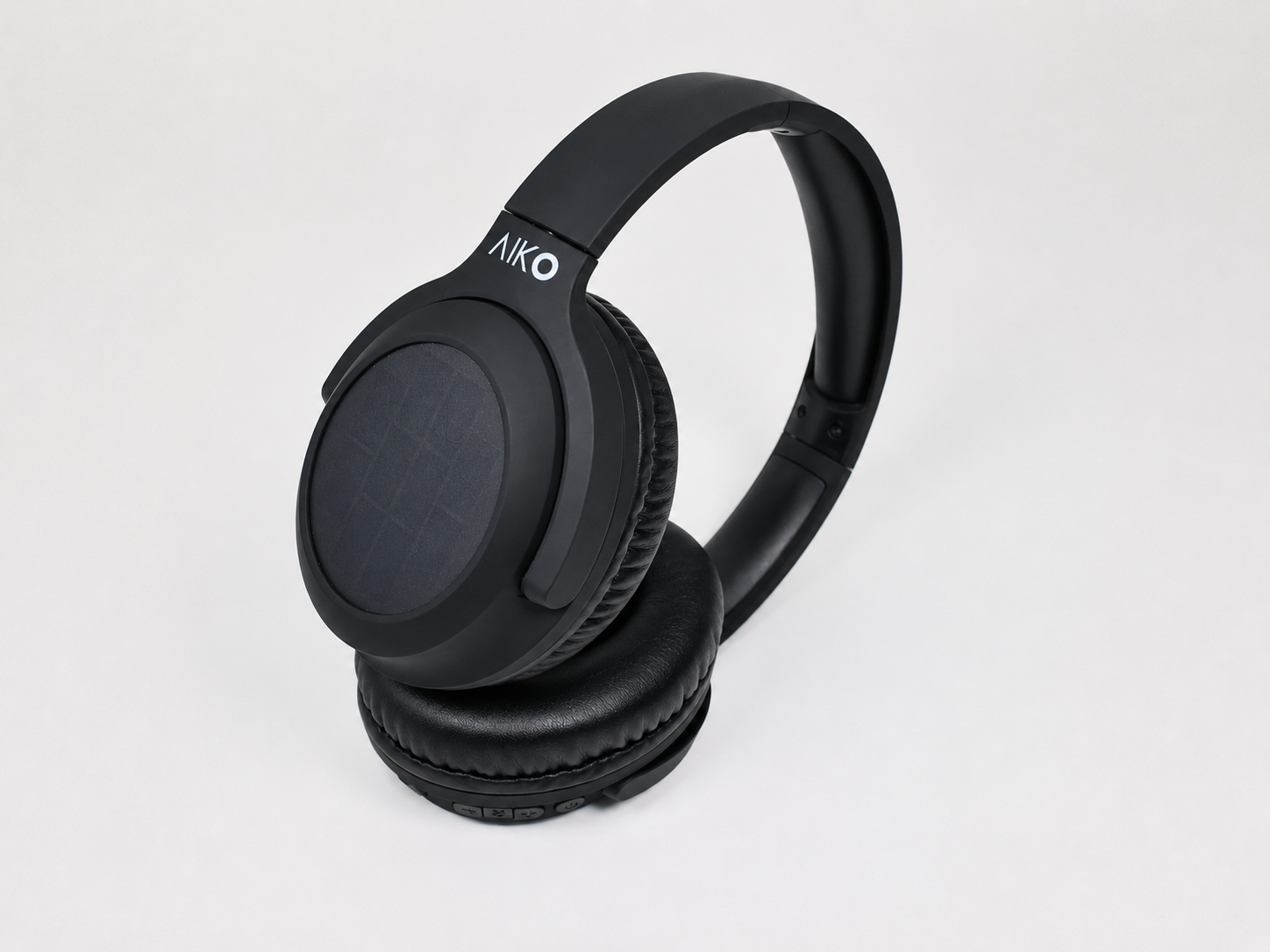
AIKO Technologies has chosen the audio segment as its starting point. Through its POLY product line, the company is experimenting with headphones that can utilise ambient and solar light as a supplementary power source. The objective is not to replace conventional charging entirely but to reduce dependence on it by extending battery performance through energy harvesting.
The strategy is noteworthy because audio products generally consume less power than smartphones or laptops, making them a practical testing ground for emerging technologies. If successful, similar concepts could eventually find applications in wearables, fitness trackers, smart accessories, and other connected devices.
What makes this approach particularly relevant is the growing concern around battery life. Despite significant improvements over the years, users continue to experience what many industry observers call “battery anxiety” — the need to constantly monitor battery percentages, carry chargers, or search for charging points during travel and long workdays.
Solar assisted charging offers a potential solution by helping devices replenish small amounts of energy throughout the day, especially in outdoor environments.
Advances in photovoltaic technology have made such ideas increasingly viable. Solar cells are becoming thinner, lighter, and more efficient, allowing engineers to integrate them into compact devices without significantly altering product design. Improvements in power management systems have further enhanced the ability of electronics to make effective use of harvested energy.
Why India Could Be an Important Market
The concept may hold particular promise in India, one of the world’s fastest growing renewable energy markets.
With abundant sunlight available across much of the country, India presents favourable conditions for the adoption of solar enabled technologies. Public awareness around renewable energy has also increased significantly over the past decade, driven by government initiatives and large scale investments in clean energy infrastructure.
While most conversations around solar power continue to focus on electricity generation and industrial applications, consumer electronics remains a relatively unexplored segment. Companies such as AIKO Technologies are attempting to introduce solar energy into a category that directly impacts everyday life.
The company’s interest in this space stems from a broader vision of making renewable energy more accessible and visible to consumers. Rather than interacting with solar technology only through rooftop installations or utility providers, users can potentially experience its benefits through products they carry with them daily.
Market conditions may also support such innovation. Demand for wireless audio devices continues to grow globally, while consumers increasingly look for features that distinguish one product from another. Sustainability focused innovation could become an important differentiator as competition intensifies across electronics categories.
Also Read: Slice Turns Profitable in First Full Year as Bank
That said, significant hurdles remain before solar powered consumer electronics become commonplace. Energy conversion efficiency, manufacturing costs, product pricing, and user awareness will all play important roles in determining adoption rates. Weather conditions and varying light availability also limit the amount of energy that can be harvested consistently.
Industry experts therefore caution against viewing solar integration as a complete replacement for conventional charging infrastructure. Instead, the technology is more likely to function as a complementary solution that improves efficiency and reduces charging frequency.
As renewable energy technologies continue to advance, the line between energy generation and consumer electronics may become increasingly blurred. Products capable of generating a portion of their own power could eventually become a standard feature rather than a novelty.
Whether solar powered audio products become a mass market success remains uncertain. What is evident, however, is that companies like AIKO Technologies are expanding the conversation around how everyday devices are powered. In doing so, they are challenging conventional assumptions about consumer electronics and offering a glimpse into a future where technology is designed not only to consume energy, but also to capture it.
