

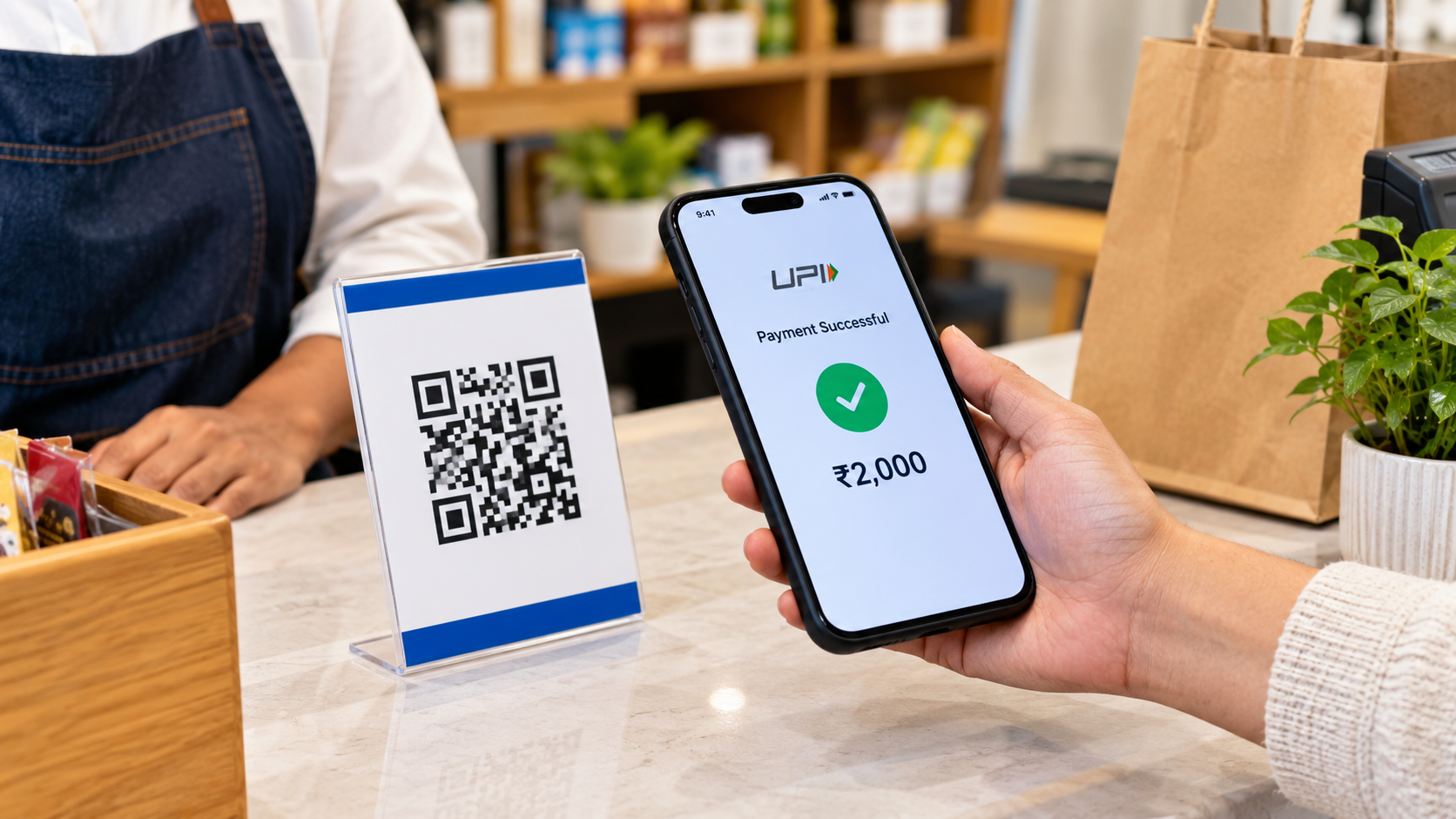
India’s digital payments landscape is set for a significant change from October 15, 2026, with the introduction of a Merchant Discount Rate (MDR) on certain UPI payments above ₹2,000. The new framework marks a shift from the long-standing zero-charge model for merchant UPI transactions and is aimed at creating a more sustainable revenue structure for the payments ecosystem.
Under the new framework, a 0.4% MDR will apply to eligible UPI payments above ₹2,000 made to merchants. The charge will be capped at ₹300 per transaction for transactions above ₹75,000. However, the change does not mean that consumers will start paying a UPI fee every time they make a large payment. The MDR is a merchant-side charge, and banks and payment service providers will not be permitted to directly pass it on to customers.
What Is Changing for UPI Payments Above ₹2,000?
The new MDR framework will apply specifically to eligible merchant transactions above ₹2,000. Payments between individuals will continue to remain free.
For standard merchant transactions above ₹2,000, the MDR will be 0.4% of the transaction value. For example, an eligible ₹5,000 merchant payment would attract an MDR of ₹20, subject to the applicable rules.
For transactions above ₹75,000, the MDR will be capped at ₹300. This means the charge will not continue increasing beyond the specified cap even when the transaction value is substantially higher.
The new structure also provides different rates for certain categories. Payments involving sectors such as fuel, telecom, insurance, and railway services will attract a flat ₹5 MDR rather than the standard 0.4% rate. Capital market transactions will have a separate MDR of 0.02%, subject to a ₹300 cap.
Will Consumers Have to Pay for UPI Transactions Above ₹2,000?
For consumers, the most important point is that the new MDR is not designed as a direct customer fee.
A person making a UPI payment to a merchant above ₹2,000 will continue to use the payment system without a separate UPI charge being added to the transaction by the bank or payment app. The MDR is charged within the merchant payment ecosystem.
Person-to-person UPI transfers will also remain free. This means sending ₹5,000 to a friend or family member will not attract the new merchant MDR simply because the amount is above ₹2,000.
The distinction between personal transfers and merchant payments is therefore important as the new rules take effect.
What Does the New Rule Mean for Merchants?
Merchants are likely to see the most direct impact from the new framework.
For businesses accepting eligible UPI payments above ₹2,000, the MDR represents a payment processing cost. This could be particularly relevant for businesses where customers frequently make high-value digital payments.
However, the framework also provides exemptions for smaller merchants. Merchants earning up to ₹1 lakh a month through QR code-based UPI payments will be exempt from MDR, helping protect smaller retailers and businesses that rely heavily on digital payments.
The impact is therefore likely to vary significantly by business size, transaction value and industry.
For larger merchants, the cost could become a factor in payment economics. Businesses may need to review their payment mix, transaction values and payment processing arrangements once the new structure comes into effect.
Why Is India Introducing MDR on Large UPI Payments?
UPI has grown into one of the world’s largest real-time payment systems, processing billions of transactions every month.
In August 2026, UPI processed about 24.5 billion transactions worth nearly ₹29.82 lakh crore, highlighting the scale of the infrastructure supporting India’s digital payments ecosystem.
The new MDR framework is intended to create a revenue mechanism that can support the continued development of UPI infrastructure, cybersecurity and customer service.
The change also addresses a long-standing challenge around the economics of India’s UPI ecosystem. Payment companies and banks have had to support a rapidly expanding transaction network despite the absence of a conventional merchant fee structure.
The government has also proposed using a portion of MDR collections to encourage UPI adoption among smaller merchants, with 5% of MDR collections earmarked for such initiatives.
What Could It Mean for Digital Payments in India?
The new rules could have wider implications for India’s digital payments ecosystem.
For payment companies and banks, MDR creates a potential new revenue stream from high-value merchant transactions. This could support investments in payment infrastructure and security as UPI volumes continue to rise.
For merchants, the change introduces a new cost consideration. Some businesses may absorb the cost, while others could reassess their payment strategies. Industry concerns have also emerged around the possibility of merchants passing costs indirectly to customers or encouraging cash payments in some situations.
However, the structure has been designed to protect everyday low-value UPI usage. Payments below the ₹2,000 threshold remain outside the standard MDR framework, while person-to-person transactions continue to remain free.
This means the core proposition that helped UPI become a mass market payment system is largely being preserved, even as the economics of higher value merchant payments change.
What Should UPI Users Know Before October 15?
For most everyday users, there is no need to change how they use UPI.
Consumers can continue making person-to-person payments without MDR. Merchant payments below ₹2,000 will also remain outside the standard 0.4% MDR structure.
For larger merchant payments, users should understand that the introduction of MDR does not automatically mean an additional charge will appear on their payment screen. The charge operates within the merchant payment ecosystem rather than as a direct UPI fee for customers.
The bigger change is therefore for merchants and payment service providers rather than ordinary UPI users.
Also Read: Apple Launches iPhone 18 Pro Series and Foldable iPhone Duo, Delays Standard iPhone 18
FAQs
Will UPI payments above ₹2,000 be charged to consumers?
No. The new MDR is a merchant-side charge. Consumers will not be directly charged the MDR by banks or payment apps for eligible merchant transactions.
Does the ₹2,000 rule apply to sending money to friends?
No. Person-to-person UPI transfers will continue to remain free, irrespective of the transaction amount.
How much is the new UPI MDR?
The standard MDR for eligible merchant transactions above ₹2,000 will be 0.4%, subject to a maximum charge of ₹300 for transactions above ₹75,000.
When will the new UPI MDR rules take effect?
The new framework is scheduled to take effect from October 15, 2026.
Will small merchants have to pay MDR?
Small merchants earning up to ₹1 lakh a month through QR code-based UPI payments will be exempt under the new framework.
Are all merchant payments above ₹2,000 charged at 0.4%?
No. Certain categories have separate rates. For example, specified transactions involving fuel, telecom, insurance, and railway services will attract a flat ₹5 MDR, while capital market transactions will have a separate 0.02% rate subject to a ₹300 cap.
Will UPI remain free for payments below ₹2,000?
Yes. The new standard MDR applies to eligible merchant transactions above ₹2,000. The framework is designed to keep everyday lower-value UPI payments outside the new charge.
Why is MDR being introduced now?
The move is aimed at creating a more sustainable economic model for India’s rapidly expanding UPI infrastructure and supporting investments in areas such as technology, cybersecurity, and customer service.
Will UPI become less popular because of the new rules?
The impact remains to be seen. Since person-to-person payments remain free and lower-value merchant payments are protected, the core consumer use case remains largely unchanged. However, larger merchants may reassess their payment strategies because of the new processing cost.
