

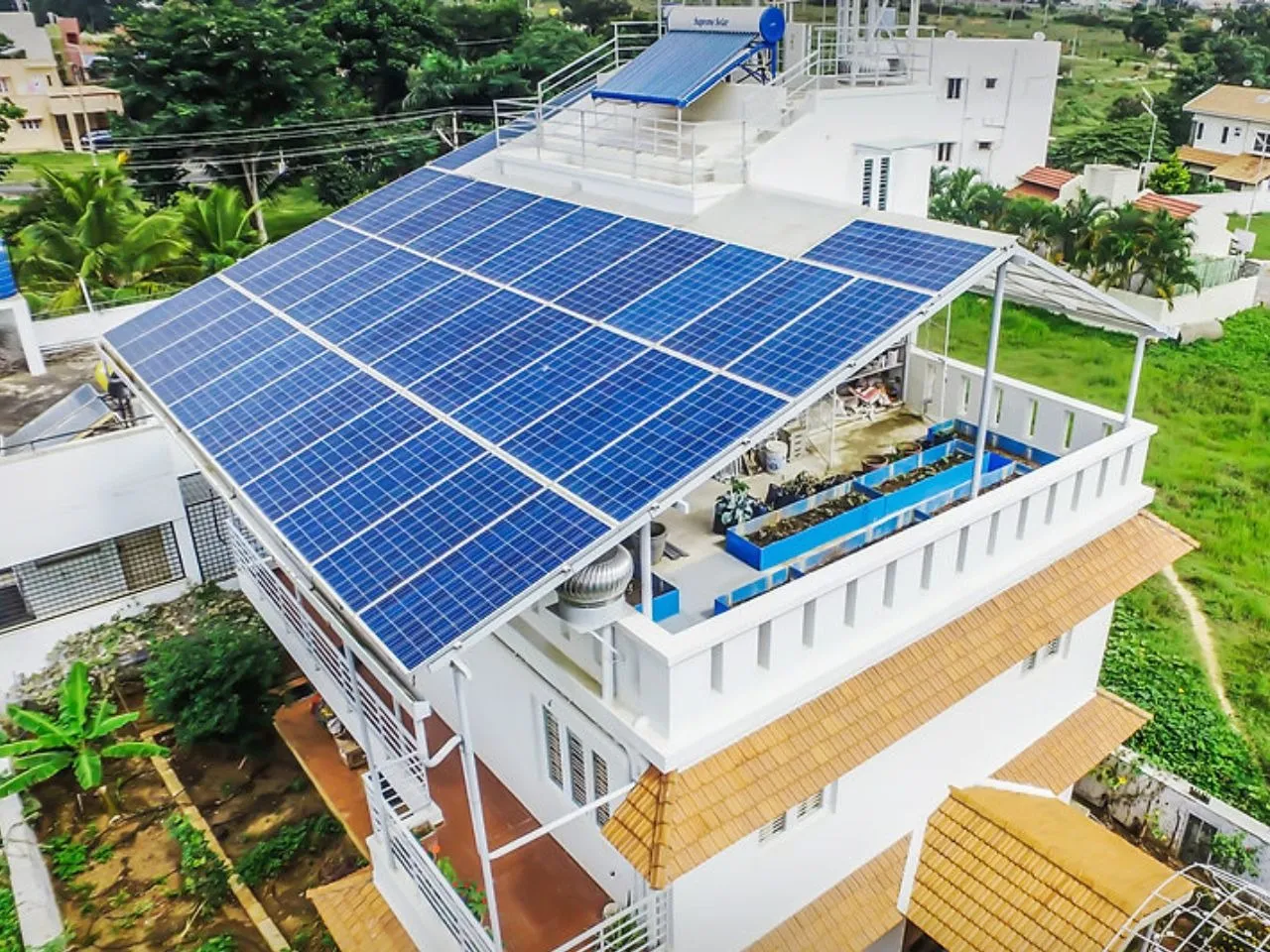
India’s clean energy transition has received another significant boost. The World Bank has approved $890 million (approximately ₹7,500 crore) in financing to support the expansion of the PM Surya Ghar Rooftop Solar Scheme, one of the country’s flagship initiatives aimed at making solar power more accessible to households.
The funding is expected to strengthen rooftop solar adoption across India by improving financing access, expanding distribution infrastructure, and encouraging private sector participation. As India continues to pursue its renewable energy targets, the latest approval reinforces global confidence in the country’s clean energy ambitions.
What Is the PM Surya Ghar Rooftop Solar Scheme?
Launched by the Government of India, the PM Surya Ghar Rooftop Solar Scheme aims to help millions of households install rooftop solar panels while reducing electricity bills and promoting clean energy generation.
The scheme offers financial support to eligible households installing rooftop solar systems, making renewable energy more affordable for residential consumers. It is also designed to reduce dependence on conventional power sources while increasing the share of renewable energy in India’s overall electricity mix.
Besides lowering household energy costs, the programme contributes to India’s broader climate goals by encouraging decentralized power generation.
World Bank Approves $890 Million Financing
The newly approved $890 million package from the World Bank will support the next phase of the rooftop solar programme by addressing some of the biggest barriers to adoption.
According to the World Bank, the funding will help improve access to affordable financing for consumers, strengthen institutional capacity, and create an enabling environment for faster deployment of rooftop solar systems across the country.
The financing also seeks to mobilize additional private investments, ensuring that the programme scales efficiently while reaching a larger number of households.
How Will the Funding Be Used?
The World Bank’s support goes beyond direct financial assistance.
The approved financing is expected to focus on:
- Expanding rooftop solar installations across residential households
- Improving access to affordable financing options
- Supporting distribution companies (DISCOMs)
- Enhancing technical capacity and implementation
- Encouraging greater private sector participation
- Strengthening grid integration for distributed solar power
These measures aim to create a more sustainable rooftop solar ecosystem while making installation easier for homeowners.
Why Rooftop Solar Matters for India
India has set ambitious renewable energy targets over the coming years, and rooftop solar is expected to play a crucial role in achieving them.
Unlike large solar parks, rooftop solar allows electricity to be generated exactly where it is consumed.
This offers several benefits:
A) Lower Electricity Bills
Households can significantly reduce monthly electricity expenses by generating their own solar power.
B) Cleaner Energy
Solar energy reduces dependence on fossil fuels and helps lower carbon emissions.
C) Reduced Transmission Losses
Since electricity is generated locally, there is less energy loss during transmission.
D) Energy Security
Distributed solar systems improve resilience by reducing dependence on centralized power generation.
A Push Towards India’s Clean Energy Goals
India has emerged as one of the world’s fastest-growing renewable energy markets.
Government initiatives promoting solar, wind, green hydrogen, and electric mobility have accelerated investments across the clean energy sector.
The PM Surya Ghar Rooftop Solar Scheme complements these efforts by bringing renewable energy directly to homes instead of relying solely on utility-scale projects.
The latest World Bank support reflects confidence in India’s long-term energy transition strategy and its ability to scale renewable energy infrastructure.
Benefits for Consumers
For households, the scheme offers more than environmental benefits.
Installing rooftop solar can help consumers:
- Reduce long-term electricity costs
- Improve energy independence
- Increase property value
- Access government subsidies
- Contribute to a cleaner environment
As financing options become more accessible, rooftop solar may become a practical investment for many middle-income families.
Role of Distribution Companies
One important aspect of the programme is strengthening India’s electricity distribution companies, commonly known as DISCOMs.
The World Bank funding is expected to help improve their ability to integrate distributed solar generation into the existing grid while ensuring reliable electricity supply.
Modernizing distribution infrastructure will become increasingly important as rooftop solar adoption grows nationwide.
Private Sector Participation Will Be Key
Scaling rooftop solar installations requires collaboration between government agencies, financial institutions, manufacturers, installers, and energy companies.
The World Bank financing aims to encourage greater private investment by improving financing mechanisms and reducing implementation challenges.
Industry experts believe stronger private participation could accelerate installations while creating new employment opportunities across manufacturing, installation, maintenance, and financing.
Economic and Environmental Impact
The expansion of rooftop solar has implications that extend beyond electricity generation.
A larger rooftop solar ecosystem could contribute to:
- Job creation in the renewable energy sector
- Increased domestic solar manufacturing
- Lower greenhouse gas emissions
- Improved household savings
- Reduced dependence on imported fossil fuels
As adoption grows, rooftop solar could become one of the largest contributors to India’s decentralized energy infrastructure.
What This Means for India’s Renewable Energy Future
The World Bank’s approval is more than just a funding announcement.
It signals international confidence in India’s renewable energy roadmap and highlights rooftop solar as a critical component of future energy security.
As technology costs continue to decline and financing becomes more accessible, residential solar adoption is expected to accelerate over the coming years.
For millions of Indian households, rooftop solar represents an opportunity to lower electricity costs while participating in the country’s clean energy transition.
Final Thoughts
The approval of $890 million by the World Bank for the PM Surya Ghar Rooftop Solar Scheme marks another important step in India’s renewable energy journey.
By improving financing access, supporting distribution infrastructure, and encouraging private investment, the initiative has the potential to expand rooftop solar adoption at an unprecedented scale.
If implemented effectively, the programme could help millions of households generate cleaner electricity, reduce power bills, and contribute meaningfully to India’s long-term sustainability goals.
